

[비즈한국] Lotte Shopping is accelerating efforts to sell its Lotte Department Store Mia branch to IGIS Asset Management. If the deal is finalized, the Lotte Department Store Mia branch, which opened in 2006, will likely end its nearly 20-year run as a department store. Rather than continuing department store operations, IGIS Asset Management is considering a plan to demolish the existing building and construct long-term private rental housing. Having previously acquired two department stores and converted them into office and commercial facilities, IGIS is now moving to transform a department store into residential space.
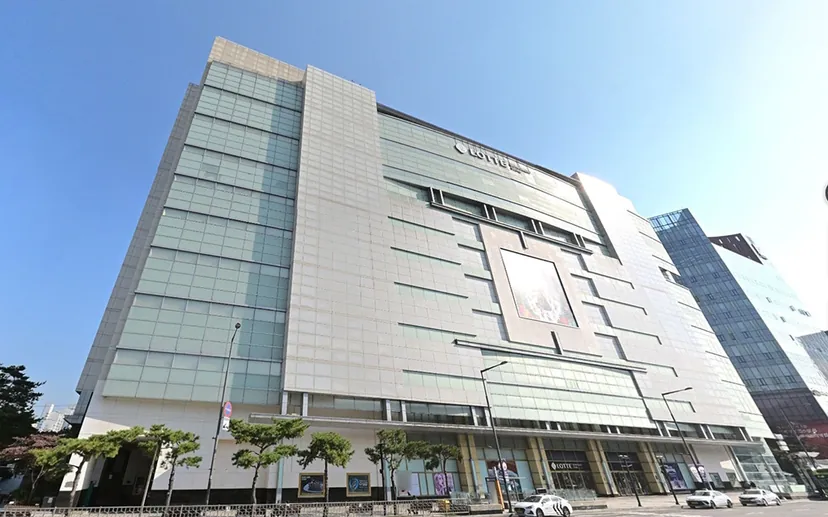
According to the investment banking (IB) industry, Lotte Shopping recently selected IGIS Asset Management as the preferred bidder for the sale of the Lotte Department Store Mia branch. The reported sale price is approximately 220 billion won. Lotte Shopping held an auction for the sale in June, but failed to select a preferred bidder due to a price gap between the seller and potential buyers. Subsequently, a re-bidding process was held, resulting in the selection of IGIS Asset Management. However, negotiations are ongoing, and the sale has not been finalized. The Lotte Department Store side also acknowledged the selection of a preferred bidder but maintained that specific terms have not yet been settled.
The Lotte Department Store Mia branch is located near Miasageori Station on Subway Line 4 at 62 Dobong-ro, Gangbuk-gu, Seoul. It has a land area of 7,372㎡ and a total floor area of 73,147㎡. Lotte Shopping opened the Mia branch in December 2006. At the time, the project involved an investment of approximately 250 billion won and was developed as a large-scale store featuring not only retail space but also a cinema.
The decision to sell the Mia branch did not happen overnight. Lotte Shopping began by clearing assets around the Mia branch first. In 2024, it sold the Mia branch's outdoor parking lot, which had been purchased in 2004 to prepare for additional parking demand. As the Mia branch's performance fell short of expectations, the site had effectively become idle, and it is known that Lotte Shopping sold it to a nearby hospital for approximately 20 billion won. Even then, the industry speculated that the parking lot sale could lead to the restructuring of the Mia branch itself. At the time, Lotte Shopping stated it was not considering withdrawing the Mia branch.
Ultimately, about two years after the disposal of the parking lot, the company began the process of selling the department store building and land as well. If this deal is finalized at the reported price of 220 billion won, Lotte Shopping will have secured a total of approximately 240 billion won from asset sales in the Mia branch area, including the 20 billion won from the 2024 parking lot sale. However, the 220 billion won figure is currently known from the preferred negotiation stage, and the final price may change depending on the outcome of negotiations.
The gap between the sale price and the value of the Mia branch on Lotte Shopping's books is also notable. According to materials released last year when Lotte Shopping initiated the sale, the book value of the Mia branch as of the end of 2024 was known to be approximately 281.7 billion won, consisting of 222.6 billion won for land and 59.1 billion won for the building. At the time, the market estimated the sale price of the Mia branch would be over 300 billion won.
A simple comparison between the 220 billion won reported by IGIS Asset Management and the book value of 281.7 billion won represents a decrease of 61.7 billion won, or approximately 22%. However, this cannot be strictly interpreted as a loss on disposal for Lotte Shopping. The 281.7 billion won figure is the book value as of the end of 2024, and it is possible that depreciation or changes in asset value have since been reflected; furthermore, the actual sale price has not been finalized. The exact scale of gain or loss will only be confirmed once the transaction is closed and Lotte Shopping discloses its disposal results.
The backdrop behind Lotte Shopping’s push for a sale at a price lower than expected lies in the Mia branch's store competitiveness and its strategy for asset efficiency. Competing against the nearby Hyundai Department Store Mia branch, the store has been classified as a non-core asset within Lotte Department Store in terms of revenue. Lotte Shopping is pursuing a strategy of clearing inefficient stores and idle assets to secure liquidity, while concentrating investments on core stores like the Main Branch and Jamsil branch. This is the so-called "townization" strategy, which combines shopping, tourism, and content centered around department stores.
On the other hand, from the perspective of IGIS Asset Management, the value of the Mia branch is closer to "real estate" than a "department store." Following the acquisition, IGIS is considering a plan to demolish the current department store building and develop long-term general private rental housing. The Mia branch is located in a semi-residential area, is close to Miasageori Station, and is surrounded by large residential areas such as the Gireum and Mia New Towns. It is understood that IGIS Asset Management judged that, considering the ceiling height and structure of the existing department store building, demolition and redevelopment would be more suitable than remodeling.
This is not the first time IGIS Asset Management has repurposed department store real estate. In 2020, IGIS Asset Management, in partnership with Woo-mi Construction, acquired the real estate of the former Lotte Department Store Bundang branch for 230 billion won. Lotte Department Store ended operations at the Bundang branch in March of this year, and IGIS is currently transforming the building into "Time Walk Bundang," a mixed-use office and retail facility. Among the 77,720㎡ of total floor area, 66.2% will consist of office space, and Line Plus has decided to move into the 4th through 8th floors. Construction is planned to be completed by October 2028.
The situation for the former Hyundai Department Store space in D-Cube City, Sindorim, Seoul, is similar. When IGIS Asset Management acquired the property in 2022, they judged the existing retail facility's competitiveness to be low and created plans to convert it into other uses such as offices. A project to convert the former department store space into a mixed-use office and retail facility is currently underway.
While the Bundang and D-Cube City projects utilized the wide floor area and high ceilings of existing department store buildings to recycle them into offices and commercial facilities, the approach for the Mia branch is different. A plan to completely demolish the building and develop it into a residential facility is under review. For IGIS Asset Management, this marks their third department store conversion project, where they are maximizing the locational and development value of the land without being bound by the existing use as a department store. Within the real estate industry, it has been consistently noted that the Mia branch has higher value as a development site for projects like mixed-use residential complexes than as a retail business.