

[BizHanKook] While the unit cost of using Artificial Intelligence (AI) is falling, the burden of AI operating expenses on companies is actually increasing. This is because the proliferation of AI agents, which call models multiple times to complete a single task, has led to a surge in token consumption. Targeting this pain point, LG Uplus is set to launch a B2B token business next year. Their strategy is to win over customers hesitant to adopt AI due to costs by offering token optimization ‘recipes’ that reduce the total cost required to complete a task.
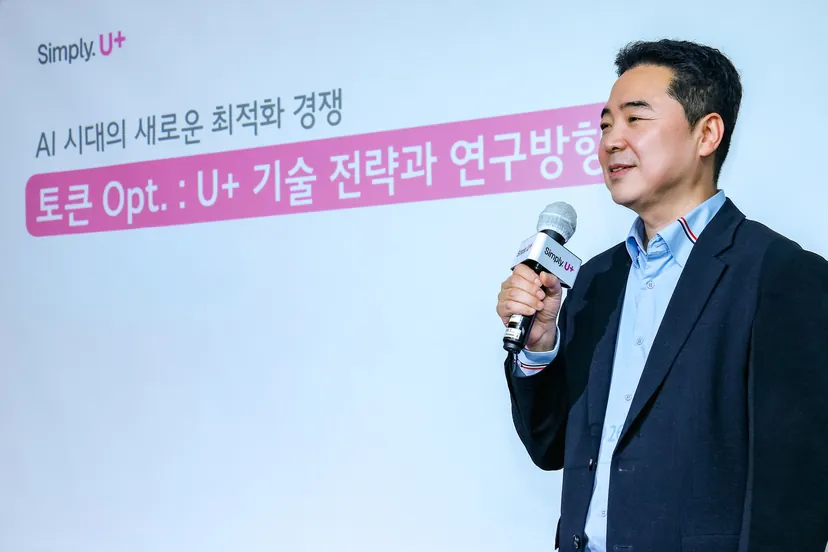
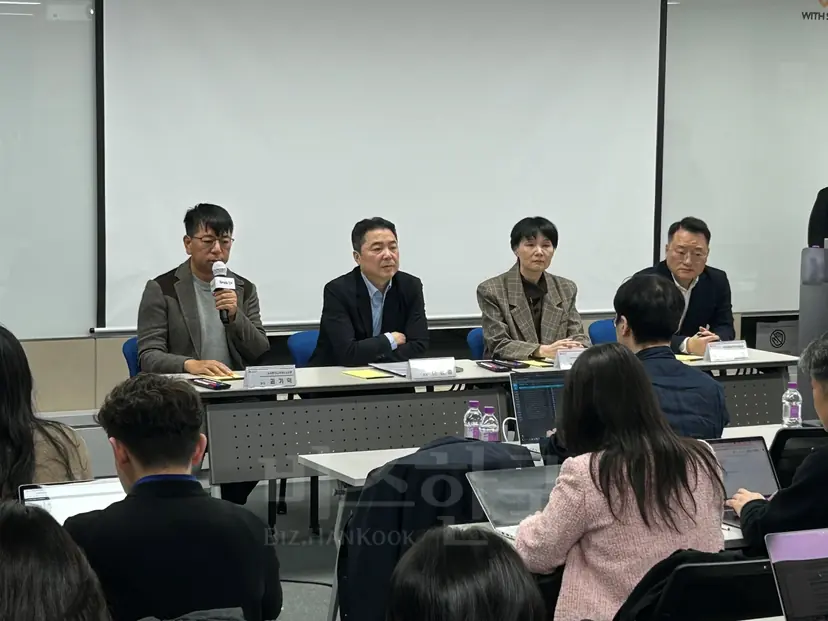
LG Uplus held a study session for the media on the 12th to unveil its optimization technology and future business direction. Lee Hye-jin, Head of Technology Strategy at LG Uplus, explained, “The real cost of AI is not in generating an answer, but in the total cost incurred until the task is finished.” Tokens are the basic units by which AI processes data, and costs are incurred based on usage. According to Lee, while token prices from Big Tech firms have dropped by about 80% over the last 1–2 years, consumption has tripled. An agent goes through about 20 steps to produce a single result, and internal inference, which is invisible to the user, can account for over 80% of the cost.
Lee Sang-yeop, Chief Technology Officer (CTO) of LG Uplus, also stated, “I don’t want to talk just about comparing prices per million tokens and saying ‘we reduced it to this many dollars,’” adding, “We aim to process the tasks our customers want to accomplish at the optimal cost.”
Using Less, Making Smaller Models, and Running Cheaper
The token optimization know-how that LG Uplus calls a ‘recipe’ combines various technologies built while operating services like the AI call service ‘ixi-O’ and AI Contact Centers (AICC) to suit specific business needs. It broadly follows three paths.
First, it reduces token usage through ‘model routing,’ which connects the query to a model suited to its difficulty, and ‘harness engineering,’ which limits the agent’s work path. In internal testing, they reduced the cost of processing general inquiries by over 25% and coding agent costs by over 30%. In the coding domain, they secured a case where operating costs were reduced by about 90% using their own model.
Second is the technology to make models smaller and faster. By reducing the size of the on-device model from 2.4–3 gigabytes (GB) to about 800 megabytes (MB), they maintained over 95% of the performance of the comparable cloud model. By using a method where a small model writes a draft and a large model verifies it, they increased the token generation speed by more than twofold.
They also utilize ‘chip mixing,’ which combines Nvidia and AMD GPUs with FuriosaAI’s Neural Processing Units (NPU). For example, they assign query analysis to the computationally fast Nvidia GPU and answer generation to the AMD GPU with larger memory.
A notable feature is that they do not strictly insist on using their own models. CTO Lee said, “If a lightweight model from a Big Tech firm is better suited for a specific task, we can route to that model to provide the service.” Even internally, they are reducing costs by keeping the Big Tech coding agent interface as is, while switching the underlying connection points that call the models to their own platform. This combination itself is described as the business recipe. Regarding product composition and pricing, Kim Hyun-min, Team Leader of Sovereign Cloud Business, said, “We will lower the Total Cost of Ownership (TCO) for customers by concurrently pursuing partnerships and building our own infrastructure.”
After ‘Minutes’ and ‘Bytes’ comes ‘Tokens’… Telecom Carriers Have Different Calculators
LG Uplus is not the only telecom company setting its sights on tokens as a new revenue source. As the focus of AI demand shifts from training (creating models) to inference (running actual services), how cheaply and stably tokens can be produced and supplied has emerged as a major business opportunity.
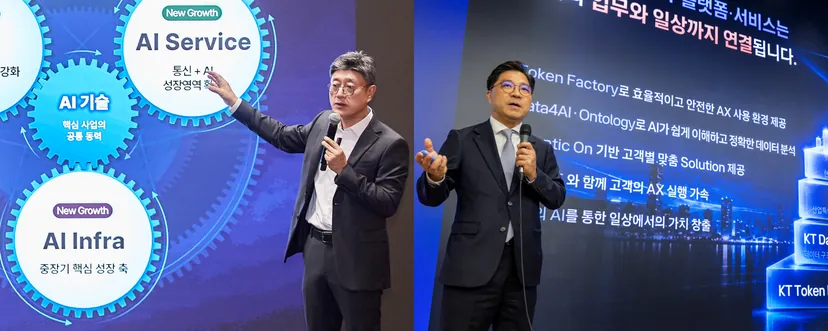
Telecom companies believe that their experience in operating networks by measuring call and data usage for billing, along with their data center infrastructure, aligns perfectly with the token business. However, their approaches differ. KT is focusing on a distribution and billing platform that aggregates various models; SK Telecom is focusing on control and monitoring that connects customers, models, and infrastructure; and LG Uplus is prioritizing token production costs and operational efficiency.
Previously, SK Telecom unveiled its ‘Token Gateway’ business in its ‘Growth Gear Strategy’ announced on the 8th of last month. It acts as a control center that manages AI usage patterns and connects them to appropriate models and infrastructure, leveraging its base of 23 million customers and payment systems. KT also launched its integrated AI model platform ‘Token Factory’ on the 30th of last month. It provides over 500 domestic and international models in one place and explains that it can reduce token usage by up to 25% through its proprietary ‘Auto Model Router’ technology and prompt compression.
Demand is growing steeply. According to statistics from OpenRouter, an AI model brokerage platform cited by KT, global token consumption has increased about 35-fold in one year. The prospect is that in the AI era, tokens will succeed ‘minutes’ and ‘bytes’ as the standard unit of usage.
The three companies’ businesses will begin in earnest next year. KT plans to expand its target to individual users and introduce a subscription-based plan in March next year, while SK Telecom is pushing for the commercialization of its ‘AI Factory,’ created in partnership with Nvidia, next year. LG Uplus will build experience by handling model serving for ‘Everyone’s AI,’ which it is launching with Kakao at the end of this year, before embarking on its B2B token business in 2027.
Lee Hye-jin stated, “For companies that have introduced AI, current AI is closer to a ‘money-eating hippo’,” adding, “Making this AI usable like an actual employee is the benefit customers need most.”