

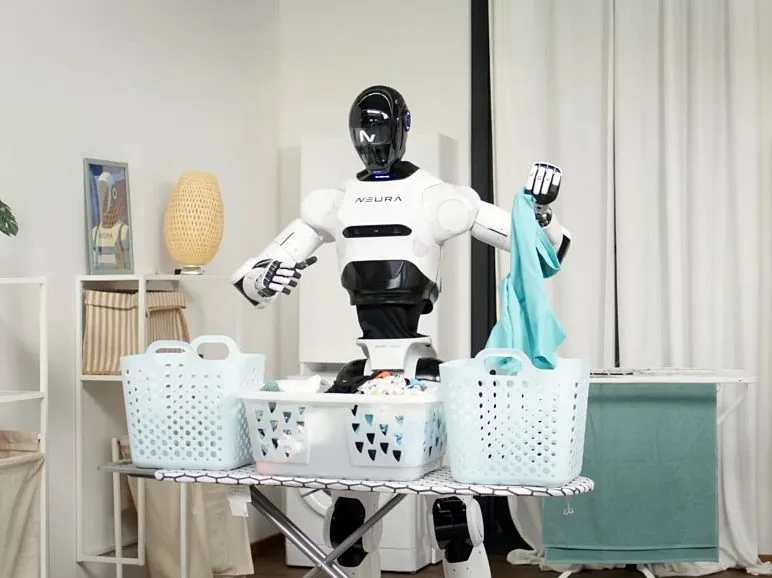
[비즈한국] Last September, I attended a live demo of a humanoid robot by a startup at IFA 2025 in Berlin, Germany. The robot was attempting to sort white clothes from colored clothes in a pile of laundry, but it felt a bit clumsy. It would occasionally grab a colored garment while picking up a white one, accidentally knock over the laundry basket with its hand, or go through the motions of transferring items without actually picking anything up. Some audience members snickered. There were whispers of, “When is this robot actually supposed to help humans?” and “It’s so slow that I just want to help it.”
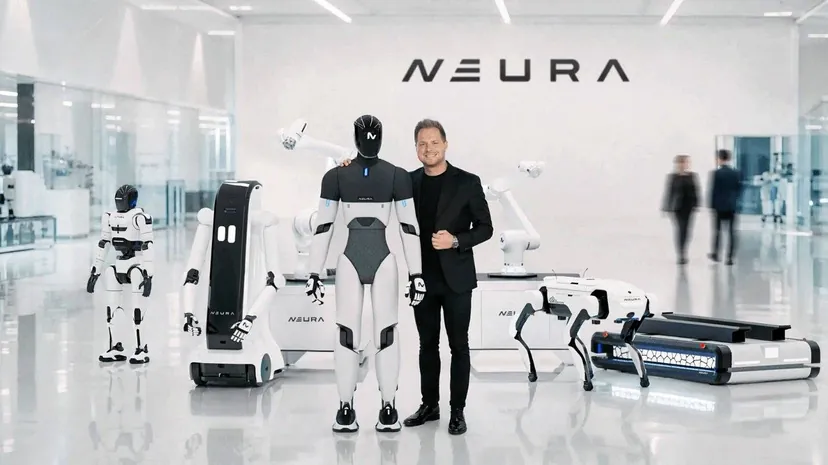
Amazon, Nvidia, Qualcomm… Opening Their Wallets One After Another
Curious, I looked up the company. It was ‘Neura Robotics.’ My search revealed that a similar incident had occurred three months prior. The company held a showcase for this robot at Automatica in Munich last June, but the robot never actually appeared at the venue. In the end, Neura had to proceed with the event using a non-functional model.
According to local media, CEO David Reger began the showcase by saying, “This presentation might be a little less flashy.” For a startup that needs to capture the attention of investors, it was what one might call a “PR disaster.” The company later explained that “engineers were finishing final touches until the morning” and that it “couldn’t arrive due to unexpected road closures.”
I had forgotten about the company, but recently came across news about them again.
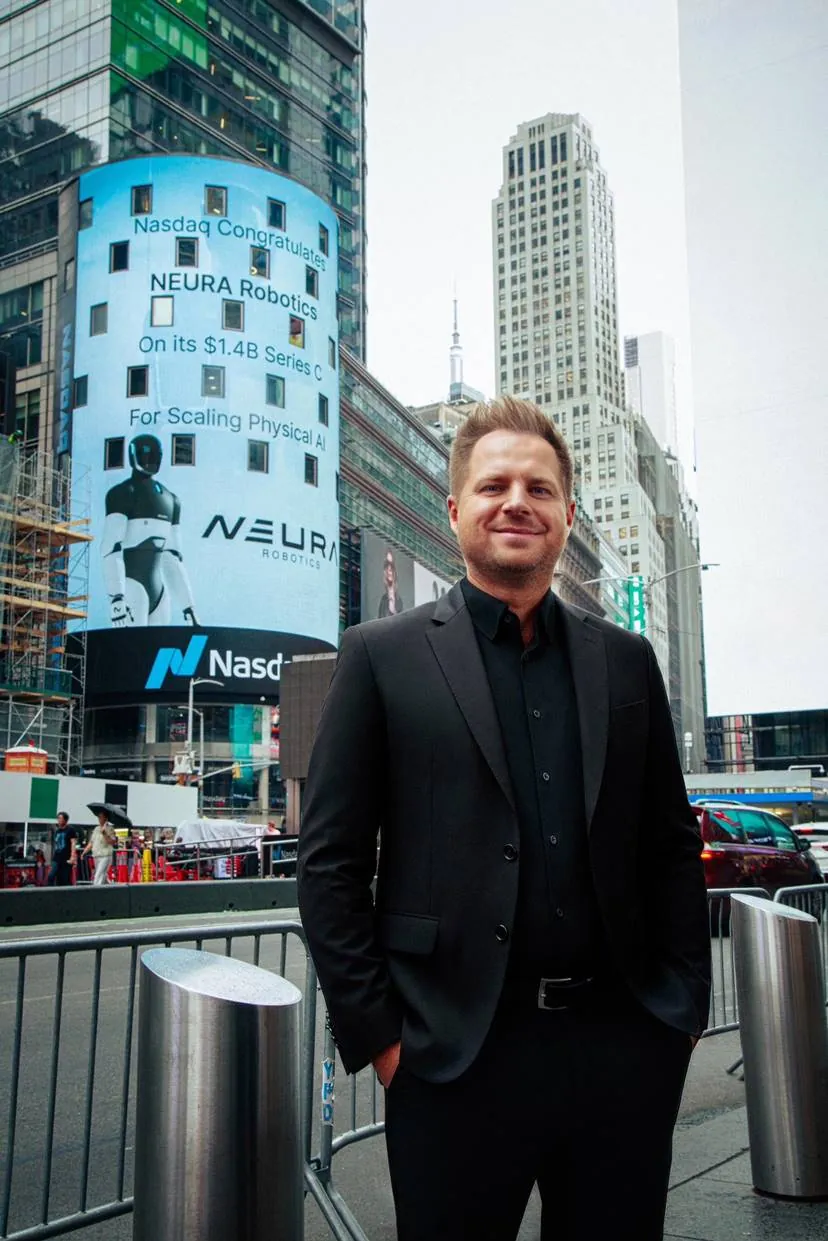
In June of this year, Neura Robotics secured a massive $1.4 billion (approximately 2 trillion won) in a Series C funding round. In terms of sheer size, it is currently the largest single investment round in the humanoid robot industry. The company was valued at $7 billion (approximately 10 trillion won).
The lineup of investors is also impressive. Led by Tether, the world's largest stablecoin issuer, the list includes Amazon, Nvidia, Qualcomm, Bosch, Schaeffler, and the European Investment Bank. Renowned investors, including Big Tech firms from Silicon Valley, have boldly opened their wallets for this unfinished German robot startup.
The Elon Musk of Swabia
The founder of Neura Robotics has a unique background. Reger, who hails from the Swabia region of Germany, graduated from a vocational high school (Hauptschule) and completed an apprenticeship (Ausbildung) as a mechanical model builder. He does not hold a traditional university degree. This is highly unusual compared to most tech startup founders, who typically follow an elite path, graduating from prestigious engineering schools and gaining experience at major tech companies or research institutes.
Without a degree or prior robotics experience, Reger joined a Swiss robotics company, learned the technology hands-on, and used that experience as the foundation to start Neura Robotics.
Because of this background, combined with his confident and blunt speaking style as a tech startup CEO, the German media calls Reger the “Elon Musk of Swabia.”
On his personal website, Reger wrote, “The next revolution that will change the world is the smartphone with arms and legs—the cognitive robot. It will come from Germany. We will not hand that over to Elon Musk.”
He also asserted that “the robotics market will become larger than all existing industries combined by 2030,” and regarding the AI regulation debate, he argued that “fear-mongering about AI achieves nothing.” He even admitted, “I think I might be slightly megalomaniacal.”
The German industrial sector, which prefers cautious and understated expressions, seems to find his words too “out there.” The German engineering journal VDI Nachrichten titled an article about Reger: “Neura-Chef – der (Auf-)Reger in der Robotik.” It’s a play on words combining the German word for “controversial figure” (Aufreger) and his surname (Reger).
4NE1, the Robot That Came Out of the Cage
Most robotic arms used in factory automation, such as on car assembly lines or in logistics warehouses, are surrounded by safety fences. This is because people could easily get injured if they enter the operating range.
Neura Robotics aimed to bring robots out of those fences. By integrating cameras, tactile sensors, and audio systems into the robot, it can perceive its surroundings in real-time, allowing it to work in the same space as humans without safety cages. Reger dubbed these “Cognitive Robots.”
He named the robot ‘4NE1.’ It is derived from the English phrase “for anyone,” meaning it can work for anyone. This is a declaration that they intend to create a robot that works by the side of anyone who needs one, from factories to medical facilities, logistics, elderly care, and homes.
According to Neura, 4NE1 walks on two legs like a human, picks up objects with two hands, and makes its own judgments by recognizing visual information. It is designed to be capable of tasks like moving boxes in factories, helping with dishwashing at home, and sorting documents in offices. Although still in the development stage, the company has already set sales prices. The full-spec version is priced at 98,000 euros (approximately 150 million won), and an entry-level mini version is set at 19,999 euros (approximately 30 million won).
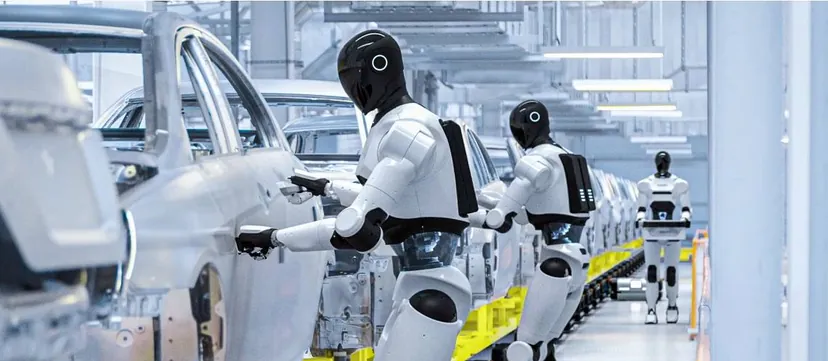
The production plan is also aggressive. They announced that they would start with 6,000 units this year, exceed 10,000 next year, and produce over 1 million robotic arms and humanoids combined annually by 2030.
The fact that they don’t intend to end up as a mere robot manufacturer is evident in their ‘Neuraverse’ concept. Neuraverse is an open platform for training robot AI. They aim to create an ecosystem where external developers and companies can upload their own data and work scenarios to train the robot AI and share the results. If this vision is realized, Neura could become the common operating system for robot AI, generating platform revenue while selling hardware.
Unfinished Potential
The past year for Neura Robotics has been quite dramatic. The 4NE1 flubbed its debut, and its actual performance in tasks is still clumsy. However, its future vision has received high marks.
There is still a long way to go. Beyond Tesla, which Reger has identified as a competitor, there are formidable Chinese companies as well. There are many obstacles to overcome, including production scale, price, safety, and AI reliability. The plan to produce 1 million units in four years is still difficult to imagine.
However, just as Tesla, which few people knew by name ten years ago, now dominates the electric vehicle market, we don’t know when the era of physical AI and humanoids will suddenly arrive, or if Neura Robotics will be the protagonist.
The robots I once dismissed as merely “unfinished”—“I wonder how those arms will be moving in 5 or 10 years.” The investors who bet 2 trillion won were likely thinking the same thing.
As it happens, Neura Robotics will unveil its vision once again at IFA 2026, held in Berlin from September 4 to 8. Reger will deliver a keynote speech on September 5, titled “From Europe to the World: Building the Physical AI Ecosystem.”
Author Lee Jung-woo spent 17 years as a journalist covering various fields, including major industries like automotive, secondary batteries, and heavy industry, as well as defense, diplomacy, environment, education, and health and welfare. He specifically reported on-site about industrial structure changes focused on mobility, energy transition, and sustainability. He currently lives in Berlin, Germany, and serves as a partner at the startup accelerator ‘123 Factory.’