

[비즈한국] “I thought to myself: If I’m going to work 60 hours a week anyway, I might as well work for myself instead of someone else’s company.”
This is how Hongbae Kim, a software developer based in Berlin, Germany, responded when asked why he left South Korea. Originally from Mokpo, South Jeonnam Province, he spent about five years working as a mechanical design engineer in Korea—a profession far removed from software development. When he moved to Berlin with his wife four years ago, he had no formal experience in development.
Yet, this June, he was selected for the “Prototype Fund,” an open-source development support program run by the German federal government. The grant is for developing ‘OpenInvoiceXML,’ an open-source project that helps generate electronic invoices (E-Rechnung) in Germany. The Prototype Fund provides individual developers with up to 47,500 euros (approximately 71 million KRW) over six months. If selected for the second round of support, they can receive an additional 31,667 euros (47 million KRW) for four months. Combined, this totals up to 79,167 euros (118 million KRW) over 10 months. Notably, the program does not require establishing a company or securing equity investment.
What is even more interesting is his background. After arriving in Berlin, he began learning to code while working part-time jobs—making hamburgers and frying chicken at a Korean restaurant—to cover his living expenses. Even while spending about three years doing this, he never stopped developing his own services.
The first electronic invoice service he created didn’t start with a grandiose business plan. It began when he saw his wife, a freelance English teacher, struggling to write invoices every month and thought about automating the process. That small idea evolved into an open-source project supported by the German government.
60 hours a week in Germany, but working for myself
Kim arrived in Germany around 2022. While working in Korea, he repeatedly faced long hours and began to worry about his future.
“In Korea, I worked 60 hours a week. But I wasn’t doing that because I wanted to; I did it because the company required it. I thought, if I’m going to work that hard anyway, I might as well go to another country and do my own thing.”
After arriving in Berlin, he chose to prepare for a startup rather than seek employment. Of course, he lacked both the immediate technical skills and sufficient capital to launch a business.
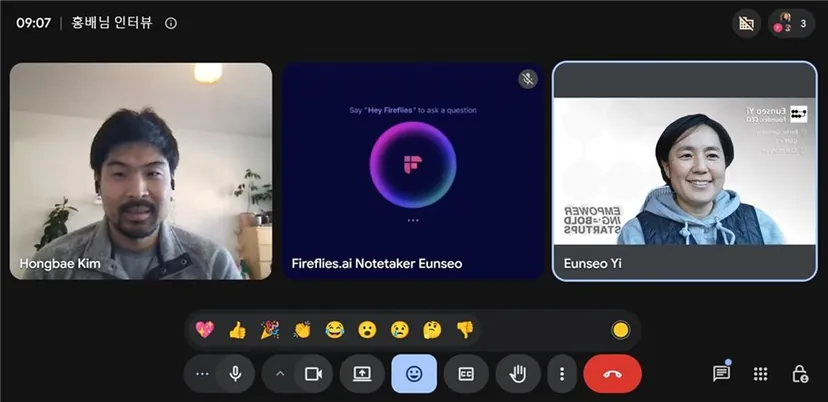
Q. You were a mechanical design engineer in Korea. Did you learn coding from scratch after coming to Germany?
“Yes. I started learning after arriving in Germany. I learned it to launch a startup. I studied for about two years at a coding school called 42 Berlin.”
42 Berlin is the Berlin campus of the global coding education network ‘42,’ which originated in Paris, France. It is a unique software education institution with no tuition fees and no traditional professors or lectures. Instead of attending set classes, students engage in ‘Peer-to-Peer Learning,’ where they complete actual programming projects, review each other’s code, and solve problems together. No prior coding experience or related degrees are required to apply; the admission process assesses problem-solving skills and motivation through the ‘Piscine,’ a 4-week intensive coding program. The Berlin campus is open 24 hours a day and is tuition-free thanks to corporate sponsorship.
42 Berlin’s educational style offers opportunities for people like Kim who are leaving their previous careers to learn new skills. Kim built his development capabilities there by learning C, C++, and Python. In particular, his experience participating in side-project communities—beyond the regular curriculum—to build various software personally led to the founding of ‘InvoicingU’ and the development of ‘OpenInvoiceXML.’
Q. How did you manage living expenses while studying coding?
“I made burgers and fried chicken at a Korean restaurant. I did that for about three years. When times were tough, I’d take on part-time work to earn just enough to survive, and then invest all the rest of my time into my projects.”
He candidly added that his wife’s financial support was a significant help.
“Actually, my wife covered most of the expenses for those four years. I spent that time studying development and building things I wanted to create.”
Meanwhile, his working hours have not significantly decreased since arriving in Berlin.
“I still work about 60 hours a week. But now it’s different because I’m doing the work I want to do.”
For him, moving to Germany wasn’t necessarily a choice to work less, but a choice to decide his own working hours and take ownership of the results.
A service made for his wife finds its first customers
InvoicingU, the commercial service Kim developed, started from his wife’s daily life as a freelancer. Freelancers in Germany must issue invoices to their clients, requiring them to organize and email customer names, service details, dates, amounts, and tax information. Even if the volume isn’t high, the manual repetition of this data every month is a hassle.
“My wife is an English teacher, and she was writing out invoices one by one manually every time she needed to send one. I watched from the side and said, ‘I’ve learned to code, let me build this for you.’”
Initially, he built a simple automation program for his wife. It later evolved into a web-based service where users could pre-save customer information and service details to quickly generate and email invoices every month.
Q. How much easier did it make the manual tasks?
“It takes time to enter the customer and service information for the first time. After that, since the information is already stored, you just load it to send the invoice. You can send one in under a minute.”
While it began as a solution to a personal problem, people started showing interest once he made the service public.
“I originally made it to help my wife, but once I put it on the internet, people started reaching out. So, I would go and build solutions for them directly.”
Currently, InvoicingU operates as a SaaS service for freelancers and small business owners to manage customer info, invoices, and schedules.
The current customer base is around 30. Users can send up to five free invoices per month, and those needing more can subscribe for 14 euros a month.
While not yet a startup with massive client numbers, he is gaining valuable experience by solving real-world problems and generating revenue through software he developed himself. This technology eventually linked him to the German government’s open-source support program.
2028 German electronic invoice mandate opens new opportunities
Germany is currently transitioning to a mandatory electronic invoicing system for B2B transactions. Previously, many invoices were issued as human-readable PDF files. However, moving forward, structured electronic data that computers can automatically read and process is required. The representative formats are XRechnung and ZUGFeRD. XRechnung is an XML-based invoice format readable by machines, while ZUGFeRD allows for a hybrid format combining human-readable PDFs and machine-processable XML.
The German government introduced the electronic invoice receipt system in 2025, with mandates for issuing invoices rolling out in phases based on company size and revenue. For general domestic B2B transactions, the mandate applies to some businesses starting in 2027, with the main grace period ending in 2028. Small transactions and micro-businesses are exempt.
Q. Why did you think the shift in the electronic invoice system was a new business opportunity?
“Up until now, it was fine to create a human-readable invoice in PDF. From now on, XML data that computers can read is required. This means people need to use new invoice systems.”
Diverse solutions already exist in Germany’s corporate accounting and ERP software market. However, complex systems designed for large corporations aren’t necessarily needed by everyone. For freelancers or small organizations that issue only a few invoices a month, a simple service is more appropriate. Kim discovered a technical opportunity here. OpenInvoiceXML, which he is developing, is an open-source project that generates and validates invoices compliant with German electronic invoice standards.
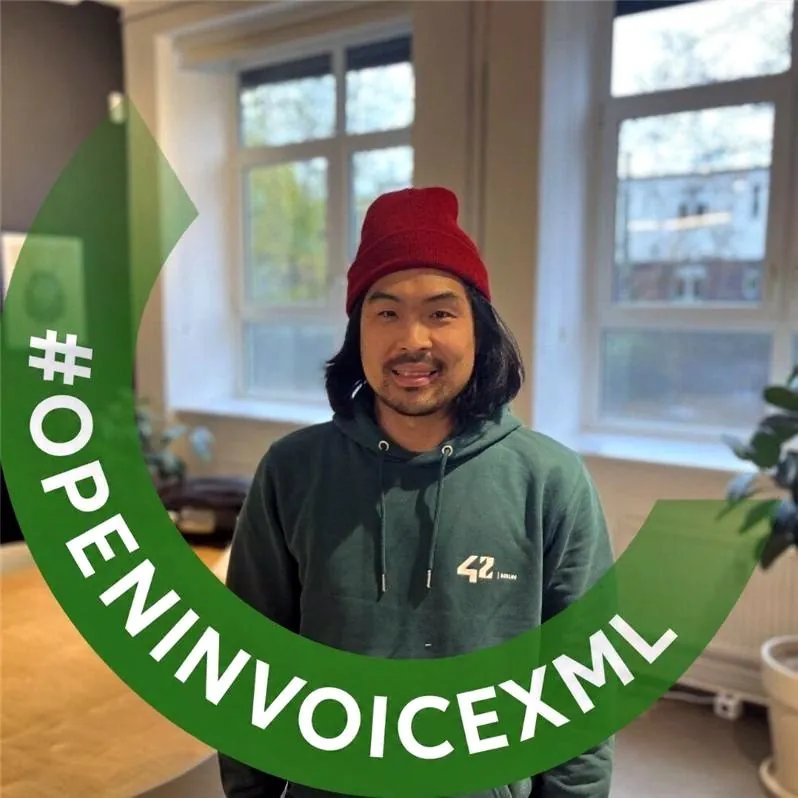
Users can create invoices on the website without a separate account, and other developers can use the project’s open-source engine to add electronic invoicing features to their own programs or services.
It is necessary to distinguish between the two services here: InvoicingU is the commercial invoice management service Kim runs, where the core is storing customer info and managing recurring tasks. Conversely, OpenInvoiceXML is a project that makes the electronic invoice generation/validation technology public so other developers or companies can use it. The German government’s grant is paid to this open-source project, not directly invested in the commercial service InvoicingU.
Q. You were developing a commercial service; why did you make the core technology open-source?
“I already had the code I developed at InvoicingU. I thought it would be good to open-source that and apply for the Prototype Fund.”
While opening the code means competitors can also use it, he views it from a different perspective.
“I think it’s important to get people to use it as much as possible first. If it becomes cumbersome for people to install and update it themselves later, I’m also considering a service where I manage it in the cloud and provide automatic updates.”
He explains that he is considering a model where the open-source software is free, but he generates revenue through auxiliary services like hosting, maintenance, and updates. It’s not a finalized business model yet. Rather than monopolizing the technology, it’s an attempt to broaden the scope of its application and create additional business opportunities on top of it.
Why the German government invests in individual developers’ time
The Prototype Fund that Kim received support from is an open-source software support program operated by the Open Knowledge Foundation Deutschland, funded by the German Federal Ministry of Education and Research (BMBF). The program’s most notable feature is its focus on individuals and small teams attempting to develop socially useful technology, rather than companies that have already succeeded in commercialization.
While typical startup support programs emphasize corporate registration, business plans, revenue projections, and job creation, the Prototype Fund supports the time and costs required to develop new open-source technology.
Selected projects must be released under an open-source license. The goal is to ensure that technology developed with government support can be used by other developers, institutions, and companies.
Q. How exactly does the Prototype Fund provide support?
“They provide a grant to allow development for six months. I am receiving the maximum amount. Instead of telling them where I will spend how much—like typical startup funding—they support me based on the time I invest in the project.”
Kim explained that he receives the grant on a quarterly basis. The program’s philosophy is evident in the fact that it supports the time actually spent on development.
However, this doesn’t mean the funds can be used freely without conditions. According to official guidelines, the grant is calculated based on approved labor and overhead costs, covering up to 95% of the total project budget. The remaining 5% minimum is the applicant’s own contribution. There are also obligations for project execution and administrative reporting. It is not a system where the government takes equity in the founder’s company. It is a structure that supports development activities on the condition that the technology is made public and its social utility is increased.
The 28 projects selected for support in 2026 cover various fields, including artificial intelligence, software infrastructure, accessibility, cybersecurity, environment, and education. Kim was the only Korean among them.
“I looked up the projects selected so far, and I hadn’t seen any Korean names. So, I think I might be the first Korean to receive this support.”
“What users actually do is more important than just building code”
The Prototype Fund is not just a program that provides funding. It provides coaching on project management, user experience (UX), branding, and entrepreneurship, and creates opportunities to interact with other open-source developers. Kim recently received coaching provided by the program. As external experts reviewed his project, they advised him to think from the user’s perspective rather than the technology itself.
“It’s easy to focus on explaining what you’ve implemented technologically, but I learned that it’s more important to consider how it helps the user.”
The coaching focused on keeping the product as simple as possible for freelancers, small business owners, and non-profits, and continuously gathering feedback from actual users. Factors like being able to use it without an account, it being open-source, and prioritizing privacy and ease of use are also being reviewed as elements that can differentiate his service from existing solutions.
OpenInvoiceXML is currently validating over 50 invoice cases and scenarios through more than 1,000 automated tests. However, the task he must solve in the next phase is not just technical perfection. He needs to ensure that people who are not developers can easily create invoices and that other software developers can integrate the open-source engine into their own systems. This is why he is currently challenging himself for the second stage of Prototype Fund support.
A second chance decided by a 3-minute pitch
On October 9, Kim participated in the second-round support review for the Prototype Fund. The judges gathered in a meeting room, and he gave his presentation online from home. He was given only 3 minutes, followed by about 4 minutes of Q&A. There were three questions he had to answer.
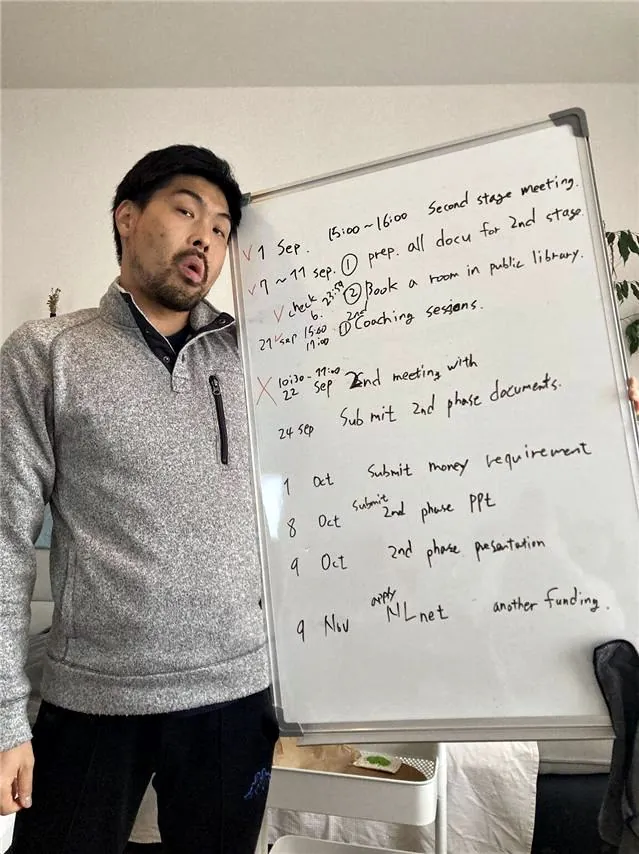
“Why is additional support necessary? What do you intend to achieve in the next stage? And how will you execute it?”
While the first stage of support focused on developing the electronic invoice generation technology to work reliably, the goal for the second stage is to improve the product based on actual user feedback.
“In the first stage, I focused on making the technology work properly. Now, I believe I need to prove that people can actually use it easily.”
If selected for the second round, he will be given an additional four months of development time, from December 2026 to March 2027. The support limit for an individual project in the second stage is 31,667 euros. Selection for the second stage is not automatic; it requires a separate review process. Kim is currently awaiting the results.
Can Koreans also apply?
Another feature of the Prototype Fund is that it does not require German citizenship. Koreans can also apply. However, regardless of nationality, applicants must meet requirements regarding residency in Germany and the application entity. Individual applicants must be at least 18 years old and reside in Germany, while team applications must have a structure permitted by the program, such as a German GbR. Kim received the support even without being fluent in German.
Q. Wouldn’t you need to be good at German for a German government program?
“I was worried at first, but I wrote the application in English. Most of the programs conducted after being selected are in German. However, they do provide translated materials in English.”
He mentioned that he only started studying German in earnest recently.
“I thought learning the development technology was more important first. Being good at German helps with getting a job, but if you have development skills, you can work in other countries besides Germany.”
As his experience shows, it is possible to apply and participate in the program in English. However, language requirements may vary depending on the application stage, and some administrative documents submitted to the German government after selection require German writing. The 2026 second-round application guide also specified that while German is the default, non-native speakers are permitted to submit in English. Kim advised that if a founder is preparing to apply from Korea, it is best to resolve the residency issue in Germany first.
Q. Is it possible to apply while living in Korea?
“In my opinion, coming to Germany to live while applying would be the fastest way. You have to prepare various documents even after being selected.”
In reality, the formal application process verifies the applicant’s status and residency, project execution plan, and self-funding capability. Depending on residency status, one must also separately review whether self-employment or freelance activities are permitted in Germany.
A notable part of Kim’s startup journey is the preparation process before receiving government support. He didn’t just suddenly develop an electronic invoice solution and get government funding. Starting in 2023, he participated in 42 Berlin’s founder meetups and side-project communities, building various programs.
He developed programs such as an automated reservation system for coding school students, a platform connecting accommodation hosts and guests, a system that automatically generates PIN codes for smart door locks, and an online customer queue management system. He began developing InvoicingU in 2025. Afterward, he gained experience interning at the German pharmaceutical company Bayer, where he developed 15 prototypes related to AI and business automation.
On LinkedIn, while summarizing the journey to his Prototype Fund selection, he emphasized that it wasn't just about a single perfect project or...