

[BizHanKook] It has been confirmed that Korea Zinc's management, including Chairman Choi Yun-beom, recently had their appeal dismissed after challenging a court order to submit documents related to investments in the One Asia Partners fund. The order was issued during a 400.5 billion won shareholder derivative suit filed by Young Poong, alleging that the management caused losses to Korea Zinc by violating their fiduciary duty. This indicates that the legal battle surrounding the appropriateness of Korea Zinc's investment decisions and capital management continues.
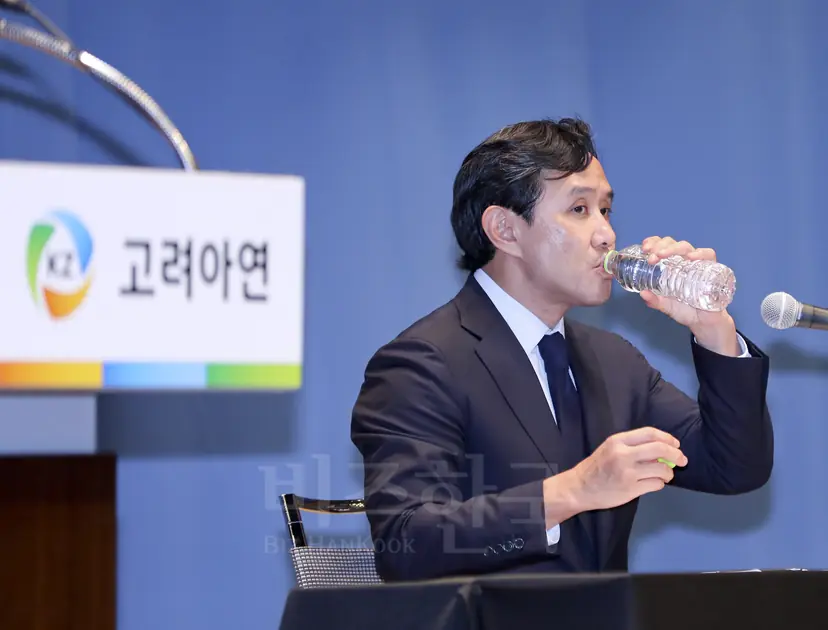
According to BizHankook's coverage, the 40th Civil Division of the Seoul High Court dismissed both immediate appeals filed by Korea Zinc, Chairman Choi Yun-beom, former Vice Chairman Noh Jin-soo, and President Park Ki-duck on the 4th. Previously, in May, the Seoul Central District Court issued two separate document submission orders regarding One Asia Partners fund investments and related corporate bond transactions during the shareholder derivative suit initiated by Young Poong. Korea Zinc and its management filed an immediate appeal against these orders in June.
The first document submission order pertains to materials related to the One Asia Partners fund, in which Korea Zinc invested. One Asia Partners is a private equity firm founded by Ji Chang-bae, a former elementary and middle school classmate of Chairman Choi Yun-beom. The court ordered the submission of fund investment proposals, operational plans, internal review and draft documents from Korea Zinc, records of capital execution, and reports on the fund's operational status.
The funds in question are Korea Growth No. 1 and Arbitrage No. 1. It is reported that Korea Zinc contributed 94.64% and 54.59% to these funds, respectively. Young Poong has raised suspicions that after Chairman Choi invested in Cheongho Comnet through a private investment partnership, some of the funds from Korea Growth No. 1 flowed toward Cheongho Comnet. The key issues are the appropriateness of the fund investment decisions and the extent of management's involvement.
The second document submission order concerns Korea Zinc's acquisition of corporate bonds from SWNC. The court ordered the submission of internal drafts, acquisition contracts, and collateral valuation documents regarding the 20 billion won SWNC corporate bond acquisition. SWNC is a newly established entity that acquired Sewon, a subsidiary of Cheongho Comnet, for approximately 20 billion won in 2020. Young Poong claims that Korea Zinc provided the funds for the acquisition of Sewon by purchasing SWNC corporate bonds at that time.
Young Poong also questions the subsequent repayment process of the SWNC corporate bonds. They allege that in 2021, Korea Zinc contributed approximately 25.3 billion won to the One Asia Partners Arbitrage No. 1 fund; when the fund paid 25.5 billion won for a capital increase in SWNC, SWNC used those funds to repay the corporate bonds held by Korea Zinc. Young Poong argues that this was a circular structure where Korea Zinc's investment money was used to repay existing debts through the fund.
The issues in this shareholder derivative suit are not limited to One Asia Partners fund investments. In January of last year, Young Poong filed a claim demanding 400.5 billion won in damages from Korea Zinc, alleging that Chairman Choi, former Vice Chairman Noh, and President Park violated their duty of care as fiduciaries and caused losses to the company during the processes of investing in the One Asia Partners fund, acquiring the U.S. corporation Igneo Holdings, and entering into an interior design contract with CS Design Group.
Young Poong has insisted on the need to clarify the flow of investment funds. On May 29, they urged for the investigation of these suspicions, citing the court's document submission order, a special tax investigation by the National Tax Service, and audits by financial authorities. Young Poong emphasized, "Objective verification is needed regarding the structure and judgment under which Korea Zinc's funds were executed, and how the interests of the company and shareholders were compromised in the process."
Korea Zinc has countered Young Poong's interpretation. In a statement on the same day, they emphasized, "The document submission order is by no means an acknowledgment of the truth of specific allegations or a judgment on illegality, nor is it a decision that accepts one side's claims." Their position is that the tax investigation and accounting audits are independent procedures, and that the relevant investments and capital management were normal business activities following legitimate decision-making processes.
Meanwhile, Young Poong is continuing legal battles in a separate shareholder derivative suit. In that case, Young Poong claimed damages of approximately 837 billion won against 10 directors, including Chairman Choi, alleging that Korea Zinc caused losses to the company by conducting a tender offer to buy back its own shares at prices higher than the market rate to defend management rights in 2024. The Seoul Central District Court dismissed the claim on the 22nd of last month, stating that the directors' decisions did not exceed the scope of reasonable business judgment. Young Poong filed an appeal on the 30th of the same month.