

[비즈한국] The legal battle between family members surrounding LG Group Chairman Koo Kwang-mo (48) continues for two consecutive days. On the 3rd, the request for dissolution of adoption filed against Chairman Koo by his adoptive mother, Kim Young-sik (74), was rejected in the first trial. One day later, on the 4th, the appellate trial for the inheritance recovery lawsuit filed against Chairman Koo by Kim and her two daughters, LG Welfare Foundation Representative Koo Yeon-kyung (48) and Koo Yeon-soo (30), will begin.
The Seoul High Court’s Civil Division 8-3 will hold the first preparatory hearing for the appellate inheritance recovery lawsuit filed by Kim, Representative Koo, and Koo Yeon-soo against Chairman Koo on the afternoon of the 4th at 4:00 PM. The three family members filed the suit in February 2023, lost the first trial this past February, and appealed in March.
One day before this appellate trial began, the first-trial ruling in another family lawsuit was delivered. The Seoul Family Court rejected the lawsuit for judicial dissolution of adoption filed by Kim against Chairman Koo on the 3rd. Kim had filed for the dissolution of adoption in November 2024, while the inheritance lawsuit was ongoing. The specific reasons for the rejection were not disclosed in court. Even after the ruling, Kim expressed her intention to continue legal action, indicating that it is difficult to maintain the parent-child relationship with Chairman Koo.
The dissolution of adoption lawsuit and the inheritance recovery lawsuit involve different parties and issues. The dissolution of adoption case is one where Kim, acting alone, requested the termination of the legal parent-child relationship with Chairman Koo. Civil law allows for judicial dissolution of adoption if adoptive parents have been subjected to extremely unfair treatment by the adoptee or if there are significant reasons that make it difficult to continue the parent-child relationship. Conversely, the inheritance recovery lawsuit involves not only Kim but also her two daughters as plaintiffs, disputing the division of the inheritance of the late Chairman Koo Bon-moo that took place in 2018.
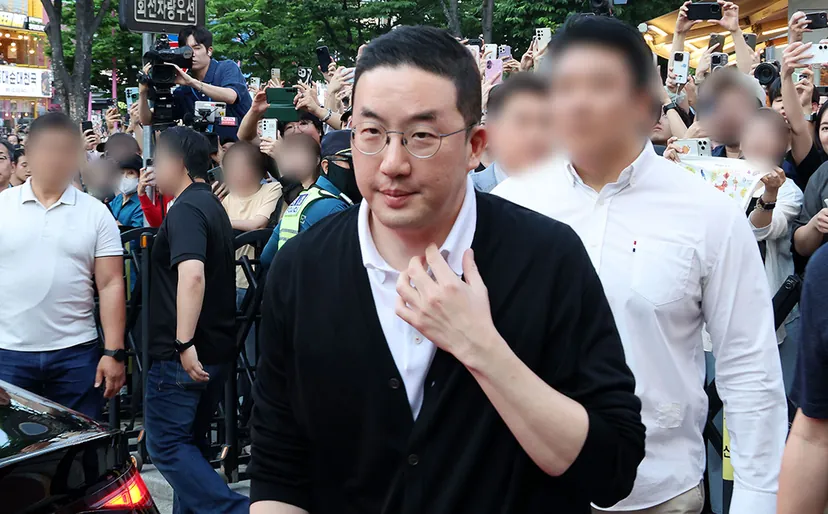
11.28% Stake in LG Corp. Left by Koo Bon-moo is Key… Current Value Approx. 2.3 Trillion Won
At the heart of the inheritance lawsuit is the stake in LG Group’s holding company, LG Corp. When the late Chairman Koo Bon-moo passed away in May 2018, he left behind 19,458,169 shares of LG Corp., which was an 11.28% stake at the time. Of this, Chairman Koo Kwang-mo inherited 15,122,169 shares (8.76%). The eldest daughter, Representative Koo Yeon-kyung, inherited 3,464,000 shares (2.01%), and the second daughter, Koo Yeon-soo, inherited 872,000 shares (0.51%). Kim Young-sik did not inherit any shares of LG Corp.
Before the inheritance, Chairman Koo already held a 6.24% stake in LG Corp. By additionally inheriting the late chairman's 8.76% stake, his ownership increased to 15% at the time, making him the largest shareholder. As the holding company, LG Corp. controls the major subsidiaries, so this inheritance was the core process in completing the fourth-generation management system of LG Group.
The value of the LG Corp. stake inherited in 2018 has grown larger based on current stock prices. LG Corp.'s closing price on September 3 was 118,300 won. Applying this to the 19,458,169 shares left by the late Chairman Koo Bon-moo, the total value is approximately 2.3019 trillion won. The 15,122,169 shares inherited by Chairman Koo are worth approximately 1.7889 trillion won, Representative Koo Yeon-kyung's share is worth approximately 409.8 billion won, and Koo Yeon-soo's share is worth approximately 103.2 billion won. These are simple valuations based on current stock prices and differ from the actual value at the time of inheritance or the valuation under tax law.
Beyond the LG Corp. shares, the total assets left by the late Chairman Koo Bon-moo were known to be worth about 2 trillion won at the time. According to LG, Kim and her two daughters inherited assets worth approximately 500 billion won, including a portion of LG Corp. shares, financial investment products, real estate, and artworks.
However, the three family members claimed that there were issues in the inheritance process. They argue that when they agreed to the division of the inheritance, they believed a will by the late Chairman Koo Bon-moo existed, but later learned that no such will existed. As there is no will, their position is that the assets should be re-divided according to the statutory inheritance ratio.
Under civil law, a spouse is entitled to a statutory inheritance share 50% larger than that of a child. Applying this to the four people—Kim, Chairman Koo, Representative Koo Yeon-kyung, and Koo Yeon-soo—the spouse Kim's ratio is 1.5, while each of the three children is 1. The three family members argue that the inheritance, including the LG Corp. stake, should be redistributed according to this statutory ratio.
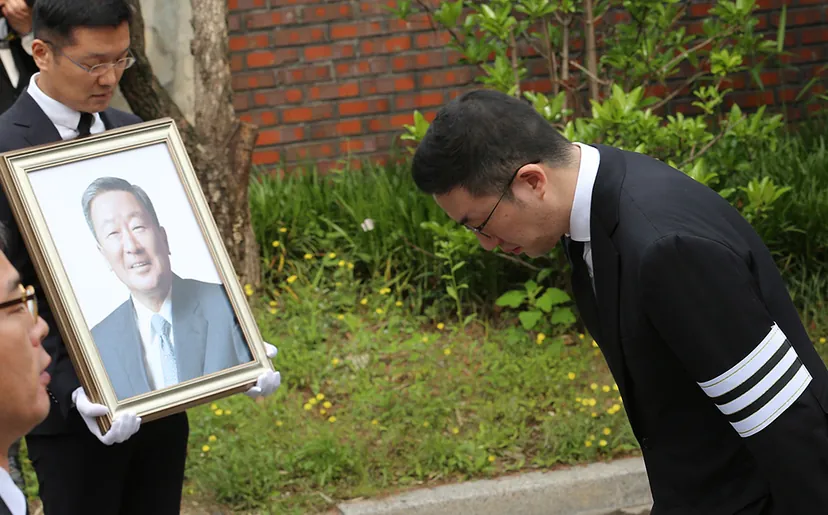
1st Trial: "The Three Family Members Also Knew About the Inheritance Details"… Will the Appellate Court Overturn It?
However, the first-trial court did not accept the claims of the three family members this past February.
The Seoul Western District Court determined that the inheritance division agreement was validly drafted. It viewed that Kim and Representative Koo Yeon-kyung had received reports multiple times from finance team employees regarding the contents of the inherited assets and the method of division, and that they had participated in the inheritance consultation process.
The court focused on the fact that the three family members had expressed their specific intentions regarding how to divide the individual inherited assets. The fact that the initially drafted inheritance division agreement was changed to reflect the demands of the plaintiffs was also used as evidence. The court also ruled that the act of finance team employees signing the agreement on behalf of the three family members was legal.
The court also did not recognize the claim that the three family members were deceived by the finance team into agreeing to the inheritance. Based on testimonies in court and evidence, the court determined that the late Chairman Koo Bon-moo had expressed his intention to make Chairman Koo Kwang-mo his successor and hand over management assets, and that family consultations took place based on this. Consequently, it found that the inheritance agreement could not be invalidated on the grounds of error or fraud.
However, not all of Chairman Koo’s arguments were accepted in the first trial. Chairman Koo’s side argued that because the lawsuit was filed years after the inheritance was completed, the statute of limitations for the right to claim inheritance recovery had expired. The court did not accept this. In other words, the claim was not dismissed because the time to file the lawsuit had passed, but because the court judged the inheritance division agreement to be valid.
For the three family members to overturn the result in the appellate trial, they must effectively shake the first trial’s recognition of facts and judgment. Key issues likely to be revisited include whether they sufficiently understood the specific details of the inherited assets, whether they lawfully delegated authority to the finance team, and how the explanation regarding the existence of a will affected the inheritance agreement.
The three family members filed an appeal on March 4, contesting the first-trial ruling. Prior to this, Chairman Koo had requested the court to restrict access to the ruling, stating that the document contained specific details regarding the family’s private life and the inheritance.
This inheritance dispute is drawing particular attention because it goes beyond a simple family property dispute and touches upon the governance structure of LG Group. Chairman Koo Kwang-mo is the biological son of Koo Bon-neung, Chairman of Heesung Group and brother of the late Chairman Koo Bon-moo. After losing his only son in an accident in 1994, the late Chairman Koo Bon-moo adopted his nephew, Chairman Koo, in 2004 to ensure group succession. The succession structure was formed according to the LG family's principle of succession by the eldest son.
After the late Chairman Koo Bon-moo passed away, most of his stake in the holding company was transferred to Chairman Koo. Even if the claims of the three family members are accepted and the division of the inheritance is subject to re-evaluation, it cannot be concluded that Chairman Koo would immediately lose his status as the largest shareholder of LG Group. This is because Chairman Koo held a stake in LG Corp. even before the inheritance. However, as there is a possibility that Chairman Koo's personal stake could decrease while the stakes of Kim and her two daughters could increase, changes could occur in the internal shareholding structure of the owner family.