

[비즈한국] The 'Korean Art Support Project' Season 12, an artist support program aimed at cultivating the fertile soil of Korean art, begins now. This project is now recognized within the art world as a meaningful event for discovering and nurturing artists. It has earned a reputation among artists as a project they aspire to participate in. The core keyword that the 'Korean Art Support Project' has pursued from the start is 'the acceptance of diverse flows in Korean art and the pursuit of developmental change.' As a result of these principles, it is credited with establishing a unique perspective on contemporary Korean art.
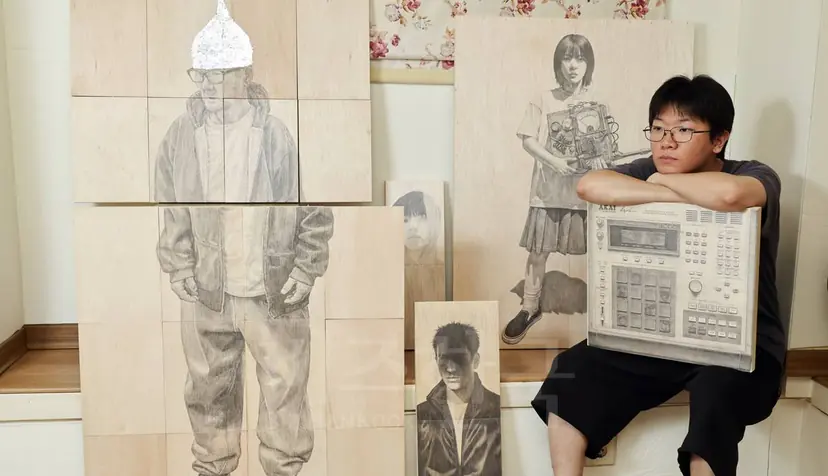
Comics are a treasure trove of imagination. Webtoons, the comics of the digital age, serve as the vanguard leading the pop culture of our time. Many hit films and dramas are based on webtoons. There is nothing like comics for extracting a creator's imagination exactly as it is. Exploring beyond time and space, or venturing into the afterlife or outer space, have all been attempted in comics, broadening people's perspectives.
Leonardo da Vinci, the Renaissance man who provided the foundation for many scientific civilizations we enjoy today, also left behind comic-like imagination in his countless notebooks. From complex inventions like cars, airplanes, helicopters, cranes, excavators, tanks, cannons, and submarines to trivial daily items like glasses and watches, as well as large-scale business projects like urban design and the construction of underground water systems, all were the results created by his comic-like imagination.
There are no exact records of when or where comics began. It is generally believed that they emerged from countries where comics have flourished, such as France, the United States, or Japan. We know that various comic techniques we see today originated in 19th-century Japan. These include 'fingerprints' that capture emotional expressions or thoughts, and simple lines drawn to represent invisible or non-constant natural phenomena (such as airflow, wind, or waves).
Bachelor of Fine Arts (Sculpture), College of Arts, Kookmin University
In the case of Japan, often called the land of comics, there was a style from the 8th to 10th centuries that combined text and pictures to convey stories. This is the 'Emaki,' story scrolls depicting ancient Japanese novel forms known as 'Monogatari.' Such traditions connected to the Ukiyo-e (woodblock prints depicting the secular world during the Edo period) that appeared in the 17th century, and later to comics and animation, forming the basis of modern Japanese art.
Comics have influenced art since 19th-century Impressionism and established themselves as a technique in 20th-century art. Roy Lichtenstein, who became a master of Pop Art by making comic techniques his own style of expression, is a representative example. Several artists in Korea have also followed this lead and gained popularity.
Kim Min-ki also uses comics as the foundation of his creative work. However, his path is entirely different from Pop Art artists who adapt comic techniques into their own language of expression.
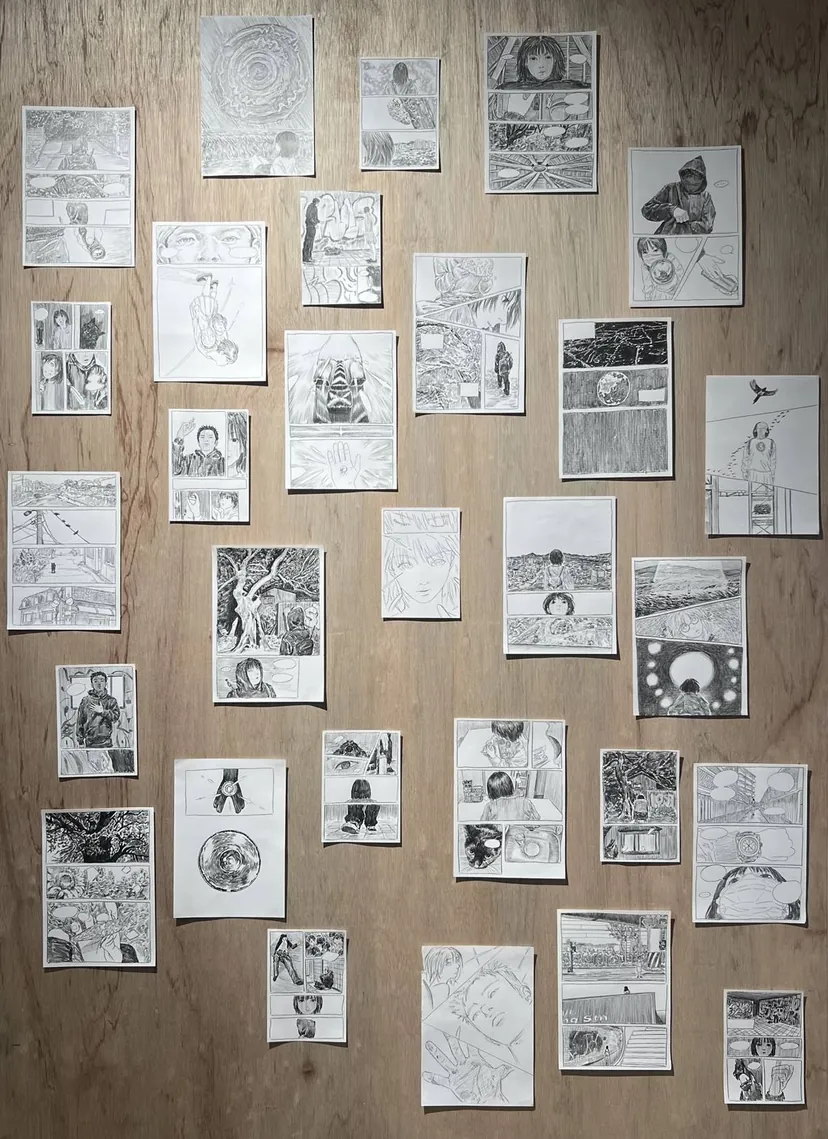
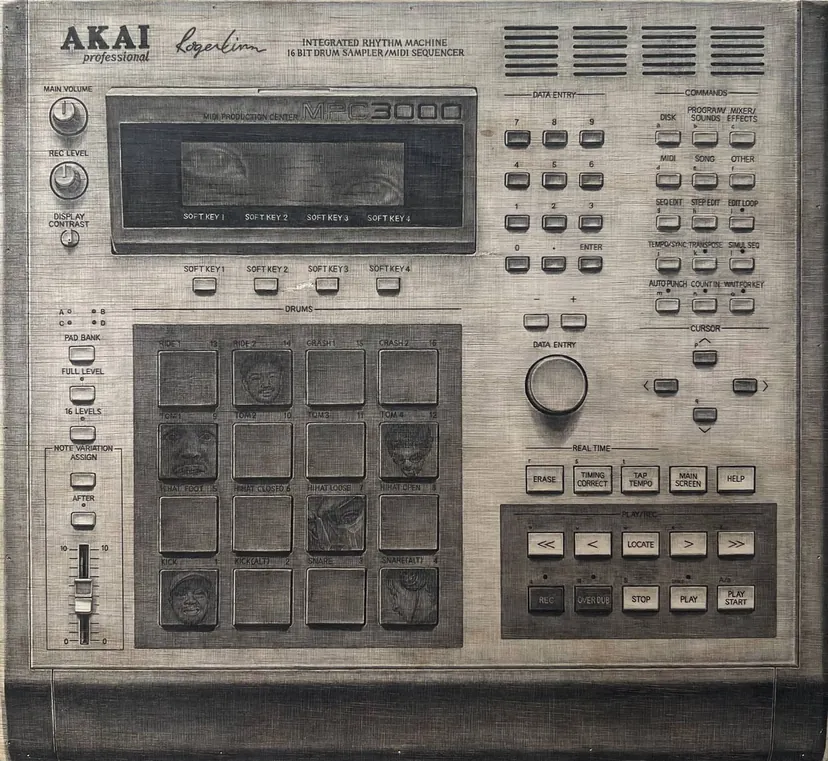
Kim Min-ki's painting is not Pop Art. It is a monotone painting with excellent realistic ability. He is pioneering the intersection of painting and comics through his own painterly vocabulary. He draws the comics himself, turns them into books, and expresses the characters appearing in them implicitly with pencil. In his exhibitions, the paintings are hung on the wall, and the comic books are displayed in front of them.
He wants viewers to see the comics first before looking at the paintings. This is a mode of expression he is attempting for the first time. He calls himself a 'Manganist,' someone who pursues a complex method of comics and painting. Therefore, the new world of artistic expression that Kim Min-ki will create is highly anticipated.