

[비즈한국] Kim Dong-yoon (33), the eldest son of Kim Nam-goo (63), Chairman of Korea Investment Holdings, has been promoted to Managing Director at Korea Investment & Securities. The financial sector views Managing Director Kim Dong-yoon as the clear successor to Chairman Kim Nam-goo. This is because, among the Chairman's children, only Managing Director Kim is currently involved in management, and there are no significant opposing factions that could threaten his succession. However, for Managing Director Kim to succeed to the company, a plan for equity succession must be established. The value of the Korea Investment Holdings stake held by Chairman Kim exceeds 1 trillion won by a significant margin. If the shares are transferred via lifetime gifting, a massive inheritance tax burden would arise.
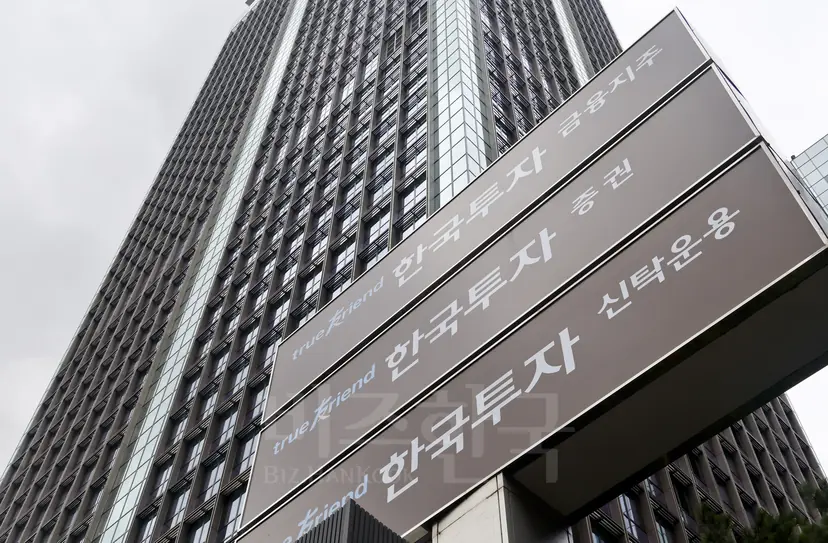
According to the financial sector, Kim Dong-yoon was promoted to Managing Director in charge of planning for the Management Planning Division at Korea Investment & Securities this past August. While Korea Investment & Securities maintains that this promotion is unrelated to the succession of management rights, the financial sector widely believes that Managing Director Kim Dong-yoon has begun his formal management training.
Chairman Kim Nam-goo has one son, Managing Director Kim Dong-yoon, and one daughter, Kim Ji-yoon. Unlike Managing Director Kim, who is gaining visibility following his recent promotion, Kim Ji-yoon has almost no public record of involvement. While it is not impossible that Kim Ji-yoon could join the Korea Investment Holdings group in the future, Managing Director Kim Dong-yoon is currently considered the most likely successor.
The remaining task is the succession of equity. The largest shareholder of Korea Investment Holdings, the group’s holding company, is Chairman Kim Nam-goo, who holds a 20.70% stake. Managing Director Kim Dong-yoon’s stake in the company is a mere 0.60%. Since it would be difficult for Managing Director Kim to inherit the status of largest shareholder with his current stake alone, the method of succeeding Chairman Kim’s shares is a key variable.
If the shares are received as a gift, a massive tax must be paid. A top marginal tax rate of 50% is applied to gift taxes when the tax base exceeds 3 billion won. Based on the closing price of Korea Investment Holdings (ticker: Korea Finance Holdings) on October 15, which was 146,000 won, Chairman Kim Nam-goo’s stake is valued at approximately 1.684 trillion won.
If a 20% valuation premium for the largest shareholder is applied, the valuation swells to approximately 2.0084 trillion won. While the exact tax amount cannot be determined now—as actual gifting would require reflecting the average stock price before and after the gift and various deductions—assuming the entire stake is gifted at once, the tax burden could reach around 1 trillion won.
For this reason, both Chairman Kim Nam-goo and Managing Director Kim Dong-yoon are inevitably influenced by the stock price at the time of the transfer. Korea Investment Holdings' share price has been on a downward trend recently. Although it surpassed 300,000 won at one point in February of this year, it currently hovers in the mid-100,000 won range.
Yet, they cannot hope for a falling stock price. If the share price drops, it could invite the wrath of numerous retail investors. In fact, Korea Investment Holdings has been increasing its dividends. The total dividend payout for the 2024 fiscal year was 232.8 billion won, which increased to 507.8 billion won for the 2025 fiscal year.
However, some retail investors point out that given the record-breaking performance last year, the shareholder returns fall short of expectations. The dividend payout ratio for Korea Investment Holdings in 2025 is around 25.1%, whereas competitors like Samsung Securities reach 35.5% and NH Investment & Securities reach 47.3%. Although Mirae Asset Securities has a relatively lower payout ratio, its board of directors approved a shareholder return plan worth 635.4 billion won this February.
Because Korea Investment Holdings is a holding company rather than a brokerage firm, direct comparison with those companies can be difficult. However, considering that most of its revenue comes from dividends from subsidiaries like Korea Investment & Securities, many argue that it should be compared with the brokerage arms of other financial groups.
Some view the issue of Chairman Kim Nam-goo’s equity succession in connection with the company’s shareholder return policy. Korea Investment Holdings has long been criticized for being stingy with shareholder returns. Jung Tae-joon, an analyst at Mirae Asset Securities, stated in a report last July: “While Korea Investment & Securities has been asked to expand shareholder returns, it has focused on growth as its primary goal and has avoided discussing returns. Unlike competitors in the same environment, the fact that it is the only one not communicating about shareholder return plans raises suspicions that this is due to unresolved inheritance issues.”
Perhaps mindful of such criticism, Korea Investment Holdings presented several points regarding shareholder returns in its "Implementation Status of Corporate Value Enhancement Plan" released this April, including: a gradual increase in the dividend payout ratio, maximization of profitability and expansion of the absolute scale of returns, and efforts to meet requirements for separate taxation for dividends by the 2028 fiscal year. At the very least, this demonstrated a commitment to shareholder returns.
The recent decline in Korea Investment Holdings' share price has created a favorable environment from the perspective of family succession. Some in the securities industry believe the stock price will rise in the long term. Yuanta Securities set a target price of 317,000 won for Korea Investment Holdings. Woo Do-hyung, an analyst at Yuanta Securities, stated, "Korea Investment Holdings achieved a performance surprise in the first and second quarters due to its strong management capabilities," adding that "it is judged that verification of management ability in the sluggish stock market environment of the third quarter is necessary."
Chairman Kim Nam-goo was born in 1963, and it is difficult to conclude that he must rush the succession immediately. However, since the succession must eventually take place, he cannot ignore the taxes. Yet, if the stock price remains low, criticism of the owner family’s management could mount, resulting in negative public sentiment. For Chairman Kim, this creates a dilemma where a rise in the stock price could increase the future gift tax burden, but he cannot hope for a decline in the stock price either.