

[BizHanKook] KG Mobility has shifted to a deficit, recording an operating loss of 29.8 billion won in the third quarter of this year. The decline in profitability is primarily attributed to sluggish domestic sales and the burden of fixed costs associated with retooling production lines for new vehicles. Conversely, overseas sales have increased, leading to a higher reliance on exports. KG Mobility plans to pursue a performance turnaround by expanding its KD (Knock Down) business, focusing on emerging markets, and launching the new SE10 vehicle (project name). Improving cost structures and the successful market entry of the SE10 are key factors for recovering profitability moving forward.
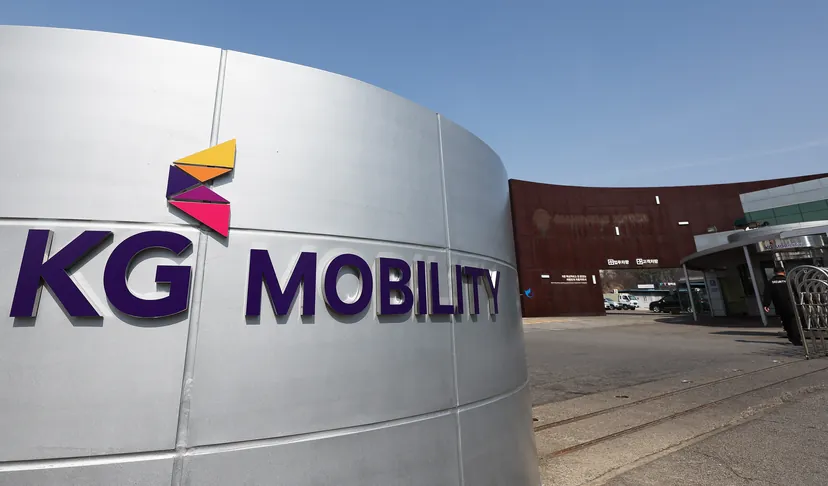
KG Mobility announced that its revenue for the third quarter of this year was 994.1 billion won. This represents a 16.4% decrease compared to the 1.1889 trillion won in revenue recorded in the third quarter of last year. The decline is interpreted as a result of recent weakness in the domestic market, with sales volume dropping 16.6% from 29,116 units in Q3 last year to 24,274 units in Q3 of this year.
A bigger concern is profitability. While KG Mobility posted an operating profit of 3 billion won in the third quarter of last year, it shifted to an operating loss of 29.8 billion won in the same period this year. Essentially, the 30.5 billion won in operating profit achieved in the first half of the year was mostly wiped out by the Q3 loss.
KG Mobility explained, "The preparation for the new vehicle (SE10) launch, including production line maintenance and reduced output, along with a slowdown in domestic demand, had an impact," adding, "Operating profit decreased due to the burden of fixed costs from production line maintenance in the third quarter and increased foreign currency translation losses resulting from a weaker exchange rate."
Because the automotive industry requires significant costs to maintain factories and production equipment, a decrease in production volume directly leads to deteriorating profitability.
Assessments suggest that the future performance outlook for KG Mobility rests on improving cost structures and the success of the SE10. Especially as the share of overseas sales increases, export-related costs and exchange rate fluctuations may act as major variables for profitability. Even if export volumes grow, actual profit contributions vary depending on logistics and local sales expenses. Financial burdens from exchange rate fluctuations cannot be ignored, and in fact, KG Mobility cited this as one of the causes of its poor third-quarter profitability.
To expand export volumes, KG Mobility recently launched its brand in Myanmar in August and entered the Ethiopian market in September using the KD (Knock Down) method. The company stated it plans to continue expanding its KD business, targeting emerging markets such as Saudi Arabia, Vietnam, and Cambodia.
- KD (Knock Down)
- A method of exporting vehicle components or semi-finished products rather than completed cars, which are then assembled locally for sale as finished products.
Analysts suggest this strategy stems from KG Mobility’s relatively narrow foothold in the South Korean market. The slump in domestic demand is evident in the performance data: domestic sales fell by 44.4%, from 12,611 units in the third quarter of last year to 7,010 units this year. In contrast, overseas sales grew by 4.6% during the same period, from 16,505 to 17,264 units. For KG Mobility to increase profitability through international markets, improving production efficiency is essential, and the expansion of the KD business is seen as a move toward that efficiency.
Expectations for the upcoming SE10 are also reported to be high. KG Mobility plans to finalize development of the SE10 this coming December. Since the company even overhauled production lines for this model, its successful market debut is a critical task for KG Mobility.
Song Sun-jae, a researcher at Hana Securities, commented on KG Mobility, "Unfortunately, the third-quarter results suggest that the company has not yet sufficiently demonstrated the profitability and model competitiveness needed to overcome slowing demand and intensifying competition." He added, "It is crucial to see whether they can normalize prices and costs by early next year and how the sales performance will fare after the SE10 launch."
A KG Mobility official stated, "Short-term profits were affected by production line maintenance for new vehicle preparations and foreign currency translation losses, but thanks to increased exports and a higher proportion of eco-friendly vehicles, we maintained revenue growth and a cumulative operating profit surplus through the third quarter." They added, "We will continue to improve profitability by expanding exports through existing markets like Turkey as well as new markets, strengthening our response to domestic demand, and successfully launching the SE10 along with optimizing our cost structure."