

[비즈한국] K-Bank has recorded a decline in net profit in its first half-year earnings report since listing on the KOSPI. The decrease is attributed to a decline in non-interest income, such as gains from the sale of loan receivables. However, with interest income rising and asset quality improving thanks to the expansion of loans to small business owners, the market remains optimistic about the growth of the bank's core business. With the stock price remaining below its offering price since the IPO, attention is now turning to whether new growth engines, such as stablecoins and the expansion of corporate finance, will serve as catalysts for a share price recovery.
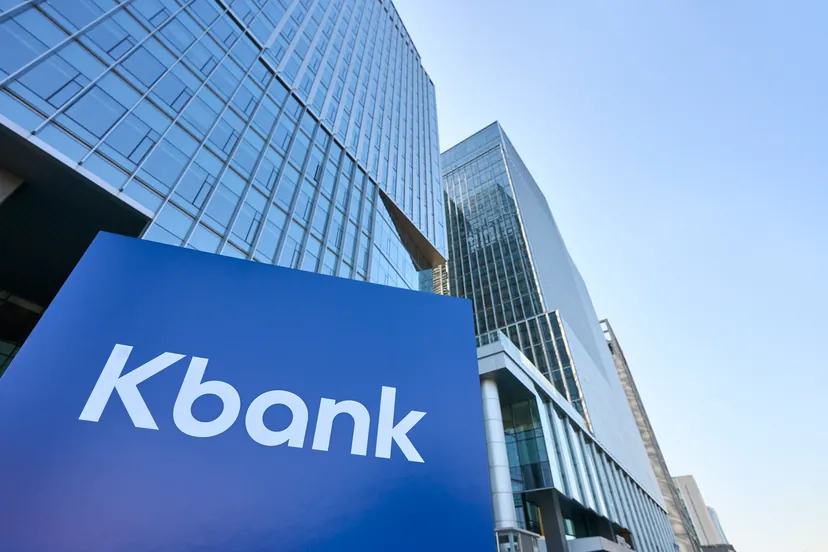
K-Bank announced its first-half earnings on July 30. Net profit for the first half of 2026 reached 60.1 billion KRW, a 29% decrease from the same period last year (84.2 billion KRW). Net profit for the second quarter of this year was 26.9 billion KRW, down 60% compared to the same period last year (68.2 billion KRW). K-Bank stated that the decline in net profit was influenced by lower gains from the sale of loan receivables (profit generated when a financial institution sells its holdings to another company).
Behind the drop in net profit is the negative growth of non-interest income. In the first half of 2026, non-interest income stood at 23.3 billion KRW, a 68% decrease from the same period last year (73.3 billion KRW). K-Bank explained, "The impact of lower bond sale gains was reflected. However, revenue from check cards, linked loans, and affiliated credit card fees has improved," adding, "To boost non-interest income, we will launch various app-tech services in the second half and strengthen platform advertising revenue through advertising partnerships."
What stands out in K-Bank's first-half performance is the increase in loans to small business owners. The outstanding balance for these loans rose 109%, from 1.582 trillion KRW in the first half of 2025 to 3.301 trillion KRW in the first half of this year. Asset quality also improved as the delinquency rate for small business loans decreased. The delinquency rate fell continuously from 0.93% in the first half of 2025 to 0.51% in the first half of this year.
The expansion of small business lending also contributed to higher interest income. Interest income in the first half grew 20%, from 211.6 billion KRW in the same period last year to 253 billion KRW this year. Thanks to the expansion of business loans, interest income grew despite government policies aimed at managing household debt. During the same period, the Net Interest Margin (NIM), a profitability indicator, rose from 1.38% to 1.59%. K-Bank explained, "Total loans grew by approximately 14% compared to the same period last year, and the NIM also improved due to the impact of market interest rates and better loan-to-deposit ratios."
Dependence on Upbit (operated by Dunamu) has also decreased. The proportion of K-Bank’s digital asset deposits has been on a steady decline since the third quarter of 2025. Digital asset deposits, which are funds held for cryptocurrency purchases, plummeted from 7.488 trillion KRW in the third quarter of 2025 to 3.735 trillion KRW in the first half of this year. Its share of total deposits fell from 25% to 14% during the same period.
Collaboration with Upbit is expected to continue. The account partnership between K-Bank and Upbit expires this October. During the earnings conference call held on July 30, Kim Min-chan, Head of K-Bank's Corporate Group, said, "The renewal process with Upbit is proceeding normally this year," adding, "We are also discussing corporate deposit and withdrawal transactions with Dunamu, as guidelines are expected to be released in the second half. We will continue to consult on business expansion in the future."
| Category | Details |
|---|---|
| Net Profit | 60.1 billion KRW |
| Deposit Balance | 26.6 trillion KRW |
| Loan Balance | 19.8 trillion KRW |
| Number of Customers | 16.45 million |
| Net Interest Margin | 1.59% |
This first-half performance report marks the first earnings disclosure since K-Bank's IPO. On March 5, K-Bank finally listed on the KOSPI after three attempts, with an offering price of 8,300 KRW. The problem is that while it succeeded in entering the stock market, its stock price has been sluggish. After sliding following its listing date, the price dipped to the 5,200 KRW range in May, rebounded to 7,200 KRW as of the closing price on June 17, but then fell again. As of July 31, the closing price was 5,590 KRW, down 22% from the IPO price.
Amid concerns from investors due to the decline in net profit, analysts suggest that the growth in interest income indicates potential in the core business. Lee Joon-hyung, head of K-Bank's Strategy Office, noted during the conference call, "The growth rate of loan assets was faster in the second quarter than in the first. Since assets increase toward the latter part of the quarter, we expect further growth in the third quarter," adding, "If interest rates rise in the second half, it is expected to have a positive impact on loan interest income." K-Bank CEO Choi Woo-hyung said, "As promised at the time of listing, K-Bank is sailing smoothly, securing sound growth and profitability."
K-Bank has announced plans to secure growth momentum in the second half through new business ventures related to stablecoins and the expansion of small business lending. During the second quarter, K-Bank conducted Proof of Concept (PoC) for blockchain-based overseas remittance technology in partnership with domestic and international firms. It signed MOUs with global blockchain firm Ripple in April and Hong Kong’s HashKey Group in July to build a Korea-Hong Kong remittance network. The goal is to refine service models based on PoC results and apply them in global markets.
To strengthen corporate lending, the bank is preparing a non-face-to-face loan service for small and medium-sized corporations with a target launch in 2027. Additionally, it is expanding its business real estate mortgage loan offerings to include townhouses, multi-family housing, studio apartments (officetels), and commercial properties, while also expanding the use of loans to include facility funding. A K-Bank official stated, "We will build a foundation for sustainable growth by securing a foothold in future financial areas such as the small business market, digital assets, and stablecoins."