

[비즈한국] On May 27, 2025, HYBE announced that it would sell its entire stake in SM Entertainment, valued at 200 billion won, to Tencent Music Entertainment (Tencent Music), a subsidiary of Tencent. The total transaction value reached approximately 243.3 billion won, with 2,212,237 shares (9.38%) sold at 110,000 won per share. This effectively meant HYBE offloaded all the stakes it acquired during the battle for management control of SM in February 2023 to Tencent.
Tencent's acquisition of SM shares was not a sudden move. Tencent Music has long collaborated with the K-pop industry by distributing music from major Korean agencies like Cube Entertainment in the Greater China region, and it has also shown interest in acquiring equity in these agencies. Through its subsidiaries, Tencent has gradually secured stakes in K-pop-related conglomerates, including YG Entertainment (4.30%) and Kakao Entertainment (4.61%). It is the third-largest shareholder of Kakao Entertainment, which owns Melon, Korea’s largest music platform, and the second-largest shareholder of SM Entertainment, considered the home of K-pop. Naturally, SM would be looking forward to expanding its influence in the Greater China region.

This was confirmed to some extent at the ‘2026 TME Live International Music Awards (2026 TIMA),’ held at Hong Kong’s Kai Tak Stadium on the 22nd and 23rd. The ceremony was hosted by Tencent Music Entertainment Group (TME). Domestic media outlets widely reported that many K-pop groups, including aespa, won numerous awards at the Tencent ceremony. While this seems like something to celebrate, there are points to consider, especially when thinking about the controversy surrounding the Grammy Awards' creation of an Asian Pop Music Performance category and BTS’s refusal to submit their work.
There are two key points. First, the TIMA awards are exclusively for overseas artists. This is why the titles include phrases like ‘Overseas Group of the Year,’ ‘Best Overseas Girl Group of the Year,’ ‘Best Overseas Boy Group of the Year,’ ‘Overseas Popular Group,’ and ‘Overseas Popular Stage.’ In other words, they separate singers from other countries, including K-pop acts, from Greater China artists, grouping them as “overseas” to be awarded separately. From a Korean perspective, it is essentially an awards ceremony for foreign singers.
Specific categories were created for K-pop. Two categories, ‘Global-K Artist’ and ‘Melon Music Choice,’ were established, the latter being a collaboration with Melon. Melon was absorbed and merged by Kakao Entertainment in 2021. In short, it is part of a business initiative linked to Melon, of which Tencent is the third-largest shareholder. One could guess the background of the winners, and that is exactly how it turned out.
The group with the most wins at the 2026 TIMA was aespa, while BTS and BLACKPINK were nowhere to be found on the list of winners. Aespa won ‘Best Overseas Girl Group of the Year’ and ‘Best Digital EP of the Year,’ and with the four members' solo tracks named among the ‘Top 10 Overseas Hits of the Year,’ they received a total of six awards. One might wonder if they are simply popular in the Greater China region, but their agency is SM Entertainment. In addition, eight SM-affiliated teams attended and received awards. Super Junior won ‘Most Influential Overseas Group of the Year,’ Girls' Generation’s Taeyeon won ‘Most Influential Overseas Singer of the Year,’ and NCT’s Taeyong won the ‘Starlight Artist Award.’ WayV received the ‘Asian Icon Group Award,’ RIIZE won ‘Trending Overseas Group,’ NCT WISH received ‘Breakthrough Overseas Group,’ and Hearts to Hearts won ‘Rising Overseas Group.’ It was a balanced distribution of both veteran and rookie artists.
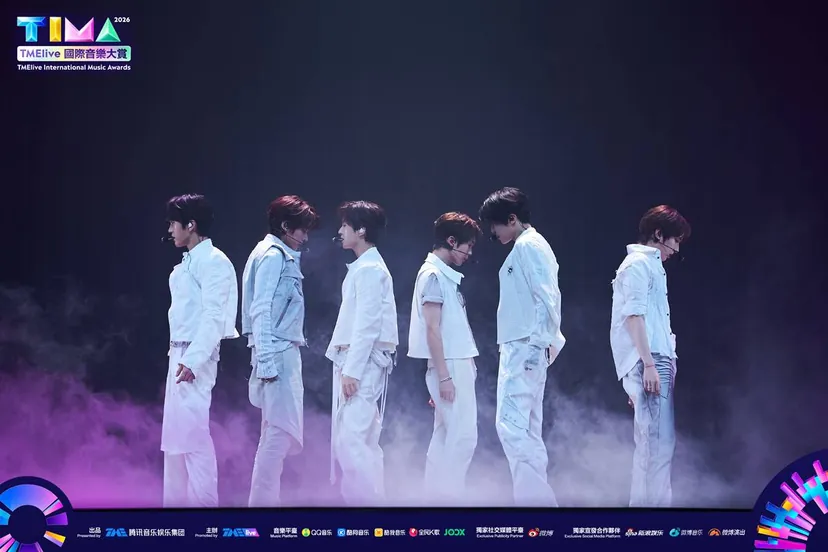
Of course, it wasn't just SM Entertainment artists who won. Stray Kids (JYP) won ‘Overseas Group of the Year,’ and IVE (Starstarship Entertainment) won ‘Overseas Popular Group.’ Tomorrow X Together (HYBE) won ‘Best Overseas Boy Group of the Year,’ and member Yeonjun also won ‘Breakthrough Overseas Singer’ as a soloist, marking a double win. KiKi (Starship Entertainment) won ‘Melon Music Choice,’ BABYMONSTER (YG Entertainment) won the ‘Global Icon Group’ category, ADOR (YH Entertainment) won ‘Most Anticipated Global Group,’ and AlphaDriveOne (WAKEONE) won ‘The Hottest New International Group.’ The virtual group PLAVE (VLAST) won the ‘Overseas Popular Stage Award,’ and EVNNE (HYBE-BELIFT LAB) received the ‘Global K-Artist Award.’
It is clear that many K-pop artists and teams were given opportunities to win. The positive side is that rookies and artists from small and medium-sized agencies were recognized and awarded overseas. However, one cannot help but question the authority of the ceremony and the value of the awards. This ceremony made it clear that it is for overseas singers only; it did not involve fair competition and evaluation against Chinese songs. This is likely a strategic move given the ongoing Hallyu ban (Hanhanryeong). Furthermore, the deeper the interest with Tencent, the higher the likelihood of winning. Ultimately, it shows that the awards are held for profit rather than for fair competition and acceptance.
In this respect, it is much the same as the American Grammys. The Grammys talk about openness on the surface but are closed-minded in reality, while China has clearly drawn its own lines. Whether in China or the U.S., the situation is the same: the bear performs the tricks, but the “Mr. Wang” (the wealthy Chinese proprietor) takes the money. This is something K-pop fans always find heartbreaking. However, nowhere else has a worldview and system capable of properly evaluating K-pop. Eventually, K-pop will have to create its own awards ceremony with trust and authority. This is a path that Korea must pave for itself.
The author, Kim Heon-sik, has been navigating the forest of pop culture phenomena since his 20s, driven by the expectation that there is a way to make the world a better place through culture. He continues to follow this same belief in the 21st century, an era powered by artificial intelligence and quantum computing.