

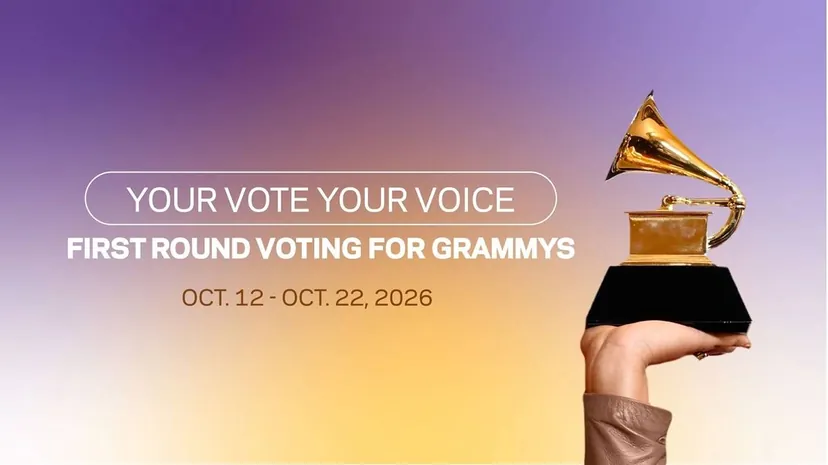
[비즈한국] The Recording Academy, which oversees the Grammy Awards, announced on June 16 (local time) that it would establish five new categories, including 'Best Asian Pop Music Performance,' starting with the 69th ceremony in February 2027. On October 12, the first round of voting for nominations began. However, artists from South Korea's four major agencies—HYBE, SM, JYP, and YG—were not included as candidates. This is because artists from not only BTS and Stray Kids, but also SM and YG, did not submit their work for consideration.
HYBE initially stated that BTS's refusal to submit was not a blanket corporate decision by HYBE, but rather a choice made by each individual label. In this atmosphere, not only HYBE's labels but other agencies joined in as well. This suggests that they all share the same sentiment as BTS.
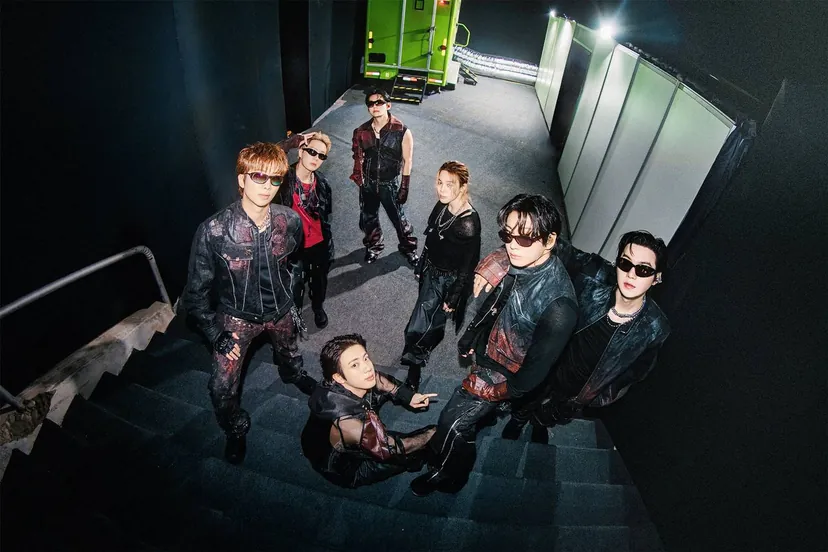
Some point out that the industry seems overly sensitive to the Grammy Awards, perhaps even boycotting them. However, there is a precedent with the Billboard Music Awards. The Billboard Music Awards established K-pop categories in 2023, including Top Global K-Pop Artist, Top Global K-Pop Album, Top Global K-Pop Song, and Top K-Pop Touring Artist. Since then, K-pop artists have been limited to winning only in these specific K-pop categories, excluding them from the main awards. Looking at the 2024 results, Seventeen won 'Top K-Pop Touring Artist,' Stray Kids won 'Top Global K-Pop Artist,' and BTS's Jungkook won 'Top K-Pop Album' for his solo album 'GOLDEN,' and that was all.
If the Billboard Music Awards are like this, the future of the Grammy Awards is clear. The Grammys have been even stingier toward K-pop than Billboard. A prime example is BTS. At the 63rd Grammy Awards in 2021, their global hit "Dynamite" was nominated for Best Pop Duo/Group Performance but did not win. In 2022, "Butter," which topped the Billboard Hot 100 for 10 weeks, was nominated in the same category but also failed to win.
In 2023, they were nominated in three diverse categories, raising expectations. They were nominated for Best Music Video for "Yet To Come," and Best Pop Duo/Group Performance for their collaboration with Coldplay, "My Universe," which was also nominated for Album of the Year. However, even though the awards were placed late in the ceremony, BTS did not win, leading to harsh local criticism that the Grammys had merely used BTS for viewership ratings and buzz.
A sense of exclusion and barriers toward K-pop in general, not just BTS, has been palpable. In 2024, despite the success of K-pop artists like Stray Kids, NewJeans, Twice, and Seventeen—not to mention the solo activities of BTS members—on both Billboard charts and IFPI statistics, not a single one was nominated in any category. This trend remained largely unchanged for the 67th ceremony in 2025.
There was hope for change in 2026. K-pop-related songs were nominated in nine categories. 'Golden' by 'K-pop Demon Hunters' and Rosé's 'APT.' were considered strong contenders given their global hits. 'APT.' had already won 'Song of the Year' at the 2025 MTV Video Music Awards. Yet, neither song won. A bigger issue is that while 'Golden,' Rosé's 'APT.,' and KATSEYE's 'Gabriella' were all nominated for 'Best Pop Duo/Group Performance,' none of them won.
This indicates that the Grammys lack the awareness, identity, and systems to properly evaluate K-pop. In this context, the establishment of the 'Best Asian Pop Music Performance' category can be seen as a reflection of their sense of crisis. Consequently, it is unlikely that any K-pop artist will receive a main award at the 2027 ceremony. The intention to confine K-pop within the framework of 'Asian music' is all too apparent.
Above all, it is important to note that the refusal to submit to the Grammys was neither spontaneous nor coincidental. BTS did not attend this year's MTV Video Music Awards, even though they won three awards, including 'Song of the Year' and 'Best Group' (for the fifth time in total). It was an expected sequence of events. Before their military enlistment, the members expressed through their own channels that they felt too much focus was being placed on Billboard rankings and award ceremonies, and that they wanted to find their own identity and path. The fact that the tracks on their 5th studio album, 'Arirang,' are not as pop-oriented as 'Butter' or 'Dynamite' reveals that they are not concerned with immediate commercial results. They no longer need to be tethered to Billboard or the Grammys. The world's music culture has already shifted toward K-pop.
Music distribution channels are no longer major record labels or platforms. Not only the promotion of new artists but also the sharing and enjoyment of music are based on social media. In the post-COVID-19 endemic era, the leadership in the music industry and market has shifted from digital files and albums to concert tours. As face-to-face experiences become crucial, the focus has moved to various experiential programs and events, not just concerts. Only K-pop has successfully built this paradigm. The economic impact of BTS has already been proven worldwide; it surpassed the 'Taylor Swift effect' long ago.
There is more interest in the 'Fanomenon' awards to be held in Korea in 2027, where BTS and other major K-pop artists are expected to appear, than in the Grammys. Because K-pop's identity is rooted in fan culture, making fans the protagonists of the ceremony is the unique aspect of Fanomenon that distinguishes it from the Grammys. In that we are creating a ceremony culture centered on ourselves—no longer bound by Billboard #1s or Grammy wins—this could be the prelude to a cultural war.
Efforts are needed to deepen solidarity, communication, and networking so that not only the 4 major agencies but also small, medium, and startup agencies can actively participate. It is more important than ever to protect the fan-centered identity of K-pop, rather than letting it be swayed by industry stakeholders, and to build an independent position accordingly.
The author, Kim Heon-sik, has been walking through or navigating the forest of pop culture phenomena since his 20s with the expectation that there is a way to make the world a better place through culture. He continues on the same path with the same belief in the 21st century, an era powered by artificial intelligence and quantum computers.