

[BizHanKook] “To take the next leap forward, Korean games must actively leverage their unique history and culture.”
As the presence of Korean console games continues to grow in overseas markets, developers behind some of the world's biggest hits gathered in Korea. They advised that for Korean games to secure global competitiveness, they must embrace their cultural identity while creating content that resonates with international players. They also shared development strategies to enhance game quality, such as platform-specific optimization and user testing.
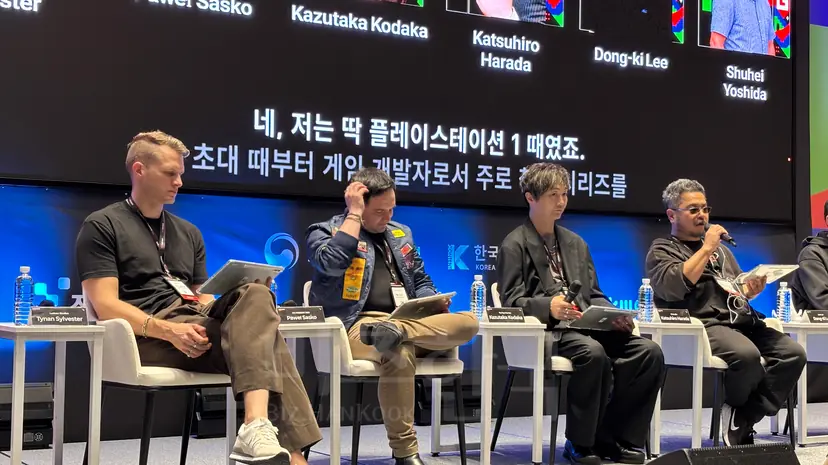
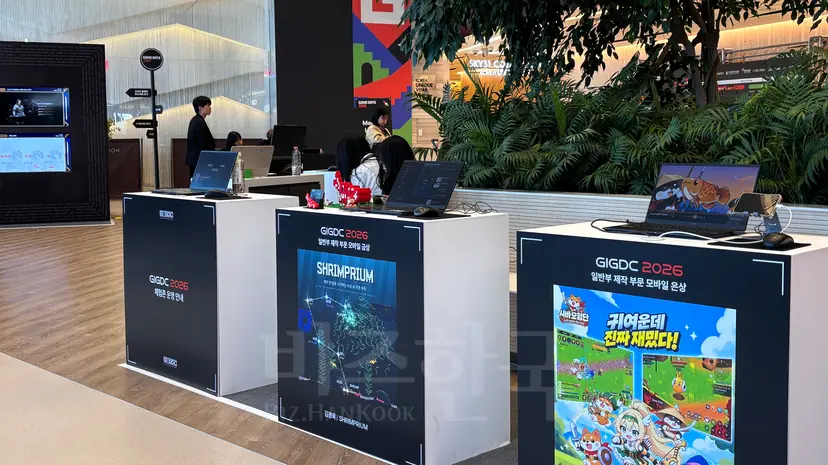
The Korea Creative Content Agency (KOCCA) hosted the ‘Console Game Developer Conference’ at the SKY31 Convention in Songpa-gu, Seoul, on the 9th. Global game developers served as speakers, including Paweł Sasko, Associate Game Director at CD Projekt Red (CDPR); Tynan Sylvester, Director at Ludeon Studios; Kazutaka Kodaka, CEO of Too Kyo Games; and Katsuhiro Harada, General Manager of VS Studio. From Korea, Lee Dong-gi, Chief Technology Officer (CTO) of Shift Up—the developer of ‘Stellar Blade’—also participated.
Embrace Korean Identity While Resonating with the World
Domestic game companies are launching a series of titles with consoles as their primary platform to target overseas markets. Historically, the Korean game market has grown centered around mobile and PC. According to the ‘2025 Korea Game White Paper’ published by KOCCA, the domestic console game market size was 1.1836 trillion won in 2024, accounting for only about 5% of the total game market. During the same period, the mobile game market reached 14.0707 trillion won.
However, there are significant hurdles to overcome to secure global competitiveness. As countless titles—ranging from high-budget AAA games to small indie games—compete, differentiated content is required to grab the attention of users. In particular, developers introducing new intellectual property (IP) face the burden of being unable to rely on the recognition of existing popular series.
During the panel discussion, international developers highlighted the unique history and culture of Korea as a way for Korean games to differentiate themselves in the global market. Paweł Sasko, Associate Game Director at CDPR, pointed to cultural identity as a competitive advantage for the next leap of Korean games. The ‘Witcher’ series, in fact, is a work that infuses Slavic mythology and folklore into its world-building.
Director Sasko advised, “When we were making ‘The Witcher,’ we worried about how to capture the Slavic feel and reveal the identity of it being a game made in Poland. I believe the next leap for Korean games lies in digging deeper into their cultural roots. You can find more materials from Korea’s history, culture, and its unique position in the world.”
However, it was noted that beyond just incorporating unique Korean culture into games, it is equally important to present it in a way that international users can understand and relate to. Tynan Sylvester, Director at Ludeon Studios, also emphasized the importance of translating unique cultural elements into a format easily understood by foreign players.
Director Sylvester advised, “The Polish history and mythology used in ‘The Witcher’ are relatively familiar materials to Western users, but Korean history and culture might feel unfamiliar to international players. You need to find elements that preserve the Korean identity while ensuring users from different cultures can understand and empathize with them.”
How Were Hits Made? Sharing Real-World Cases
The speakers also disclosed the techniques and trial-and-error processes used in creating actual hit titles. Since console games rely heavily on single-player experiences where users follow a narrative, elements like character development, story, and combat experience are crucial for immersion. The lectures introduced specific examples of how these elements were designed to increase the quality of the games.
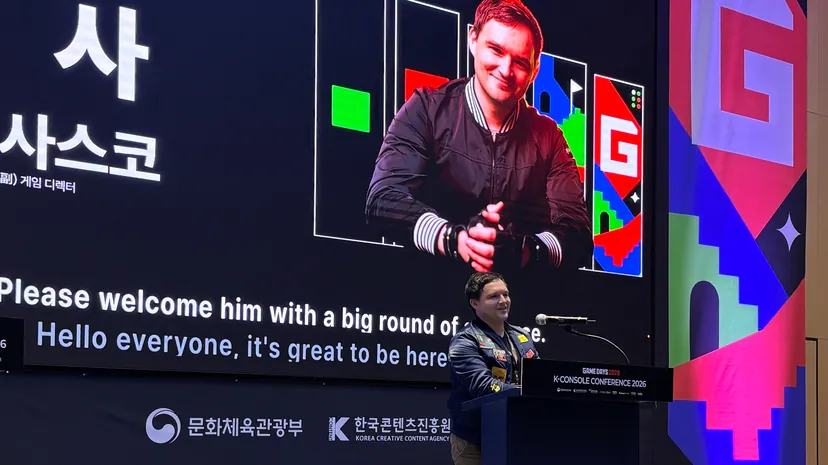
CDPR’s flagship title, ‘The Witcher 3,’ is an RPG where the plot and endings change based on the player’s choices. As players become the protagonist Geralt, they meet various characters and solve cases, often facing dilemmas where good and evil are difficult to distinguish. Director Sasko explained that they designed the game so that users become emotionally immersed in the story through these experiences.
During gameplay, they even gave emotional significance to actions themselves by utilizing existing combat functions in different contexts. Music, weather, and the pacing of events were also used as devices to stimulate the user’s emotions. The goal was for users not just to read or watch a story, but to experience the situation by acting within it.
The ‘Danganronpa’ series develops its story around character charm and unexpected incidents. In the game, high school students are trapped in a closed space where murder cases occur, and the user must deduce the culprit. It creates tension by setting up the premise that a colleague who lived with you can become a victim or a perpetrator at any moment.
CEO Kodaka shared, “When creating characters, we combine their background, appearance, and personality, then add their role in the story and unexpected incidents. In this process, we create twists between the character's established image and their actual actions, while maintaining their core values to ensure credibility.”
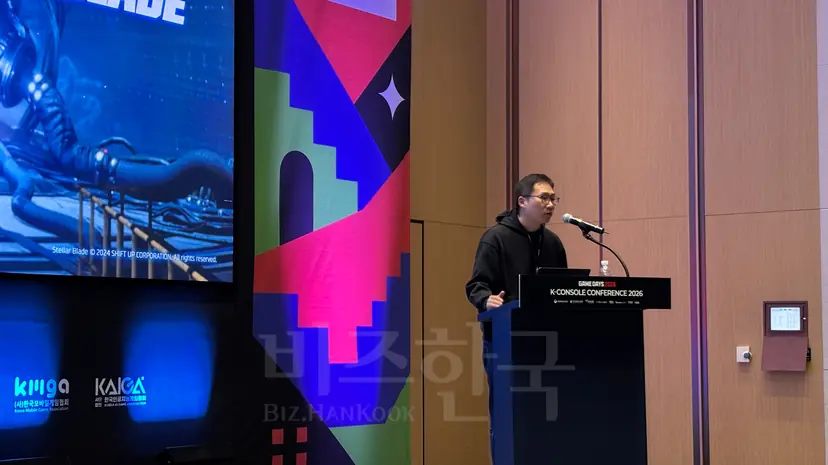
A case study of user testing to improve the quality of ‘Stellar Blade’ was also introduced. CTO Lee Dong-gi revealed that they had been verifying user reactions for about two years before the game’s release with the help of Sony and external research firms. They improved the game system by removing the penalty of losing skill points upon death and modifying the method for acquiring combat resources.
CTO Lee advised, “Many of the problems we tried to solve until the final stages of development were already pointed out in early usability assessments. As development schedules become tighter, it becomes difficult to fundamentally modify core systems, so it is necessary to conduct user testing as soon as the gameplay reaches a certain level of completion.”
The conference also featured a networking reception where key speakers, domestic game developers, and platform representatives participated, aiming to allow attendees to share development experiences and practical information, and explore future business cooperation opportunities.
Kim Sung-jun, Head of the Game New Technology Division at KOCCA, stated, “As the domestic console game development ecosystem grows, support that reflects the voices of on-site developers and practitioners is crucial. We will continue to strengthen support for domestic game companies entering the global console market based on the demands of the field.”