

[비즈한국] South Korea recently fell short in the Canadian Navy’s Future Submarine Project (CPSP), losing out to Germany. It is widely assessed that this outcome was less about the competitiveness of individual companies or the performance of the weapon systems, and more a result of strategic choices made with NATO (North Atlantic Treaty Organization) alliances in mind.
The Canadian bidding process symbolically illustrates the shift in the market environment facing K-Defense. As European nations accelerate rearmament following the Russia-Ukraine war, the increase in arms demand does not necessarily translate into export opportunities for non-European companies. Europe is focusing its massive defense budgets on boosting the production capacities of its own and regional defense firms, effectively erecting trade barriers for the defense industry.
Experts warn that while the "price-to-performance" ratio and "rapid delivery," which have been the core competitive edges of K-Defense, will remain valid for the time being, they could gradually diminish once European production capacity recovers. They point out that a new strategy is needed that goes beyond the existing export formula of supplying finished goods cheaply and quickly, encompassing local production, maintenance, repair, and overhaul (MRO), security cooperation, and the export of components.
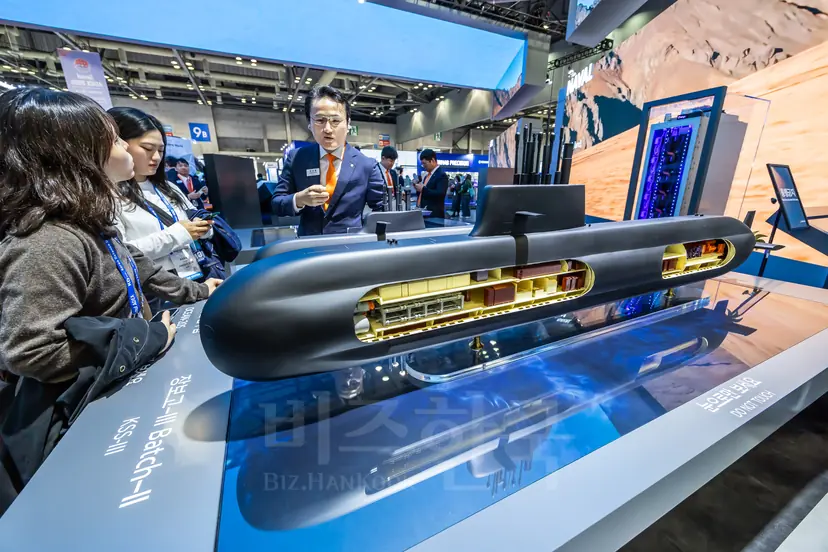
Not a Performance Gap, but a Strategic Choice… The ‘Barrier of Alliance’ Rises Again
The rapid growth K-Defense achieved in the European market was the result of excess demand created by the specific security crisis of the Russia-Ukraine war. Following the outbreak of the war in 2022, Eastern European countries bordering Russia, such as Poland and Romania, required large-scale weapon systems that could be deployed immediately amidst extreme security anxiety.
At that time, European defense companies struggled to meet the sudden surge in demand due to production lines that had been scaled back after years of arms reductions. In contrast, South Korea had maintained large-scale production bases to respond to the division of the Korean Peninsula. Leveraging this, Korea quickly filled the supply void in Europe with rapid delivery and price competitiveness.
However, the expansion of South Korean weapons into Europe paradoxically accelerated the "bloc-ization" of the European defense industry. In traditional defense powerhouses like France and Germany, the idea of "European strategic autonomy"—the belief that European security must be defended with European weapons and technology—gained traction. A consensus was formed that moving away from reliance on external supplies to address immediate weapon shortages, and instead rebuilding regional production bases, was necessary.
Jang Won-jun, a professor of Advanced AI Defense Industry Convergence at Jeonbuk National University, assessed, "The urgent demand and the need for rapid replenishment of specific weapon systems in the early stages of the Russia-Ukraine war were abnormal and unique circumstances. Now, years after the war broke out, we have entered a stage of 'normalization,' returning to alliance-centered transactions."
The Canadian submarine bid can also be interpreted in this context. Because NATO member states must perform joint operations in contingencies, they place high importance not only on weapon performance but also on compatibility with existing alliance systems, logistics support frameworks, and long-term security cooperative relationships. Even with superior performance and price, it is becoming increasingly difficult to overcome the limitations of being a non-regional country.
From Strategy to Finance… Europe Locks its Defense Doors
Europe’s move toward localization and bloc-ization of the defense industry is becoming entrenched through specific policies and financial systems, moving beyond mere slogans. The European Union (EU) is consecutively pursuing the European Defence Industrial Strategy (EDIS), the European Defence Industry Programme (EDIP), and the Strategic Activities for European security (SAFE) to incentivize regional procurement and joint production.
EDIS is the top-level strategy to rebuild Europe’s strategic autonomy and defense readiness by 2030. Its core is to lower dependence on third countries for weapons procurement and expand joint purchasing among member states to integrate the European defense technology and industrial base. The EU has set a target for member states to procure at least 50% of their defense acquisition budgets within the region by 2030, increasing this to 60% by 2035.
EDIP is a program that provides budget and execution power to this strategy. It plans to invest an initial €1.5 billion (approximately 2.2 trillion KRW) from 2025 to 2027 to support technology development, joint research, production expansion, and joint procurement for regional defense firms. Joint procurement projects receiving financial support under EDIP cannot have more than 35% of their weapon systems and components sourced from outside the EU or the European Economic Area (EEA).
SAFE is a financial support program worth €150 billion (approximately 220 trillion KRW) designed to facilitate joint procurement among European nations. It provides long-term, low-interest loans when member states jointly purchase items like ammunition, drones, missile defense systems, and artillery. However, to receive support, at least two or more countries must participate in the procurement, and at least one must be an EU member state. A condition also applies that at least 65% of production and procurement costs must be met within the European region.
These three systems handle strategy, subsidies, and financial support, respectively, to promote the purchase and production of European-made weapons. While they do not explicitly ban the entry of specific countries on the surface, they act as de facto trade barriers that make it difficult for non-European companies to enter the market independently by setting requirements for regional production ratios and component origins.
The Expiration Date of Cost-Effectiveness and Rapid Delivery… The Next 5 Years are the Crossroads
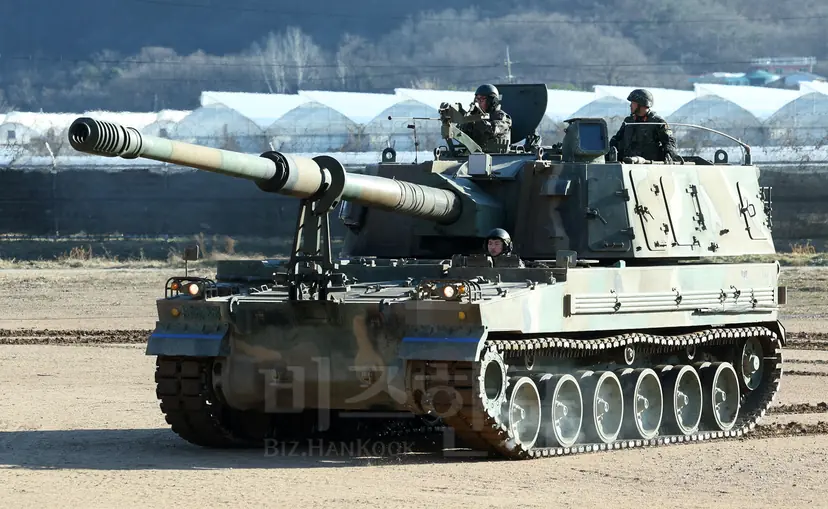
Europe’s objective in erecting trade barriers is not merely to exclude foreign weapons. It is intended to buy time for regional defense firms to expand production lines and secure skilled labor. Once European defense production capacity recovers during this period, the price competitiveness and rapid delivery that have been K-Defense’s greatest strengths will be less powerful as points of differentiation.
The Korea Institute for Defense Analyses (KIDA) analyzed in a report last year, "Key Contents of the EU Defense Readiness 2030 and Implications for Korean Defense Exports," that Europe is investing up to €800 billion in the defense industry by 2030 to strengthen production capacity. The report projected that as European production bases are restored over the next 3 to 5 years, South Korea's strength in rapid delivery might not be as highly valued as it once was.
Of course, experts generally agree that it will be difficult for Europe to catch up to South Korea’s production capacity in the short term. South Korea has already established mass production and economies of scale by keeping production lines running consistently amidst the reality of national division. Conversely, Europe requires considerable time and cost not only to expand production facilities but also to secure skilled workers, supply chains, and lower production unit costs.
Kim Kyung-sook, a senior researcher at the Institute for National Security Strategy, diagnosed, "Even if Europe enacts laws and expands production lines to strengthen its independent defense capabilities, there will be a grace period of several years before the actual industrial infrastructure is fully operational and capable of replacing Korea." She added, "While the impact won't be immediate, as Europe is buying time to improve its structure through trade barriers, we must also establish a long-term survival strategy that looks five years ahead."
The problem is how to utilize the given time until Europe’s production capacity recovers. If we remain complacent with current export records and focus only on selling existing products, we could be pushed out of the market the moment European defense companies regain their competitiveness. Conversely, if we convert the customer countries and export hubs secured now into bases for local production and joint development, we can utilize Europe’s regional procurement principles as a new path for entry.
From Weapon Sales to the Integration of Industry and Security… A New Export Formula Required
The strategy that experts propose first is localization. For countries that have already introduced large quantities of Korean weapons, such as Poland and Romania, a model of establishing local assembly and production lines, along with providing component manufacturing, workforce training, and maintenance, repair, and overhaul (MRO) services, is needed. This means that instead of Korean companies producing and selling finished goods outside of Europe, they must become a part of the European defense ecosystem.
Senior researcher Kim Kyung-sook stated, "Since it is clear that Europe is moving toward a 'Buy European' stance, selling weapons alone will have its limits in the future. We need to approach it from the perspective of taking responsibility for the entire life cycle of weapon systems, including providing local production lines, workforce training, and MRO to the purchasing countries."
There is also an opinion that security partnerships should be strengthened to a quasi-alliance level. By utilizing existing cooperative frameworks, such as the status of IP4 (South Korea, Japan, Australia, and New Zealand) as global partners of NATO and the "Korea-EU Security and Defence Partnership," South Korea should establish itself not just as a weapon seller, but as a joint security partner.
Professor Jang Won-jun noted, "Because NATO members must deal with threats jointly in contingencies, they inevitably place importance on weapon compatibility, interoperability, and standardization. South Korea, too, must prove its interoperability as an ally or quasi-ally and demonstrate that it can perform joint training and joint operations in times of crisis."
There is also advice to diversify the export structure from a focus on finished goods to components. Currently, K-Defense exports are heavily weighted toward completed weapon systems such as tanks, self-propelled howitzers, fighter jets, and submarines. However, even if Europe’s regional procurement principles for finished goods are strengthened, there is a possibility that demand for external procurement will persist in the market for core components, materials, electronic equipment, and sensors.
A defense expert said, "While European bloc-ization is progressing rapidly in the market for completed weapon systems, there are areas in detailed components where the ratio of external procurement is actually increasing. As component exports have structural characteristics that make it difficult for large corporations to enter actively, we must foster small and medium-sized enterprises with technological prowess and build a mutually beneficial ecosystem that links them with large corporations."