

[비즈한국] I have been keeping a close eye on director Todd Phillips’ film 'Joker' (2019) and its sequel 'Joker: Folie à Deux' (2024). This is because it seemed to mark a return to the classic model of villain construction. This is just as valuable as the IMAX cinematography used by director Christopher Nolan. While the creation of villain characters is an important topic that intersects with the fundamental contradictions of our society, it is also an aspect that has been overlooked. Before we knew it, the trend of setting characters as villains in genre works has spread uncritically into general video content, reaching a point where it is causing "fatigue" in K-content.
First, let’s distinguish between a "villainous group" (악당) and an "evil individual" (악인). A villainous group is akin to a faction of evil. Such a group can be defined from a relative perspective. It is a concept formed when a minority group with different views or worldviews is defined as a force of evil by the dominant establishment. People flock and form groups because there are values and consciousness they can agree on. At the very least, they must not harm each other and must help one another to maintain and strengthen their bond. On the other hand, an "evil individual" does not form groups but chooses and acts for themselves alone. They are simply bad people who would even harm those trying to help them. One can easily think of a psychopath. They are evil regardless of social structure or contradictions.
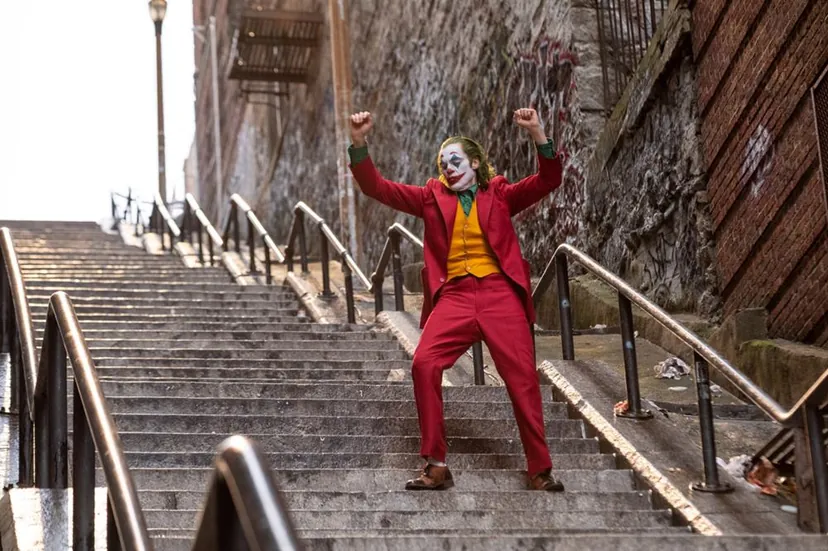
In the movie 'Joker', the protagonist Arthur Fleck dreams of becoming a well-known stand-up comedian and a famous talk show host. However, he has a fatal weakness: a neurological disorder that prevents him from controlling his facial muscles. He suffers from uncontrollable laughter when he shouldn't, leading to significant misunderstandings by those around him. He managed to hang on thanks to social welfare measures that provided medication, but as the welfare budget was cut, his medication support ended. His disability worsened. While riding the subway, a fit of laughter suddenly overcame him, leading to a gang beating by hoodlums; he reflexively fired his pistol and eventually became a murderer. However, because the dead hoodlums were wealthy members of the financial sector, Arthur was hailed as a hero who stood up against unjust forces. Thus, Joker, the villain, was born.
Now let's look at K-content. The character Lee Gi-hwan (Jung Moon-sung) in the ENA drama 'Scarecrow', which took inspiration from Lee Chun-jae of the Hwaseong serial murders, is literally an evil individual. He rapes and murders any woman, regardless of age or appearance. He even causes his younger sibling's death without a shred of guilt. The storyline focused its capabilities on the complexity of a plot full of twists and turns. While the real Lee Chun-jae became an increasingly extreme serial killer due to the failure of early investigations, the drama 'Scarecrow' depicted him as an evil person from start to finish, inciting public outrage. A "bad guy" is just a bad guy.
In Netflix’s 'The Glory', Park Yeon-jin (Lim Ji-yeon) is evil from the start, and her hierarchical status only reinforces it. In Disney’s 'Sculpted City', Ahn Yo-han (D.K.) cruelly displays the madness of a psychopath who finds pleasure in carving up the lives of others. Age doesn't matter. In Netflix’s 'True Education', high school student Jo Gyu-cheol (Lee Bong-jun) cruelly murders the homeroom teacher who tried to care for and protect him, and continues to engage in drug distribution, exploitative crimes, and further murders without a hint of remorse.
In such content, social variables like an unfortunate home environment or childhood abuse are not even highlighted. The more stimulating and violent the genre, the clearer the battle between good and evil, and the greater the tendency to create villains as purely evil individuals. This is because it reflects the motivations of viewers who enjoy such content, as well as game storytelling and worldviews. Furthermore, with the development of brain science, the psychopath type based on differences in brain functioning is being highlighted more than social variables.
However, because such characters appear too often in video content, it feels as if the world is full of psychopaths. It seems as if there are always specific people who commit cruel crimes. But we know that in reality, crimes are often committed not by psychopaths—meaning those who are inherently evil—but by those who are not. Complex factors are at play in criminal acts.
In this respect, two recent dramas caught my eye. The dramas 'Completion of Marriage' and 'Apartment' draw both social realism and public immersion through the complexity of their villains.
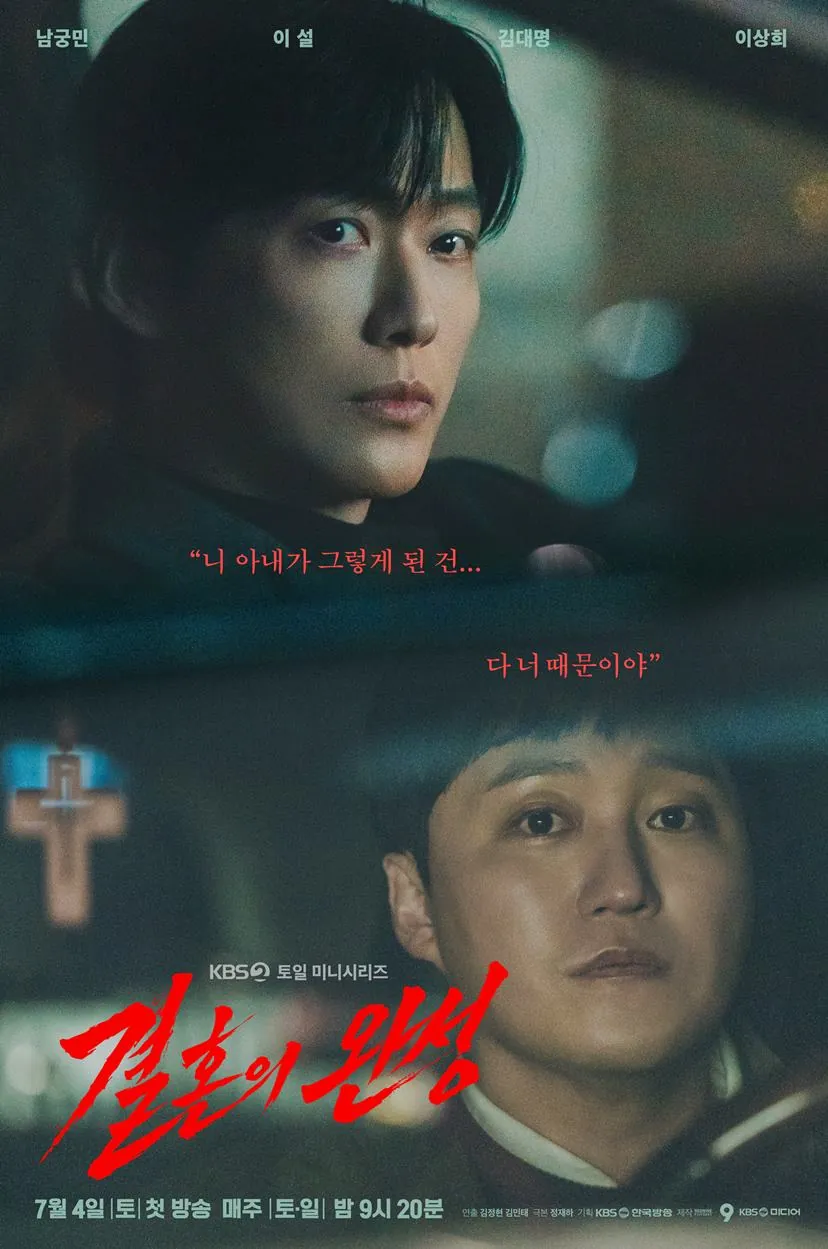
In the drama 'Completion of Marriage', Noh Man-hee (Kim Dae-sung) initially appeared to be just a serial killer. His first crime was accidental. He accidentally killed a pimp who was harassing the woman next door and intended to turn himself in. However, the neighbor woman, Kim Kyung-ae (Lee Sang-hee), advised him not to. From then on, the two became a couple. Noh Man-hee loves Kim Kyung-ae deeply, which leads him to commit further crimes. Beyond this level of personal relationships, social environments and structures are also at work. The kidnapping and murder conspiracy surrounding Kang Tae-joo (Namgoong-min) and Ko Se-yoon (Lee Seol) is influenced by corruption within the hospital foundation regarding fetal stem cells and the instigation of figures like Vice Director Choi Chi-woong (Woo Ji-hyun). This drama is persuasive because it shows that evil individuals are not necessarily born that way, but are shaped by a combination of situational conditions and variables.
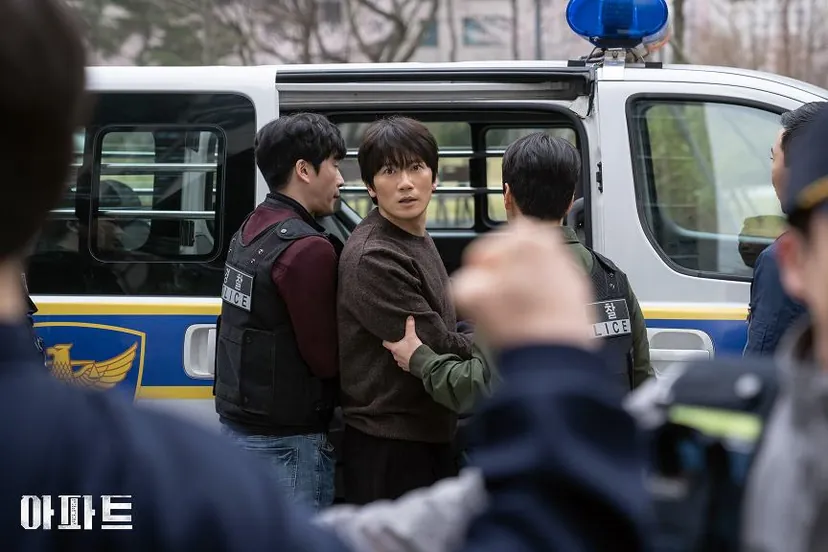
The drama 'Apartment' features psychopaths, socio-structural factors, and the behavior of criminals surrounding them. In other words, there are three layers of villains. First, construction company CEO Lee Choong-won (Park Byung-eun) is a cold-blooded man who does not hesitate to order murders or commit them himself. Lee Choong-won is a character similar to Joo Kang-chan (Joo Sang-wook), a construction company CEO from the "Manager Kim" service organization.
The second layer consists of the corrupt groups that flock to find profit. Lee Choong-won creates a private club called "One Club" with a membership fee of 10 billion won, consisting of the National Police Agency Commissioner, Prosecutor General, Supreme Court Justice, Senior Secretary for Civil Affairs, and the president of a public daily newspaper. They aim for the massive profits to be gained from apartment construction.
The third layer is the criminal gangs and their leaders who are used by these psychopaths and corrupt groups. Among the groups that maintain a sense of loyalty, the boss Park Hae-gang (Ji Sung) tries to save his mentor figure Park Yong-man (Jung Jin-young) by embezzling long-term repair reserves, but as he moves through the roles of apartment representative and residents' council president, he ends up correcting injustice and realizing justice. He becomes a sort of "anti-hero."
By now, villains in content cannot provide thematic depth or public immersion through simple settings that highlight only psychopathy. Conversely, highlighting only social structures or environments does not align with the reality of individual responsibility. We cannot overlook the reality where evil individuals exist. The interests and organization surrounding evil deeds are a stark reality. When these points are dealt with comprehensively, K-content might contribute to preparing for crimes or seeking practical alternatives. Crime is not committed solely by certain psychopaths, nor is it only a problem of sociopaths. This is a fact we all know in reality.
The author Kim Heon-sik has been walking through or clearing paths in the forest of pop culture phenomena since his 20s, with the expectation that there is a way to make the world a better place through culture. In the 21st century, where artificial intelligence and quantum computers are active, he continues on the same path with the same belief.