

[비즈한국] Resale tickets for Christopher Nolan’s film ‘Odyssey’ have been fetching as much as 300,000 won. A key factor driving this is that the entire three-hour film was shot using IMAX cameras. There is a cultural obsession that if an IMAX film is expensive, it must be experienced in a dedicated IMAX theater. This persists even though Nolan himself stated that a regular theater is sufficient. In reality, it would be difficult for most to distinguish the difference if they weren't watching it in an IMAX theater. It wouldn't be too late to visit an IMAX theater after seeing it in a standard one and deciding you truly love the film; the emotional impact of the movie doesn't originate solely from the IMAX theater itself.
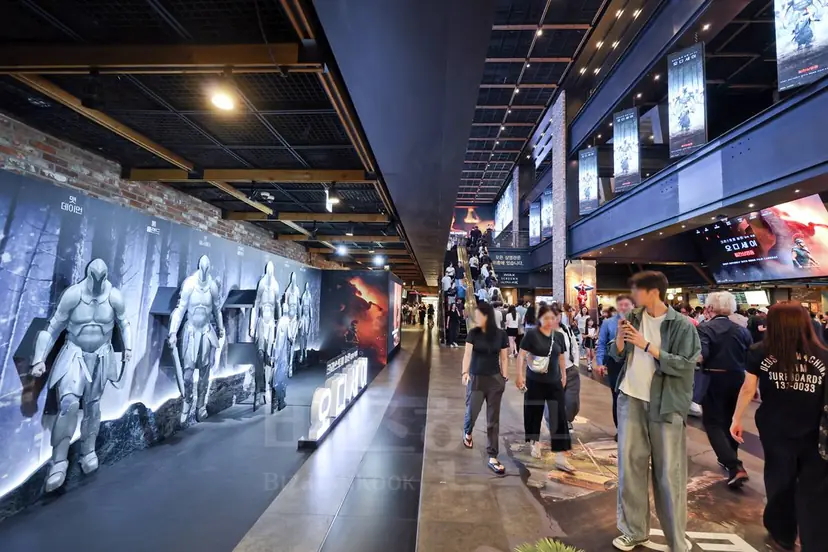
Nevertheless, the tendency to seek out IMAX first appears to be driven by a unique Korean cultural psychology: the belief that masterpieces by renowned directors must be viewed with high-end specifications. The specialized sound systems in IMAX theaters also seem to play a role. There is also the value of scarcity; people feel a greater sense of achievement and a desire to show off when they experience something others cannot easily access. From the perspective of value-based consumption, this could be seen as a willingness to spend extra time and money if deemed necessary. Furthermore, the social media-driven "proof shot" culture has only accelerated this behavior.
On the other hand, some audiences seek out IMAX theaters to experience a level of immersion that smartphones or OTT platforms simply cannot provide. These viewers likely hope that films like ‘Odyssey’ do not move to online streaming platforms too quickly, as OTT cannot replicate the texture of IMAX-filmed footage. Such films do not require a mandatory theatrical window under the holdback system.
Ultimately, films that remain in theaters for a long time stay on the big screen because the production, distribution, theater, and audience all want them to. The decline in the theater's role and function is precisely due to a shortage of such films. The mindset that one must see a movie while it is still in theaters is the key factor in sharply increasing audience numbers. This is true for ‘Spider-Man: Brand New Day’ as well; the film’s surge in theater attendance occurred because it was a movie worth seeing in a cinema. It went beyond a simple case of ticket sales driven by curiosity about a sequel.
However, ‘Spider-Man: Brand New Day’ is a film that offers "value for price" (gaseongbi), whereas ‘Odyssey’ is a film that offers "value for satisfaction" (gasimbi). Value-for-price films weigh immediate utility, such as being fun or thrilling. Value-for-satisfaction films, meanwhile, tend to leave a lasting impression or a deep resonance, which often leads to the consumption of derivative content. The sharp rise in sales for Homer’s original ‘The Odyssey’ following the film’s success is a perfect example of this.
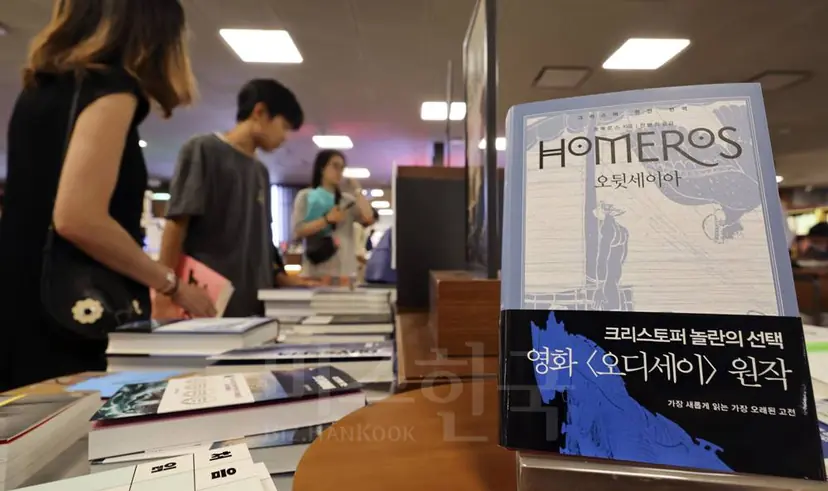
Complaints about high movie prices primarily stem from a lack of perceived value for the price paid. This leads to the reaction of preferring to use online streaming platforms instead. Even for a film with good value-for-price, it is not easy to satisfy the "value-for-satisfaction" criteria. For the Korean film industry to survive, it must move beyond producing only value-for-price films and create more value-for-satisfaction films. The films ‘Hope’ and ‘Colony’ show that this doesn't strictly require big-budget blockbusters like ‘Spider-Man: Brand New Day’ or ‘Odyssey.’ We also cannot fail to mention ‘The Man Who Lived with the King,’ which sparked a phenomenon of fans longing for discontinued products. Of course, a situation where one film dominates the entire cinema landscape cannot be considered desirable.
The film ecosystem thrives when more films break even. This means there should be many value-for-price films, and it would be even better if they also pursued value-for-satisfaction. Among domestic films released this year, only three have surpassed their break-even point: ‘The Man Who Lived with the King’ (break-even point approx. 2.6 million, cumulative audience approx. 16.91 million), ‘Salmokji’ (break-even point approx. 800,000, final audience approx. 3.24 million), and ‘Colony’ (break-even point approx. 3 million, cumulative audience approx. 5.95 million). Among these, ‘Salmokji’ and ‘Colony’ are far from the "value-for-satisfaction" category.
Meanwhile, while we look forward to films worth opening our wallets for despite the high prices, AI films do not fall into this category. Almost no consumer is willing to pay their own money to watch AI-generated content. ‘Odyssey’ reached the level of "value-for-satisfaction" because it was painstakingly built through manual IMAX labor and on-site filming. Even if it doesn't quite reach the "aura" of an original work in the age of mechanical reproduction mentioned by Walter Benjamin, it is clear that people are willing to open their wallets for irreplaceable value.
The author, Kim Heon-sik, has been navigating the forest of pop culture phenomena since his 20s, driven by the belief that there is a way to make the world a better place through culture. He continues on this same path in the 21st century, an era dominated by artificial intelligence and quantum computing.