

[비즈한국] As ADC (Antibody-Drug Conjugate) emerges as a next-generation anticancer modality, competition in the global pharmaceutical and biotech industry is intensifying. In particular, Chinese biotech companies are rapidly increasing their presence in the market, leveraging various ADC candidates to sign a series of large-scale technology export contracts with global big pharma.
Amid the overheated ADC competition, the industry's gaze is shifting toward the ‘next ADC.’ While efforts to improve the technical limitations of ADCs themselves continue, there is also a rapid move to preempt new modalities that target the unmet needs of existing treatment methods. One such example is RPT (Radiopharmaceutical Therapy).
RPT is a method that delivers radiation to tumors by combining therapeutic radioisotopes with target substances that find cancer cells. Because of the half-life of radioisotopes, the industry structure is fundamentally different from existing anticancer drugs, as it requires seamless integration from production and transportation to patient administration. This is why it is predicted that South Korea, with its high hospital density and established manufacturing and supply infrastructure for radiopharmaceuticals, could capture new opportunities in the RPT field.

China Increasing Its Presence in ADCs… Eyes on ‘Next Modality’ RPT
The most notable players in the global ADC market recently are Chinese firms. Chinese biotech companies such as Kelun-Biotech, MediLink Therapeutics, and DualityBio have been signing major deals with global big pharma one after another. It is estimated that Chinese companies have swept more than 70–80% of global ADC technology export contracts signed last year.
Chinese companies are expanding their influence across the entire ADC ecosystem by building their own ADC platforms, developing new target, payload, and linker technologies, and simultaneously expanding joint development and technology exports with global pharmaceutical companies.
Although ADCs have gained attention since the emergence of ‘Enhertu,’ they face significant hurdles. Because they use large molecules known as antibodies, it is difficult to deliver a sufficient amount of drug into solid tumor tissues, and problems such as toxicity to normal tissues and drug resistance during repeated treatment cycles must be solved.
For this reason, ADC developers are actively conducting research to advance existing ADCs by utilizing bispecific antibody ADCs, applying new payloads/linkers, or leveraging masking platforms. Along with this, RPT, which attacks cancer cells in a different way than ADCs, is also receiving attention as a next-generation modality.
If the ADC approach involves delivering a cytotoxic payload to cancer cells by linking it to an antibody, RPT involves combining a radioisotope with a ligand or antibody that locates cancer cells. While the basic structure of precisely targeting cancer cells is similar for both technologies, RPT is differentiated by the fact that it destroys cancer cells by emitting physical radiation instead of using chemical drugs.
US VCs Also Eye Korean RPT: “A Niche Market to Avoid Full-Scale War with China”
The global investment community also foresees that South Korea could seize opportunities as the RPT market begins to take shape in earnest.
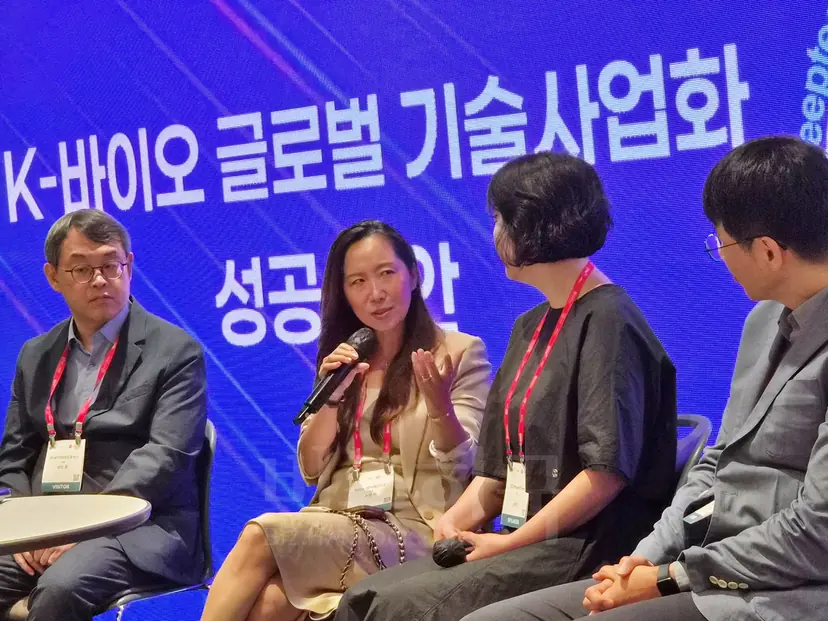
Park So-young, CEO of 1004 Venture Partners, a healthcare-specialized venture capital (VC) firm in Silicon Valley, stated at the ‘K-Bio New Drug Modality and Technology Commercialization Conference’ held at COEX in Seoul on the 25th of last month, “Along with ADC and TPD (Targeted Protein Degradation), RPT is currently one of the hottest emerging technologies in the US market.” CEO Park emphasized, “The RPT field currently has no clear leader dominating the global market, making it the best niche market for Korea to preempt global hegemony while avoiding a direct, full-scale confrontation with China, which is leading the ADC sector.”
In RPT, manufacturing and supply capabilities that can deliver the drug to actual patients are as important as the new drug candidate itself. Because radioisotopes have a half-life during which radioactivity decreases over time, production, quality control, transportation, and hospital administration must work organically.
This means such barriers to entry could actually be an opportunity for South Korea. Since major hospitals and research institutions are concentrated in the country, and relevant infrastructure including radiopharmaceutical manufacturing facilities is already in place, if combined with the clinical trial capabilities accumulated by domestic pharmaceutical and biotech companies, Korea has a competitive edge not only in new drug development but also in production and supply.
Global big pharma companies are already expanding their focus to RPT. Following Bayer’s prostate cancer treatment ‘Xofigo,’ approved in the US in 2013, Novartis’ ‘Lutathera’ received US Food and Drug Administration (FDA) approval in 2018, followed by ‘Pluvicto’ in 2022. Since the success of Pluvicto, which recorded annual sales of $1.994 billion (2.7 trillion KRW) last year, global pharmaceutical companies have been investing more aggressively in RPT. In particular, BMS (Bristol Myers Squibb) acquired RayzeBio, a developer of Actinium-225 (Ac-225) based RPT, for approximately $4.1 billion (5.5128 trillion KRW) in 2024, securing an RPT pipeline and internal production facilities all at once.
The growth of the entire radiopharmaceutical market is also expected to be steep. According to global market research firm Straits Research, the global radiopharmaceutical market—combining diagnostics and therapeutics—is projected to grow from $7.47 billion (10.0419 trillion KRW) in 2025 to $17.48 billion (23.4984 trillion KRW) by 2034.
DuChemBio Aims to Become an RPT CDMO Hub Based on 12 Nationwide Manufacturing Sites
In South Korea, radiopharmaceutical specialist DuChemBio has fully entered the CDMO (Contract Development and Manufacturing Organization) business in line with the expansion of the RPT market.
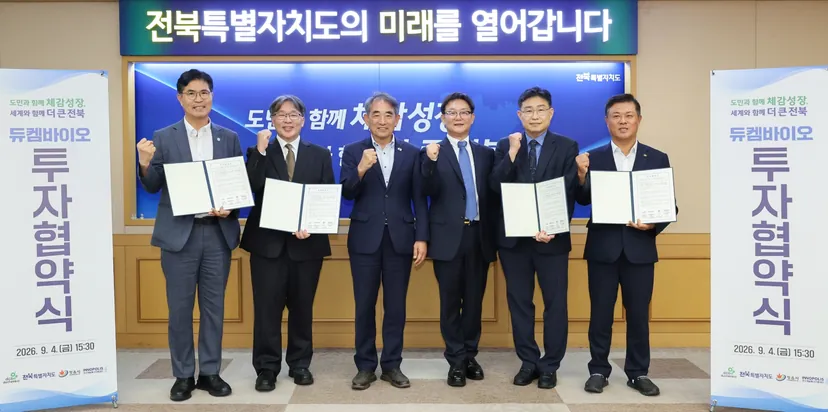
DuChemBio announced on the 4th that it has decided to invest 33.6 billion KRW in new facilities to build an RPT-specialized CDMO plant and an R&D center. The facilities to be located in the Jeongeup Advanced Science Industrial Complex in Jeonbuk will be built in stages until 2032.
DuChemBio’s focus on the RPT CDMO business is due to the unique supply chain of radiopharmaceuticals. Because of the half-life of isotopes, it is difficult to mass-produce radiopharmaceuticals in one location, store them for a long time, and ship them around the world like regular drugs. Ultimately, establishing nationwide hubs is crucial.
DuChemBio has already experienced the importance of such a production and delivery system through diagnostic radiopharmaceuticals. In particular, Fluorine-18 (F-18), which has a half-life of about 110 minutes, is used for amyloid PET radiopharmaceuticals used in Alzheimer’s disease diagnosis. DuChemBio has secured 12 radiopharmaceutical manufacturing sites across the country to produce and supply products to hospitals by key region.
A DuChemBio official stated, “Logistics and operational capabilities are required where drugs must be produced at a hub site in the early morning upon patient reservation and delivered to the hospital within just a few hours. We have accumulated 20 years of experience in radiopharmaceutical supply based on a network of 12 manufacturing sites nationwide.”
DuChemBio plans to expand this experience to therapeutic radiopharmaceutical CDMO services. The physical half-life of Lutetium-177 (Lu-177), used in drugs like Pluvicto, is about 6.6 days. As long-distance transport from overseas production facilities reduces the time available for actual patient administration, securing production hubs close to the market is essential to increase supply stability and efficiency.
This is why Novartis is continuously increasing its global production hubs. Following the expansion of RPT production facilities in the US, the Haiyan plant in China, which involved an investment of over 600 million yuan (119.9 billion KRW), and the Sasayama plant in Japan, which cost over $100 million (134 billion KRW), are expected to start operations within this year.
However, not all latecomer pharmaceutical and biotech companies can build regional production facilities themselves like Novartis. As building an internal production network requires significant initial capital and experience in radiopharmaceutical manufacturing, DuChemBio has targeted the CDMO business, judging that the role of a professional CDMO that can handle local manufacturing, quality control, and delivery will grow.
Securing radioisotopes is another task. In particular, Ac-225, which is drawing attention as a key raw material for next-generation RPT, currently has limited production volume, leading global pharmaceutical companies to secure supplies through long-term supply contracts.
DuChemBio also plans to build a supply chain for therapeutic radioisotopes according to its clients' development stages and demand. In Korea, efforts are being made to expand the production of medical radioisotopes utilizing nuclear infrastructure, centered on Korea Hydro & Nuclear Power, so it is expected that the domestic procurement base will broaden in the mid-to-long term.
A DuChemBio official said, “Since CDMOs produce according to the radioisotope materials contained in specific treatments, we go through a process of securing necessary materials once the order volume is determined. Domestic nuclear infrastructure and extraction technologies for radioisotopes are in place, so the supply and demand process itself should not be too difficult.”
SK Biopharmaceuticals, FutureChem, Selion… Competition for Domestic RPT Development Intensifies
Competition is also fierce in the development of domestic RPT new drugs, beyond just manufacturing infrastructure.
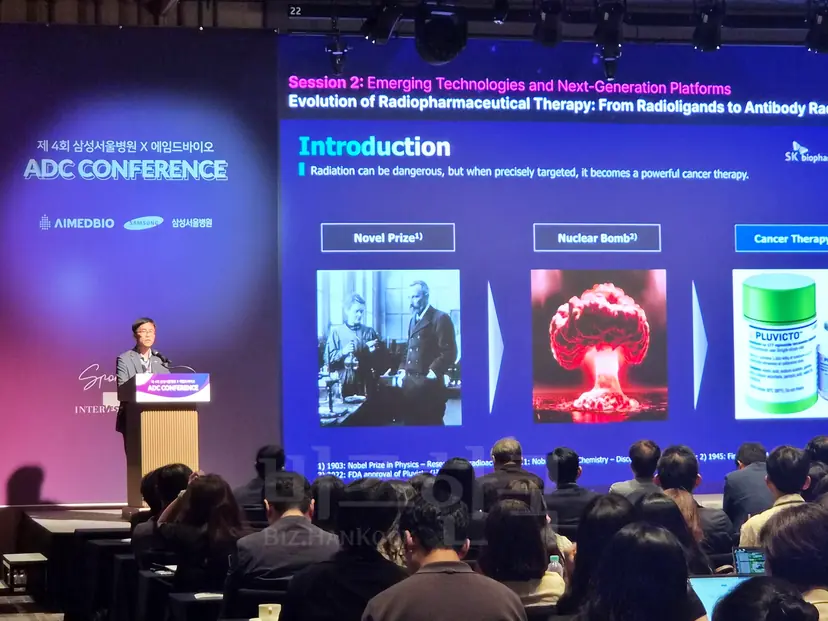
SK Biopharmaceuticals has designated RPT as a next-generation growth engine and is securing pipelines and raw material supply chains simultaneously. By establishing an Ac-225 supply chain with overseas isotope companies such as TerraPower in the US, PanTera in Belgium, and Eckert & Ziegler in Germany, it is expanding its RPT value chain from candidate development to raw material procurement.
Its first RPT candidate, ‘SKL35501,’ was in-licensed from Full-Life Technologies in July 2024 for a total of $571.5 million (792.1 billion KRW). The strategy is to administer SKL35501 after screening patients using the imaging diagnostic agent ‘SKL35502,’ and SK Biopharmaceuticals received approval for the Investigational New Drug (IND) application for Phase 1 clinical trials of SKL35501 and SKL35502 from the FDA in January.
It is also adding to its pipeline. Last November, it in-licensed the RPT candidate ‘WT-7695’ from the Wisconsin Alumni Research Foundation (WARF) for up to $576 million (842.5 billion KRW), and preclinical development is currently underway.
In the field of prostate cancer RPT, FutureChem and Selion are engaged in a fierce competition.
FutureChem is developing the Lu-177 based prostate cancer RPT candidate ‘FC705.’ It is conducting Phase 3 clinical trials in Korea and completed patient administration for Phase 2a clinical trials in the US last May. Prior to its therapeutic agent, it received approval for the prostate cancer diagnostic agent ‘ProstaView’ from the Ministry of Food and Drug Safety (MFDS) in April and has launched it. It is building a strategy to identify prostate cancer expression using the diagnostic agent and connect it to treatment.
Selion has also finished Phase 2 clinical trials of its Lu-177 based RPT ‘Lu-177-DGUL’ and applied for conditional product approval to the MFDS on December 30th of last year, currently awaiting approval. Lu-177-DGUL has been designated as an orphan drug for development and is a recipient of the MFDS’s Global Innovative Product on Fast Track (GIFT).
While global big pharma such as Novartis are ahead in terms of commercialization in the RPT market, competition surrounding next-generation pipelines and production infrastructure is now entering a full-scale stage. In Korea, SK Biopharmaceuticals is embarking on global new drug development, while FutureChem and Selion are accelerating the commercialization of domestic RPTs, and DuChemBio is expanding its reach into production and supply chains.
While Chinese biotech companies quickly secured leadership in the global technology export market for ADCs, the industrial ecosystem for RPT is still in the process of being formed. The speed at which companies can build a value chain that connects not only candidate development but also radioisotope procurement, manufacturing, logistics, and hospital administration will determine future competitiveness.