

[BizHanKook] The NEXROC Group, which claims to be a Japanese investment group, and SVCV have suddenly announced plans for a tender offer to acquire up to 50% of JYP Entertainment (JYP). If successful, this acquisition would far exceed the stake held by the current largest shareholder, Park Jin-young, JYP's Chief Creative Officer (CCO).
The issue is that JYP has stated it has “never received a proposal related to a stake acquisition.” Nexroc and SVCV announced their tender offer plans to the media before finalizing the criteria for determining the purchase price, the final price, or a specific financing plan.
A look at the two companies' public disclosures reveals a complex relationship. The U.S. Securities and Exchange Commission (SEC) recently received a securities offering filing worth $50 million from a corporation named ‘NEXROC SVCV, Inc.’ Past names registered by the entity with the SEC include ‘SVCV, Inc.’ and ‘THE NEXROC GROUP.’ However, Nexroc’s own materials describe The NEXROC Group as the parent company and SVCV as an affiliated platform, making it difficult to determine the exact legal relationship between the two based solely on public disclosures.
JYP: “We Have Never Received a Proposal”... Plans Announced Before Formal Engagement
On the 26th, Nexroc and SVCV distributed a press release to domestic media, stating their intent to acquire a stake in JYP. Their goal is to acquire 25–50% of JYP's issued shares, with the tender offer starting as early as November 20.
The two companies stated they are considering a price that includes a 30% premium over the reference share price. However, they have yet to determine how that reference price will be calculated or what the final tender offer price will be. They also proposed a schedule to submit a non-binding letter of intent (LOI) to JYP and negotiate for about 30 days. They explained that if negotiations fail, they would then decide whether and under what conditions to proceed with the tender offer.
JYP’s account, however, was different. That same day, JYP stated, “We have not received any proposals regarding the acquisition of our company’s shares.” During the reporting process, accounts differed on whether Nexroc and SVCV were planning to deliver an LOI or if they had already done so. It is clear, however, that as of the night of the 26th, when JYP made its official statement, the company had received no such proposal.
The method of the tender offer has also drawn market attention. Generally, a tender offer aimed at acquiring management control is conducted after the purchase price, quantity, period, and financing plan are finalized and disclosed. If plans are leaked in advance, the target company’s stock price may rise, increasing the financial burden on the acquirer.
In this case, however, the plan was made public about a month before the target start date for the tender offer. The materials distributed by Nexroc include a disclaimer stating that the tender offer has not yet begun and that the expected price and schedule do not constitute a finalized transaction or a guarantee of execution. This is why the move is being described as highly unusual in the domestic M&A industry.
The market reacted immediately. On the 26th, JYP closed at 36,000 won on the KRX, down 2.31% from the previous trading day, but after news of the tender offer broke, the stock rose to as high as 42,150 won in the after-hours market. This is 14.38% higher than the previous trading day's base price of 36,850 won and 17.08% higher than the regular session closing price of 36,000 won. It briefly touched 44,000 won during the day.
On the morning of the 27th, the stock continued to trade well above the previous day’s base price on the NXT. However, it was lower than the after-hours closing price from the previous day, making it difficult to conclude that the post-announcement rally is holding steady.
30% Premium Would Require Up to 830 Billion Won
A real tender offer would require substantial funding. JYP has 35,532,492 issued shares. Based on the 36,000 won closing price on the 26th, the market capitalization is approximately 1.2792 trillion won. Assuming a 30% premium is applied to this price as suggested by the bidders, the per-share price would be 46,800 won.
At this price, acquiring 25% of the shares would cost approximately 415.7 billion won, while 50% would cost approximately 831.5 billion won. However, because Nexroc and SVCV have not finalized the calculation method for the reference share price, the actual funds required could vary.
The figure of 750 billion won cited in some reports is a simple calculation of 50% of JYP’s market cap after it rose to approximately 1.5 trillion won following the announcement. If a 30% premium is applied to the actual tender offer price, the required funds could be higher depending on the reference price.
Securing even a 25% stake could lead to significant changes in JYP’s governance. According to JYP’s filings, CCO Park Jin-young is the largest shareholder with 5,462,511 shares (15.37%). Including CEO Jung Wook (0.41%) and Vice President Byun Sang-bong (0.04%), the combined stake of the largest shareholder and related parties is 5,622,390 shares (15.82%).
Therefore, if Nexroc were to successfully secure over 25% of the shares as a single entity, it would hold more than the current largest shareholder and related parties. However, it cannot be concluded that securing a 25% stake would automatically grant management control.
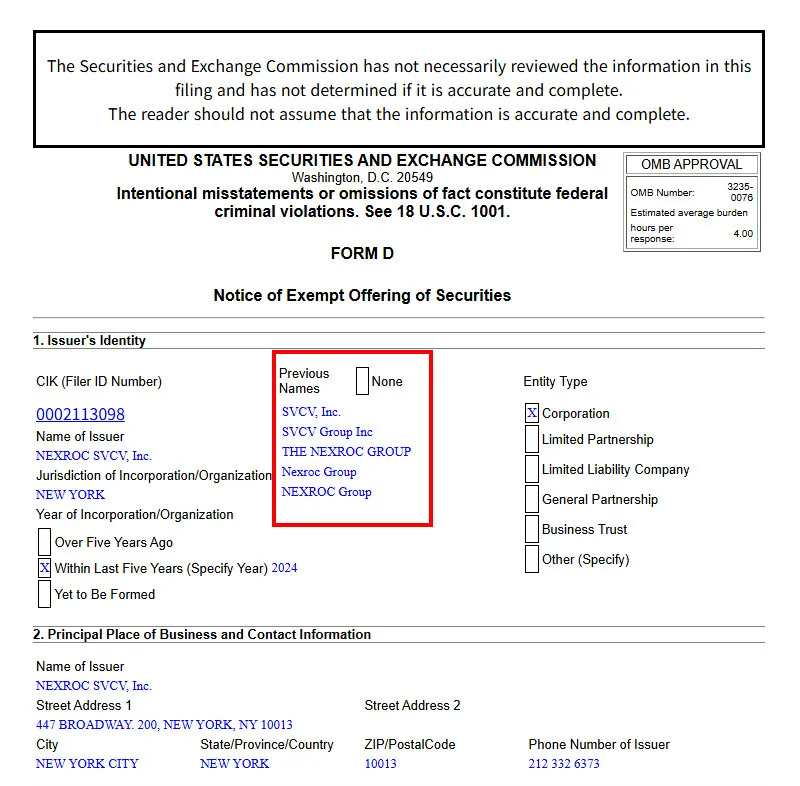
‘NEXROC SVCV’ at the SEC... A Complex Relationship
So, who are Nexroc and SVCV, the companies looking to buy up to half of JYP? Nexroc’s website introduces the group as a diversified investment and holding platform based in Japan and China. In an investor letter released in August, it announced the completion of its reorganization, outlining the final group structure as: “NEXROC Group - Parent Company, NEXROC Inc. - Asset Management, SVCV Inc. - Holding Company, and NEXLIFE Group - Insurance/Pension.”
In a press release last September, Nexroc described SVCV as a cultural conglomerate preparing for launch in 2027. It also stated that it is supported by institutional investors and strategic partners, and is discussing acquisitions and partnerships with various brands in the luxury, fashion, and entertainment sectors. However, these are Nexroc's own claims, and no specific list of institutional investors or investment sizes has been disclosed.
In the U.S. SEC documents, the relationship between the two names is more complicated. According to a Form D signed and filed with the SEC on the 19th, the name of the reporting entity is ‘NEXROC SVCV, Inc.’ It states that it was established in New York in 2024 and lists previous names including ‘SVCV, Inc.’, ‘SVCV Group Inc’, ‘THE NEXROC GROUP’, ‘Nexroc Group’, and ‘NEXROC Group’.
While the tender offer announcement introduced Nexroc and SVCV as separate entities, the U.S. filings show both names as past designations for the same corporation. However, Nexroc’s own materials describe the NEXROC Group as the parent company and SVCV as an affiliated platform, making it difficult to definitively conclude from SEC data alone that the two organizations are currently the same legal entity.
The annual revenue range reported by the entity to the SEC is between $1 million and $5 million. Again, this is a figure self-reported by NEXROC SVCV, Inc. and does not reflect the total revenue or asset size of the entire Nexroc Group. The SEC also explicitly states that it does not verify the accuracy or completeness of the information provided in Form D.
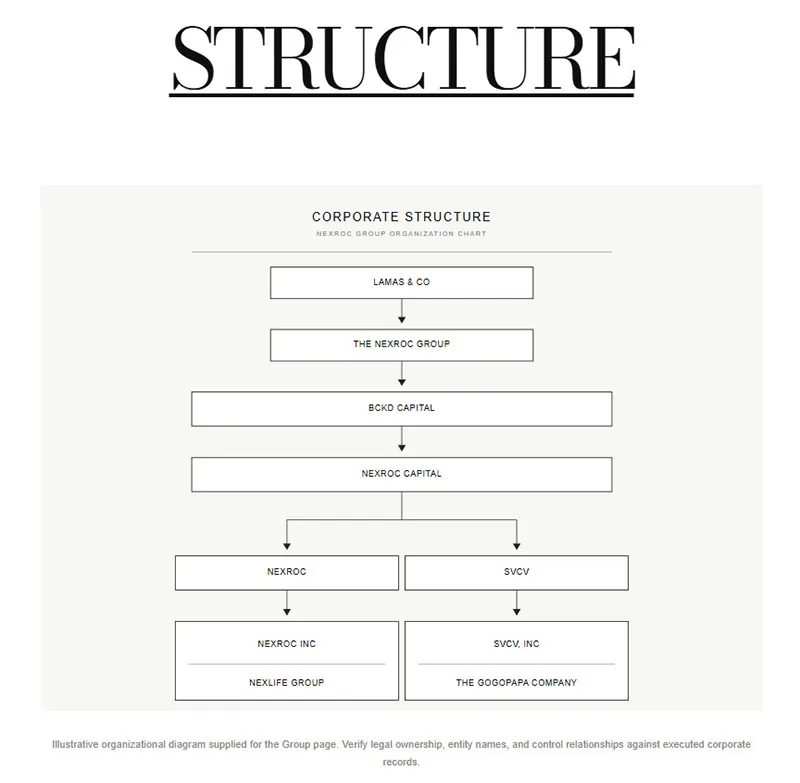
$50 Million ‘Sale’ in SEC Filing... Actual Financial Capacity Unconfirmed
The most interesting part is the funding for the tender offer. Form D submitted by NEXROC SVCV, Inc. to the SEC lists a securities offering totaling $50 million. The date of first sale is the 12th, and both the total offering amount and the amount sold are listed as $50 million, with a balance of 0. The type of security is reported as a right to acquire debt and other securities, and it also checked “yes” for being related to a business combination transaction, such as an M&A.
However, this filing alone does not confirm that the $50 million has actually been paid in or that it is intended for the JYP tender offer. The same filing lists the number of investors as 0, making it difficult to understand the capital inflow structure from the document alone.
Form D is a filing made by an issuer to the SEC regarding a securities offering that utilizes registration exemptions under U.S. securities law. It does not mean the SEC has verified or guaranteed whether the funds were actually deposited or that the reported content is accurate. Therefore, it is difficult to conclude from the currently available SEC data that Nexroc has already secured the hundreds of billions of won required for the JYP tender offer.
Nexroc presents a much larger financing capacity on its own investor website. It introduces a $3 billion program, combining $500 million in initial capital, $2 billion in securities/acquisition financing, and a $500 million revolving credit facility.
However, the same page clearly states that this figure is an “illustrative program capacity.” It adds that this does not imply approval from financial institutions, executed agreements, or an actual record of capital raised. This is why the $3 billion presented on the Nexroc website cannot be viewed as confirmed capital currently available for deployment.
The same applies to the 2-year targets, such as $5 billion in insurance assets under management, $15 billion in liquid assets under management, and $1 billion in revenue. Nexroc itself clarifies that these are future goals set by management, not actual results or confirmed assets under management.
Ultimately, based on currently available data, it is difficult to confirm how Nexroc and SVCV plan to raise the hundreds of billions of won needed to buy a 25–50% stake in JYP.
The situation will change once the actual tender offer begins. Under current capital markets law, a tender offerer must include not only the tender offer price, quantity, and period in the tender offer statement, but also details on the formation of the purchase funds. If funds were borrowed, the specific procurement structure, such as the lender, must also be disclosed.
If the tender offer becomes reality according to the schedule proposed by Nexroc for November 20, the actual financing capability, which has been unclear until now, will be put to the test.
So far, all that has been confirmed is Nexroc’s announcement that it “will buy up to half of JYP” and JYP’s stance that it “has received no proposal for a stake acquisition.” The tender offer price has not been finalized, and the large-scale financial program presented on the Nexroc website is not an executed financial agreement. As the JYP stock price has moved significantly based solely on the announcement of the tender offer plan, the key in the future is whether Nexroc and SVCV can actually submit a tender offer statement and present a concrete plan to raise hundreds of billions of won.