

[비즈한국] When you think of 'Jinju', Nongae comes to mind. The righteous gisaeng who became a symbol of patriotism and loyalty after throwing herself into the Namgang River while clutching a Japanese general during the Imjin War. At least, that’s how it was for me. However, these days, the younger generation heads to Jinju to enjoy the night views and the romantic atmosphere. On the first day of the 'Jinju Namgang Yudeung (Lantern) Festival,' which began on October 3rd, a staggering 185,000 people visited. This was the reason this "older" traveler, piqued by curiosity, got up and headed to Jinju.
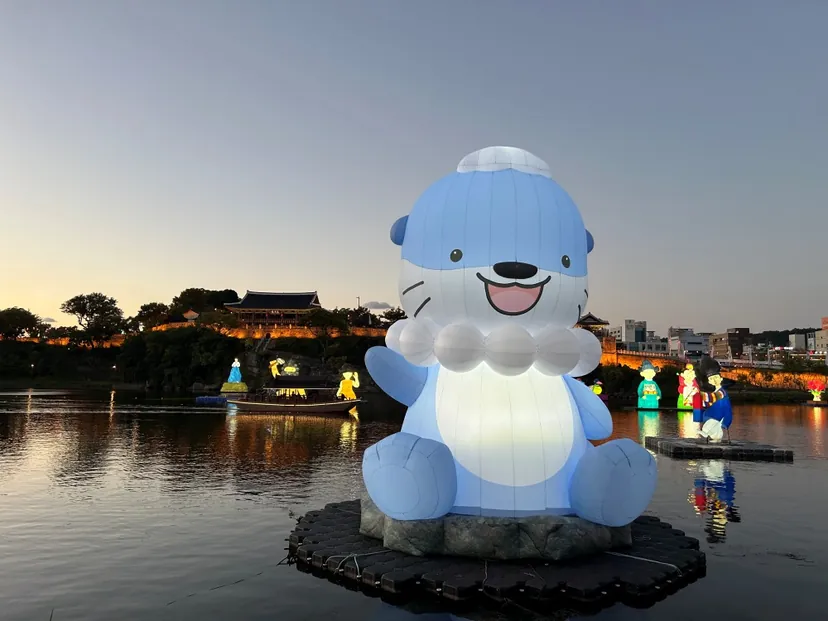
The Jinju Namgang Yudeung Festival has its origins in the Siege of Jinju, one of the three great battles of the Imjin War. It originated in 1592 when General Kim Si-min and his soldiers, isolated within Jinjuseong Fortress, used floating lanterns as military signals and a means of communication with those outside the fortress. Having started as part of the Gaecheon Arts Festival, this event became independent in 2002 and has since established itself as one of South Korea's representative festivals. With over 70,000 lanterns filling the Namgang River and the surrounding Jinjuseong area, complemented by night views of the fortress, spectacular fireworks, and a synchronized performance by 1,300 drones, there is every reason for those seeking to fully enjoy a glamorous autumn night to visit.
First, before the sun sets, visit Jinjuseong and head up to Chokseongnu Pavilion to enjoy the expansive view of downtown Jinju. Then, cross the colorful pontoon bridge on the Namgang River to reach the side opposite Jinjuseong. While you can cross via the Jinjugyo or Cheonsugyo bridges, walking across the temporary pontoon bridges installed during the festival offers the unique fun of experiencing a familiar river from a completely different perspective. There are four bridges, including the Baedari and Byeolbit Yunseul bridges; I recommend the Baedari bridge, which is lit with Cheongsachorong (traditional lanterns). Note that it costs 2,000 won for a single crossing and 6,000 won for an all-day pass.
The lanterns on the Namgang River have themes for each section, such as 'Future City Jinju,' 'Our Writing, Our Hearts,' 'Companies Shining Together,' 'Modern Art,' 'Korea's Global Festival,' 'Aesthetics of Tradition,' 'Century's Wedding,' 'Spirit of Jinju,' 'Voyage of Peace,' and 'Earth's Hope.' Among them, the side with the best view of Chokseongnu ranges from the central 'Korea's Global Festival' zone to the 'Century's Wedding' zone. Don’t forget to snap a photo with 'Hamo,' the Jinju mascot inspired by the otter, a natural monument inhabiting Jinyangho Lake and the Namgang River. The Wish Lantern Tunnel, where visitors hang earnest wishes on the gates, and the Namgaram Starlight Road, which features shimmering lights placed along the bamboo forest following the river to encourage nighttime strolls, are also considered hot spots for night views.
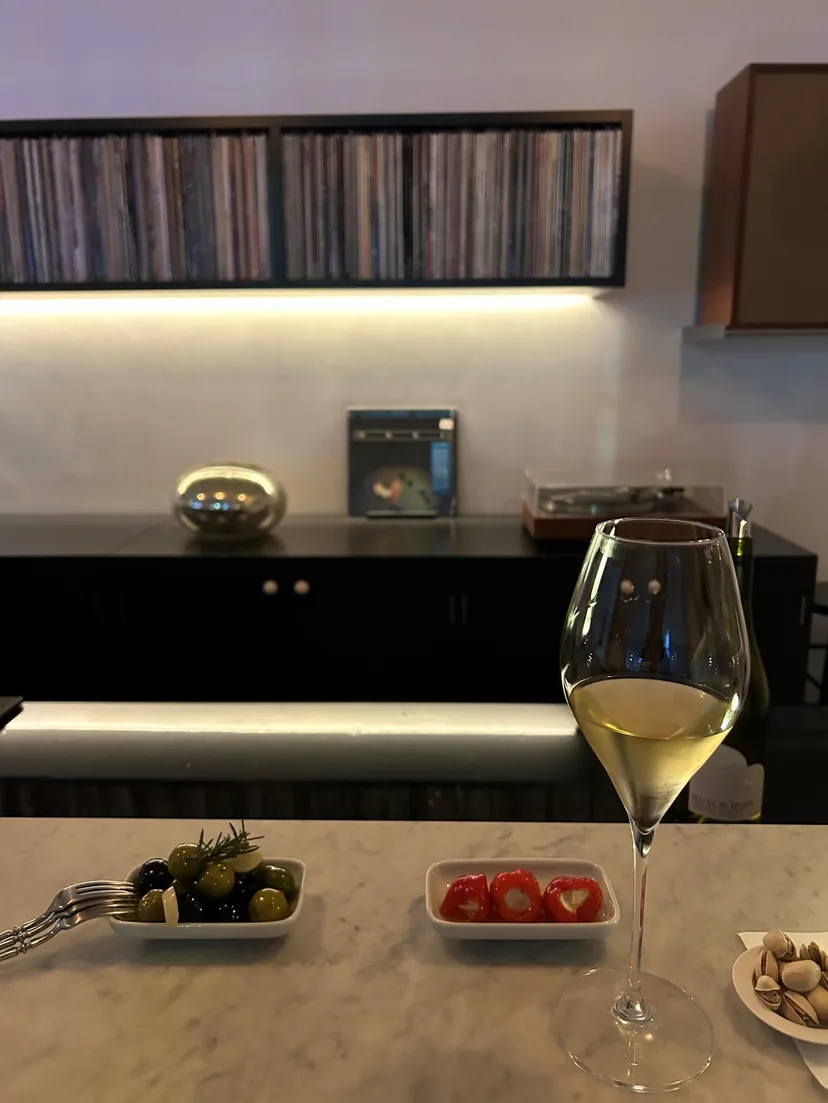
Once you’ve had your fill of the night view while feeling the river breeze, it’s time to enjoy a drink in an atmosphere-filled spot. If you cross the Jinjugyo Bridge toward Jungang-dong, you’ll find places where you can experience a modern side of Jinju. The cafe/wine bar 'Le Montreux' and the wine bar 'Ca' located on the floor above boast a level of sensibility and ambiance that is hard to find even in Seoul. They are especially worth visiting if you love music, as you can listen to LP records dug up from all over the world by the owners. Be careful, as you might find yourself ordering a second or third bottle of wine while intoxicated by the music and the wine. Le Montreux is open only on Fridays, Saturdays, and Sundays, while 'Ca' is open daily. 'Jinju Jinmaek Brewery,' located in the Jinju Nongae Market, is also worth visiting along with the market's 'Ol-bam' Night Market. You can savor high-end craft beer made primarily with short-height wheat grown in Jinju.
In Jinju, a city with a highly developed food culture alongside its traditional Gyo-bang culture, what should you eat to make sure you've truly experienced the local cuisine? Jinju Cold Noodles (Jinju Naengmyeon), considered the best alongside Pyongyang Naengmyeon, and Jinju Bibimbap are famous. Neat Korean set meals (Hanjeongsik), Heotjesabap with various side dishes, and black pork are also highly recommended. While Jinju Naengmyeon topped with savory meat pancakes (Yukjeon) is excellent, you cannot miss out on Jinju Bibimbap, which adds fresh raw beef (Yukhoe) to various seasoned vegetables. The top-tier spots are 'Jeil Sikdang' and 'Cheonhwang Sikdang.' Among them, Cheonhwang Sikdang, which has been operating for over 100 years, draws attention with its classic Hyundai Pony pickup truck parked in front, giving off a genuine old-school vibe. The bibimbap, served with blood sausage soup (Seonjitguk), is mild and clean, and pairing it with charcoal-grilled beef is the perfect finishing touch. For a cup of tea after the meal, I recommend the well-known cafe 'Eunaanjae' in Manggyeong-dong, or the 'Eunaanjae Tearoom,' where you can enjoy tea and refreshments in a refined setting. In the tearoom, where matcha lattes, mugwort lattes, and hojicha lattes are popular, be sure to pair your drink with a Japanese-style confectionery (Hwagwaja).
For those who were deeply moved by the documentary film 'Adult Kim Jang-ha,' the 'Jinju Namseongdang Education Center' is a must-visit. It is the place where the Namseongdang Oriental Medicine Clinic, which Mr. Kim Jang-ha operated for about 60 years, was reborn as a civic cultural and educational space in December 2025. You can explore the clinic space he used, along with records of the March 1st Independence Movement, the Jinju Boyhood Movement, and the Hyungpyeong Movement; it is well worth stopping by to have some medicinal herbal tea and reflect on the spirit of the man who lived a life of sharing and giving. 'Ilshin World,' famous as a vintage prop shop, is also located nearby. You are greeted by a persistent collection belonging to the owner, who has been importing tableware from Japan for over 40 years, filled with decades-old character goods including Hello Kitty, as well as various dishes. Finally, how about wrapping up your Jinju journey at the book cafe and book bar 'The Lounge Chaekgang'? It is a new space that opened in July, where you can quietly immerse yourself in a book along with various cafe drinks and bar menus. Even if you don't usually read much, in this atmosphere, you’ll find yourself turning pages with ease.
The Jinju Namgang Yudeung Festival is open until October 18th. With a drone light show on Saturdays, October 10th and 17th, and a fireworks show on October 9th and 17th, it is clear that there will be a large number of visitors. One strategy is to admire the overall night view of the Namgang River and Jinjuseong Fortress from the outer Somangjinsan Lantern Park rather than the main zone, or to ride the 'Kim Si-min' boat, a traditional pavilion-style pleasure boat. Not only the Jinju Namgang Yudeung Festival but also the Gaecheon Arts Festival is held until October 18th, and the Korea Drama Festival will take place on October 10th, so more people are expected to visit Jinju. If you are visiting Jinju during this period, be sure to keep your receipts. A 'Jinju Tourism and Consumption Certification Event' is currently underway, where you can receive cute Hamo merchandise with proof of visiting Jinju festivals/tourist spots and a receipt of 50,000 won or more on the same day. You can pick up the items at the event booth in front of Gongbukmun Gate from 1 PM to 9 PM (ID required).