

[BizHanKook] Hyundai Department Store Group Honorary Chairman Chung Mong-koon has successfully overturned a first-instance loss in a lawsuit against tax authorities regarding gift taxes imposed for building and using a house on land owned by his eldest son, Chairman Chung Ji-sun, without charge. A single-day difference in the calculation of the gift tax became the deciding factor that separated the rulings of the first and second instances. The appellate court ordered the cancellation of approximately 37.51 million KRW in gift tax imposed on Honorary Chairman Chung.
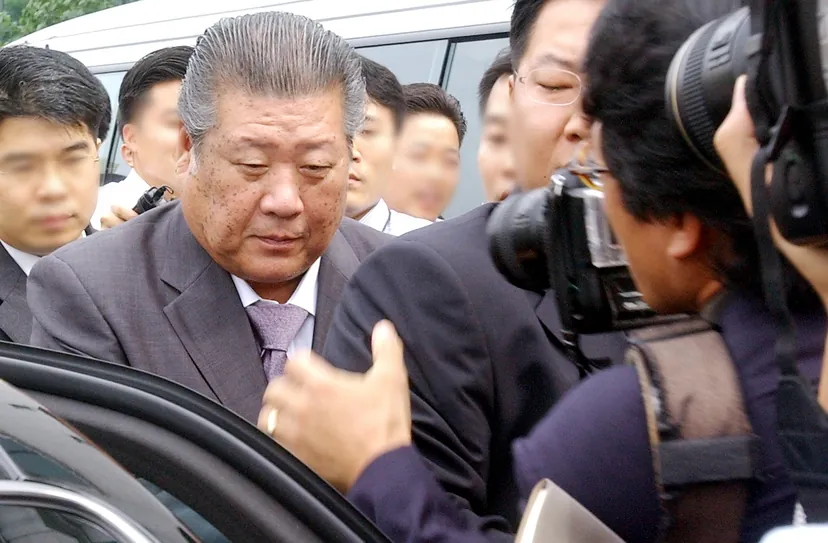
According to BizHankook's coverage, the 8-2 Administrative Division of the Seoul High Court (Presiding Judge Kim Bong-won) ruled on the 13th in favor of Honorary Chairman Chung Mong-koon in his lawsuit against the Head of the Seongbuk Tax Office to cancel a gift tax imposition, overturning the previous ruling that had sided with the defendant. The court ordered the cancellation of the approximately 37.51 million KRW in gift tax imposed by the Seongbuk Tax Office in May 2025 and ruled that the tax authorities must bear the total costs of the litigation.
This lawsuit originated from Honorary Chairman Chung Mong-koon's free use of land owned by his son, Chairman Chung Ji-sun. Honorary Chairman Chung built a private residence in Seongbuk-gu, Seoul, using a plot consisting of 753㎡ of land he owned and 935㎡ of land owned by Chairman Chung Ji-sun. After receiving approval for building use on January 6, 2014, he used the land owned by his son as a residential site free of charge. The benefits derived from this arrangement became subject to gift tax.
Honorary Chairman Chung Mong-koon reported and paid gift tax for the free use of land three times. The Inheritance and Gift Tax Act treats the economic benefit derived from using another person's real estate without charge as a gifted asset under certain conditions. The enforcement decree of the same act stipulates that if the period of free use exceeds five years, it is deemed as a new gift every five years. Accordingly, Honorary Chairman Chung reported gift taxes in 2014, 2019, and 2024.
The issue arose from the 10-year aggregate taxation rule. The Inheritance and Gift Tax Act requires that the value of gifted assets received from the same person within 10 years prior to the date of a gift be aggregated for taxation. At the time of his 2024 gift tax filing, Honorary Chairman Chung aggregated the gifted asset value of approximately 322.18 million KRW from that period with the gifted asset value of approximately 267.18 million KRW from 2019. However, the Seongbuk Tax Office determined that the initial gifted asset value of approximately 192.81 million KRW from 2014 should also be included.
Honorary Chairman Chung appealed, arguing that the initial gift date fell outside the 10-year aggregate taxation period. He argued that although he began using the land on January 6, 2014, the "principle of non-inclusion of the first day," which dictates that the first day is not counted under Civil Law, means the second gift date is January 7, 2019, and the third gift date is January 7, 2024. In this case, the initial gift date falls more than 10 years before the third gift date and is thus excluded from aggregate taxation.
The first-instance court sided with the tax authorities. The Seoul Administrative Court ruled last January that the enforcement decree of the Inheritance and Gift Tax Act serves as a special provision that excludes the Civil Law principle of non-inclusion of the first day. Accordingly, it viewed the second gift date as January 6, 2019, and the third gift date as January 6, 2024. The conclusion was that since the initial gift date of January 6, 2014, was within 10 years of the third gift date, the tax authority's taxation was lawful.
However, the appellate court's judgment was different. The Seoul High Court pointed out that the enforcement decree of the Gift Tax Act only specifies the criteria for determining the next gift date and does not explicitly exclude the Civil Law principle of non-inclusion of the first day. In particular, it noted that as there is no evidence that the building use approval on January 6, 2014—the day free use began—occurred at 12:00 AM, the period should be calculated by excluding that date.
Accordingly, the appellate court recognized January 7, 2019, as the second gift date. It judged that the third gift date is January 7, 2024, as it deems the free use to have continued from the second gift date, calculating the period from 12:00 AM on that day. Consequently, the initial gift date of January 6, 2014, was not included within the 10-year period preceding the third gift date and was excluded from aggregate taxation.
The court also pointed out that the tax authority's method of calculating the period was disadvantageous to the taxpayer. It noted that if the initial day of free use is included in the period, it could infringe upon the taxpayer's property rights by taxing five years' worth of usage benefits even if the actual usage period is less than five years. It also observed that as subsequent gift dates are moved forward by one day, the range of past gifted assets subject to 10-year aggregate taxation expands.
The court ultimately ruled, "The disposition of taxing the third gift amount by adding the gift value of the first gift in addition to the second gift is unlawful and must be cancelled."
This ruling is significant in that it provides a different criterion for calculating the taxable period when assessing gift tax on the free use of real estate. Previously, the Tax Tribunal dismissed a taxpayer's claim in a similar case in April last year, judging that the initial day of free use should be included in the period calculation. Conversely, the Seoul High Court held that the Civil Law principle of non-inclusion of the first day must be applied unless there is an explicit exception in tax law.