

[BizHanKook] “I have been unfaithful to my wife.”
This is the content of an apology sent by Nvidia CEO Jensen Huang to his employees. On the 8th (local time), Nvidia's board of directors announced that it would launch an independent investigation regarding reports that CEO Huang had been targeted by a foreign intelligence agency. At the same time, the company stated there is no basis to believe that national security or company secrets have been compromised.
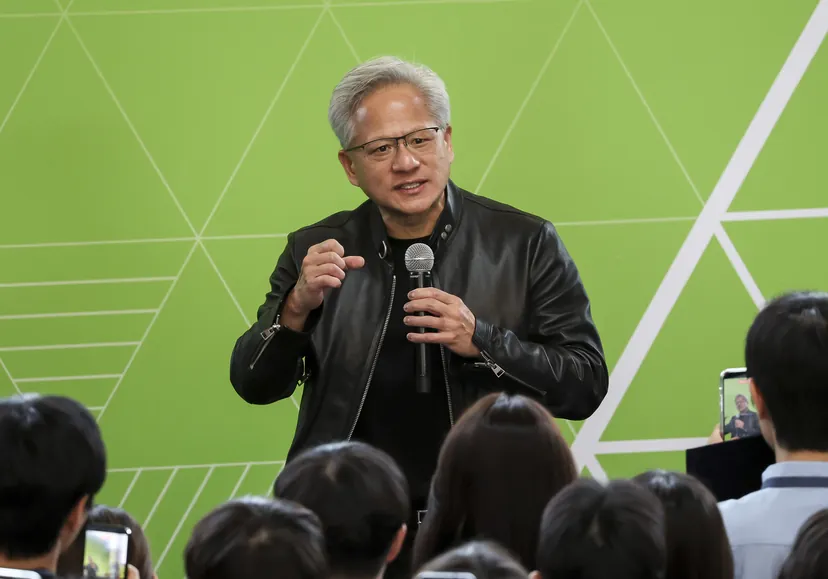
This is disconcerting news for investors. Some might think that as long as the company sells its chips well, that is all that matters. However, if Nvidia’s stock price rise has been explained by the anticipation of founder CEO Huang's vision and drive, it is difficult to dismiss this controversy as merely a personal matter.
CEO Huang is not only an executive who explains technology but also plays a key role in persuading the U.S. government to allow the sale of chips to China. Even if Chinese customers want the products, transactions are difficult without export permits from the U.S. government. Therefore, it is difficult to rule out the possibility that if the U.S. government's trust in CEO Huang and Nvidia is shaken, it could impact future export permit reviews.
In reality, Nvidia’s business in China depends on whether it receives export permits from the U.S. government. Reuters reported last May that the U.S. had approved the purchase of Nvidia’s H200s by about 10 Chinese companies, including Alibaba, Tencent, and ByteDance. Although the chips were not delivered at the time, circumstances suggest that small quantities have since entered China.
Large-scale imports into China remain blocked. According to Reuters on the 5th, approximately 600,000 H200 units are being held in Hong Kong, awaiting entry into mainland China. Even if the U.S. grants export approval, if China blocks the entry, it is difficult for sales to expand.
In particular, MegaSpeed, which appeared in this case, is an Nvidia customer based in Singapore. It is known that U.S. authorities have been suspicious of whether MegaSpeed was involved in the diversion of advanced AI chips—which are subject to export restrictions—to China. Nvidia maintains that it conducted its own investigation into allegations of MegaSpeed's chip diversion and found no issues. However, investors should watch for the possibility that export controls and transaction screenings for third-country customers may be tightened as a result of this controversy. If screenings become stricter and planned chip shipments are delayed, it could affect performance forecasts even excluding China-related revenue.
The U.S. Congress is already pressuring Nvidia. Last March, Senator Elizabeth Warren (Democrat) and Senator Jim Banks (Republican) requested that the Department of Commerce investigate whether CEO Huang’s remarks regarding chip diversion had misled U.S. authorities and influenced export permit decisions. The two senators took issue with the fact that CEO Huang had previously stated there was no evidence to support the diversion of advanced AI chips to China.
After the allegations of contact with Chinese intelligence agencies surfaced, the House of Representatives also began applying pressure. Foreign Affairs Committee Chairman Brian Mast, China Select Committee Chairman John Moolenaar, and Intelligence Committee Chairman Rick Crawford requested a closed-door joint briefing from CEO Huang on the 4th to explain the allegations and the company's security procedures. They asked for a response regarding attendance by the 11th, proposing to hold the briefing on the 18th. While congressional demands do not automatically lead to tighter export regulations, investors should note that Nvidia’s China-related transactions and internal security systems are now under political and regulatory scrutiny.
Nvidia’s third-quarter revenue guidance presented in August was $108 billion (146.47 trillion KRW). This forecast did not include revenue from computing products for data centers sold to China. Nvidia is scheduled to announce its third-quarter results on the 17th. Attention is focused on whether it achieved its existing targets even without China data center revenue, as well as on its fourth-quarter revenue outlook. In particular, if export permits or transaction screenings are tightened due to this controversy and product shipments are delayed, it could impact existing revenue forecasts. Investors need to distinguish whether they invested based on the company's growth prospects excluding China, or if they were factoring in expectations for better performance as the Chinese market reopened.