

[BizHanKook] Beyond the black basalt beach of Samyang-dong, Jeju City, a massive chimney stands tall. Smoke containing air pollutants drifts on the sea breeze toward residential areas and the harbor. This is the landscape of the Jeju Combined Cycle Power Plant, run by Korea Midland Power (KOMIPO) right at the water's edge. Plans are in place to add a 150MW LNG (liquefied natural gas) combined cycle power plant here, in accordance with the government’s 10th Basic Plan for Electricity Supply and Demand.
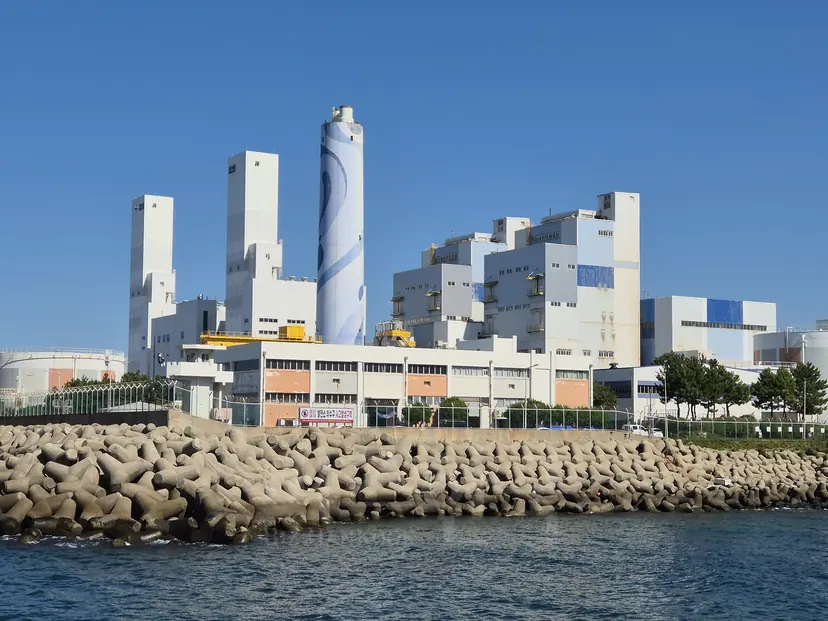
Gas Power Trapped in a Quagmire of 22-Fold Emission Limits and ‘Reverse Margin’ Deficits
Glancing at the chimney through the taxi window, the driver tightened his grip on the steering wheel. As he drove the reporter through the alleyways near the Samyang-dong plant, he opened up about the news of the plant's expansion.
“People here are already dead set against things like offshore wind farms. You’d face intense opposition from the local haenyeo (female divers) and residents whose fishing grounds are at stake; it certainly won't be easy to expand a gas plant that’s puffing out smoke.”
Criticism has never ceased regarding how the high-temperature cooling water discharged from the plant accelerates the whitening of corals and seaweed, destroying the underwater ecosystem. In particular, the KOMIPO Jeju Power Headquarters is located directly next to a dense residential area, meaning air pollutants from the plant can drift straight into the village. According to the Climate & Energy Resource Center (ARC), gas power plants in Jeju recorded a total of 2,817 instances where nitrogen oxide (NOx) emissions exceeded the limits measured by Tele-Monitoring Systems (TMS) in 2025 alone. The excess levels ranged from as little as 6.4 times to as much as 22.1 times the legal limit.
Yet, there were no sanctions. This is due to a "grace period" regulation that deems the initial startup and final shutdown phases of a generator as "abnormal operations," exempting them from penalties on the grounds that Selective Catalytic Reduction (SCR) systems cannot function properly below certain temperatures. Meanwhile, due to an oversupply of energy, frequent startups and shutdowns of the generators have lengthened the periods during which unfiltered pollutants from low-temperature cycles are emitted directly into the air.
Kim Jeong-do, secretariat director of ARC, whom we met in Samyang-dong, raised his voice: “Despite thousands of incidents of excess pollutant emissions, the plant has hidden behind the 'grace period' regulation. They have never once transparently disclosed this information or notified the residents. Under the guise of 'clean energy,' taking residents’ health hostage to build another 150MW facility is clear-cut deception.”
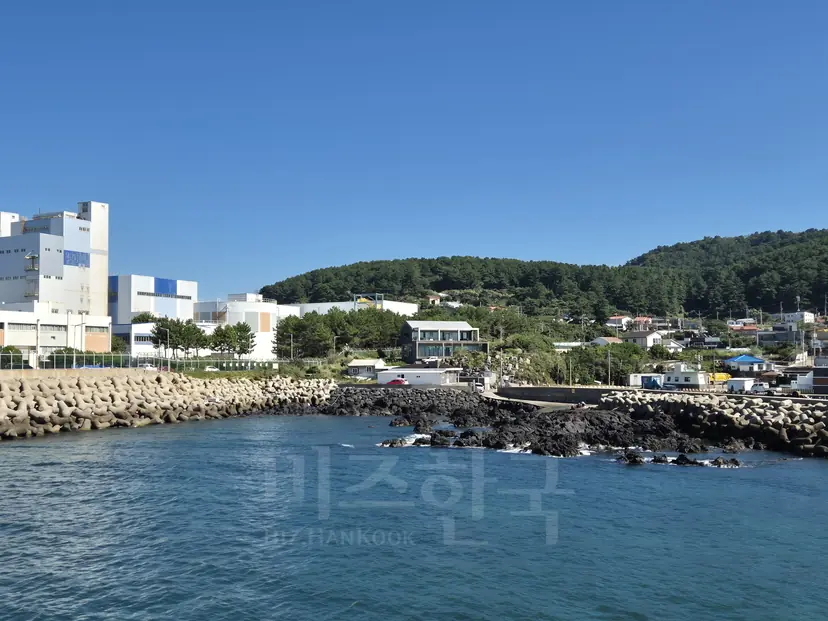
Within the Samyang-dong plant site, four bio-heavy oil generators that emit nitrogen oxides and dust are also in operation. Although the government classifies bio-heavy oil as a renewable energy source, it carries environmental problems, such as the generation of pollutants during the combustion process and greenhouse gas emissions during the harvesting of palm oil, the raw material. Among the four units, Jeju Power units 2 and 3, and Jeju Internal Combustion unit 1, will reach the end of their design lifespans around 2030. Plans to build new chimneys are being pushed forward while plans to prematurely retire aging fossil fuel facilities are being delayed.
The economic viability of existing facilities is also plummeting. The utilization rate of the Samyang-dong Jeju Combined Cycle Power Plant nosedived from 60.6% in 2023 to 39.9% in 2025. The operating rate fell further after the Korea Power Exchange (KPX) lowered the minimum output capacity for essential power generators like gas plants in August 2024.
As operating rates plummeted, the financial situation sank into a quagmire of reverse margins. The Jeju Combined Cycle Power Plant recorded an operating loss of 11.1 billion KRW in 2023, followed by 28.2 billion KRW in 2024 and 29.4 billion KRW in 2025. With revenue at 144.8 billion KRW against a cost of sales of 170.4 billion KRW in 2025, the structure is such that the more electricity they sell, the greater their losses grow. The South Jeju Combined Cycle Power Plant in Andeok-myeon, Seogwipo, also saw a 28 billion KRW deficit as soon as it switched its fuel from diesel to LNG in 2024, with losses continuing at 26.4 billion KRW in 2025.
Traveling east from Samyang-dong brings you to Dongbok-ri, Gujwa-eup. On a former quarry site overgrown with grass and brush, Korea East-West Power (EWP) plans to build another 150MW LNG combined cycle power plant. Just 1.5km from this site lies the Dongbaekdongsan forest in Seonheul-ri, Jocheon-eup, a UNESCO Ramsar Wetland and a wetland conservation area designated by the Ministry of Environment. It is a habitat for numerous endangered species such as the floating heart (Nymphoides coreana) and the Jeju pit viper, and a Gotjawal (Jeju’s volcanic forest) that serves as a groundwater recharge area.
Dongbaekdongsan was not included in Korea East-West Power's draft environmental impact assessment. The project developer narrowed the scope of the assessment to a 500m radius from the plant. Civil groups have filed a request for a public interest audit with the Board of Audit and Inspection, citing reasons such as the fact that economic feasibility was not re-evaluated even though project costs ballooned by over 30%—from 4.88 trillion KRW to 6.488 trillion KRW—and that the authority to determine environmental impact assessment items was exercised by the Governor of Jeju instead of the Minister of Environment. There is also fierce criticism that this has set a precedent for allowing development projects without the restoration of quarry sites as originally ordered.
80% Reserve Power Rate… The ‘Contradiction’ of Turning Off Wind While Building Gas
Jeju’s power grid has already exceeded saturation. For years, Jeju's base load—the minimum power demand during spring and autumn—has stagnated at around 730MW. In contrast, power supply capacity has surged rapidly alongside the expansion of renewable energy. Since the commercial operation of the #3 Wando-Jeju HVDC line in 2025, the supply capacity through inland transmission has expanded from 360MW to 600MW. As of 2025, Jeju's reserve power rate has soared to 43.3% in summer and 81.1% in winter.
Even when trying to transmit surplus electricity back to the mainland, Jeollanam-do, where the connection line terminates, also suffers from frequent output curtailments due to a surplus of renewable energy and lacks the capacity to absorb the power. Instead, as electricity pushes in from the mainland, the operating rate of power facilities within the island is hitting rock bottom.
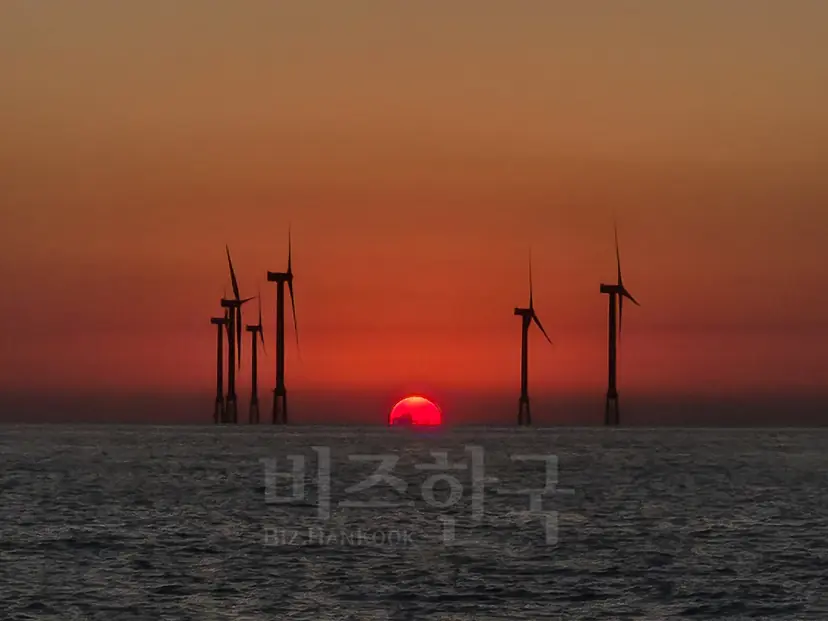
Throughout the reporting process, I saw rows of wind turbines standing across the land and sea of Jeju. Even during the day when the wind was blowing, the turbine propellers were stationary. This is due to "output curtailment," where power production is forcibly cut off because it exceeds the capacity of the power grid.
Kim Jeong-do, secretariat director of ARC, stated: “We are forcing perfectly functional wind turbines to stop their blades because we have too much electricity, while on the other side, we are building new fossil fuel chimneys that will emit massive amounts of greenhouse gases. If we fail to correct this grotesque contradiction in Jeju, the mainland’s power grid will eventually suffer the same failure and stranded assets.”