

[Bizhankook] In Japan, well-known for its "small homes," the minimum residential area for a single-person household is 25㎡, which is 11㎡ larger than the South Korean standard. This figure includes considerations for securing a separate dining area in addition to a living room, kitchen, toilet, and bathroom. The Housing Bureau of Japan’s MLIT, which oversees the nation's housing policy, provided this rationale in a written response to Bizhankook. They also cited policy shifts prioritizing housing quality after the resolution of housing shortages, the increase in middle-aged and elderly single-person households, and the trend of long-term residency in homes for singles as key background factors.
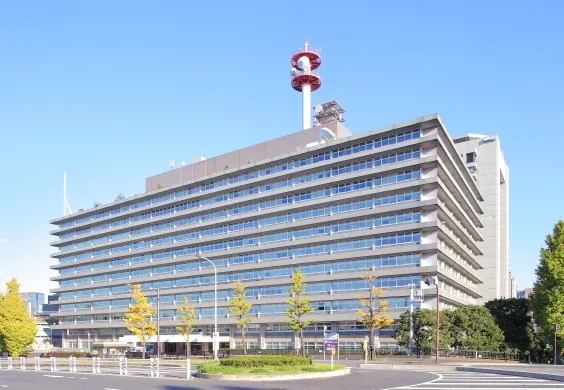
Bizhankook recently sent inquiries to the Housing Bureau of Japan’s MLIT regarding the background of setting the minimum residential area, specific calculation rationales, the status of application in public rental housing, and the minimum residential area in Korea, and received an official response. The following is a Q&A based on the translated and organized written responses from the Housing Bureau of the MLIT.
△ How did Japan calculate the 25㎡ minimum residential area for single-person households?
The 25㎡ figure was calculated based on the area required to secure a living room the size of 4.5 tatami mats, plus a kitchen, toilet, bathroom, and dining space. Japan first established minimum housing standards in its "3rd Five-Year Housing Construction Plan" in 1976. At the time, the standard area for a single-person household was 16㎡, which was the result of a simulation to ensure a living room of 4.5 tatami mats along with a kitchen and toilet.
Later, in the 5th plan, the area was increased to 25㎡ for middle-aged and elderly single-person households by adding the space needed for a separate dining area. Meanwhile, in the 7th plan, the area for a bathroom was included, setting the standard for single-person households at 18㎡. Subsequently, as the policy shifted to the Basic Plan for Housing Life in 2006, the minimum residential area for single-person households was uniformly set at 25㎡ regardless of age.
△ What are the social and policy backgrounds behind Japan expanding its minimum residential area standards?
Japanese housing policy began with the goal of resolving housing shortages after facing a shortfall of approximately 4.2 million homes following World War II. However, by 1973, the number of houses exceeded the number of households in every prefecture across the country. Following this, the focus of policy shifted from quantitative supply to prioritizing the quality of housing.
The change in living patterns for single-person households also had an impact. Initially, it was expected that single-person households would reside in homes for short periods, but as lifestyles became more diverse, the number of middle-aged and elderly single-person households increased, as did cases of long-term residency in housing designed for singles. The growing necessity to improve the quality of existing housing in an aging society also served as background.
△ What is the significance of Japan’s 25㎡ minimum residential area? Is this standard still maintained today?
Since the Five-Year Housing Construction Plan, the minimum residential area has been presented as the "basis for a healthy and cultural living life." It has been used as a standard for housing financial support and the supply of public housing. Although the new Basic Plan for Housing Life, decided in March of this year, does not contain the residential area standard, it was specified in a separate notice sent by the MLIT to local governments to ensure it continues to be used as a reference for housing policy as needed.
The notice defines the minimum residential area as "a standard for housing area considered necessary as a basis for leading a healthy and cultural living life, with attention to the relationship between the number of household members and the floor area."
△ Is the 25㎡ standard applied to public housing, such as municipal housing and the Urban Renaissance Agency (UR)?
The development standards for Japanese municipal housing generally set the total floor area per unit at 25㎡ or more. This serves as a reference for local governments when they establish municipal housing development standards by ordinance; specific details are determined by each local government considering regional conditions. New municipal housing is also built according to these ordinance standards. However, if appropriate communal kitchens and bathrooms are provided in common areas, housing smaller than 25㎡ can be supplied.
Housing built by local housing supply corporations is, in principle, set at an area between 30㎡ and 175㎡ per unit. UR rental housing does not have a uniform minimum residential area standard. Instead, the area is determined for each individual project by comprehensively reviewing demands for reconstruction, housing product planning, etc., while considering the residential area standards of the Basic Plan for Housing Life. However, there are no UR rental housing units among those newly supplied recently that are smaller than 25㎡.
△ How do you evaluate Korea’s 14㎡ minimum residential area for single-person households compared to Japan?
It is difficult to provide a specific answer as we do not have sufficient understanding of Korea's housing facilities and lifestyle patterns. However, Japan shifted its policy to prioritize quality over quantity after housing shortages were resolved. In doing so, we changed the minimum residential area by considering social changes, such as the increase in middle-aged and elderly single-person households, the expansion of long-term residency in single-person housing, and the need for qualitative improvement of housing in an aging society.
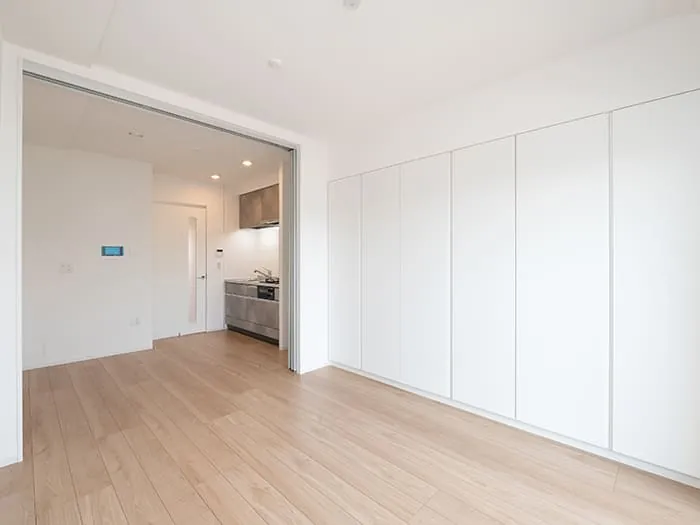
Meanwhile, in the Basic Plan for Housing Life revised in March of this year, Japan presented "a level exceeding about 40㎡" as the scale of housing to promote future supply and distribution. This is included in the "housing performance level," which stipulates the basic functions and living performance of housing. It outlines a blueprint to secure housing that various households can use for a long time in response to the expected increase in single-person households and changes in household composition by 2050.
40㎡ is not an area figure Japan presented for the first time this year. In its 2021 Basic Plan for Housing Life, the Japanese government set 40㎡ as the induced residential area required for single-person households in urban areas to enjoy a prosperous living life. With this year's revision, the nature of the standard was changed to exclude existing minimum/induced residential area standards from the national plan and instead present the scale of housing that various households can occupy and that can be utilized by the next generation.
The Housing Bureau of Japan’s MLIT stated to Bizhankook, "40㎡ is a level where a single-person household can live comfortably, and it is also the minimum residential area level for a three-person household or a household consisting of a couple and two preschool children. Considering that it can cover about 80% of households nationwide if two-person households are included, we view it as a level of housing function and performance that allows various households to reside and can respond to a wide range of housing demand and social needs."