

[BizHankook] “The reason wireless connectivity is critical is not just because of the power consumption of the chip. If you can establish a fast connection while using minimal power, you can offload a significant portion of AI computing to the smartphone’s powerful processor and larger battery.”
Shreyas Sen, CTO of Ixana, stated that the future of AI glasses will be decided by wireless connectivity technology. Sen is a wireless communication expert who founded the wearable semiconductor startup Ixana.
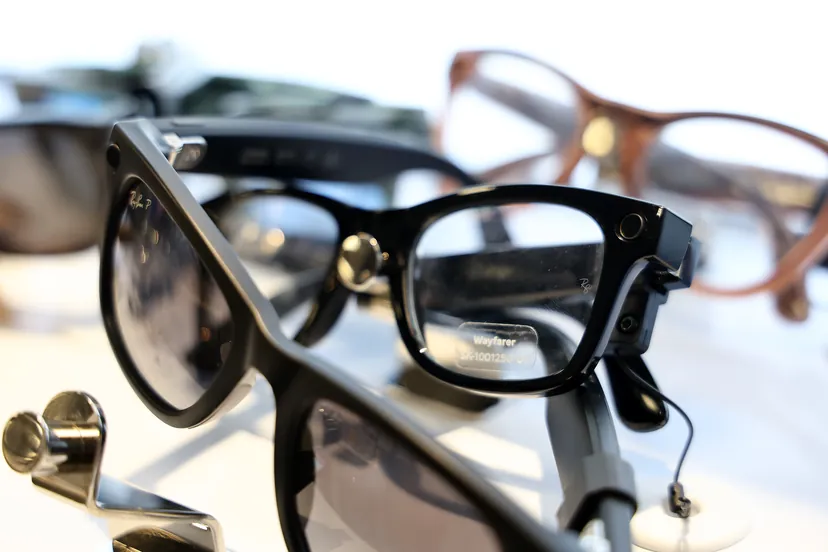
As AI glasses garner attention as the next-generation AI interface, their range of applications is expanding. The market is also growing rapidly; according to Counterpoint Research, global AI glasses shipments in the first half of this year increased by 263% compared to a year ago. However, fitting cameras, microphones, and AI features into small frames while managing weight and battery life remains a challenge. A realistic alternative being discussed is a structure where AI computation is handled by a smartphone, while the glasses focus on collecting and relaying information. Implementing this requires low-power consumption combined with high-speed data transmission.

Ixana is a wearable semiconductor startup that spun out of Purdue University in the United States. It has developed ‘Wi-R,’ a wireless communication technology that exchanges data through electric fields flowing along the human body and nearby conductors, rather than radiating radio waves into the surrounding space like Bluetooth. Shreyas Sen, CTO of Ixana, is an associate professor at Purdue University who devised Wi-R. Samsung Next, the overseas investment arm of Samsung Electronics, has also invested in Ixana.
In a written interview with BizHankook, CTO Sen said, “Today’s AI can understand what a user sees and hears, making glasses a medium that provides eyes and ears for personal AI.” He believes that wireless connectivity can influence not only simple data transmission but also the weight, battery, and computing architecture of the glasses. He emphasized that the key is not to cram more computing devices into the glasses, but to change the connection structure so that computing can be shared with peripheral devices like smartphones. The following is a Q&A with CTO Sen.
The Role of AI Glasses Is Evolving… Personal AI That Understands Daily Context Is Key
-How is this different from the Google Glass era?
“Google Glass was a device that displayed information in front of your eyes. Now, a screen is not a requirement. 96% of AI glasses shipped in the first half of this year were products without displays. Engineers in Silicon Valley are obsessed with implementing technology that seamlessly perceives the surrounding situation using small devices. Investors and startups see the potential for a new computing interface here.”
-What is needed to win over consumers?
“While weight, battery, design, and price are important, there must first be a reason to wear them. Currently, the biggest appeal of smart glasses is taking photos and videos without a phone, but that isn’t an essential function for most people. The door to mass adoption will only open when we have an AI that knows what the user is doing, remembers what it has seen and heard, and handles tasks without needing step-by-step instructions.”
Big Tech is moving in a similar direction. At its annual developer conference ‘Meta Connect 2026,’ Meta announced that it would integrate its personal AI agent ‘Muse’ into its AI glasses.
-What is the most difficult technical hurdle to overcome?
“Power consumption and heat generation. Increased computation consumes more power and generates more heat. Increasing the battery size adds weight and cost, while shrinking the frame leaves no room for components. This is why wireless connectivity is not just a power issue for a single communication chip, but a factor that determines the entire design of the glasses. However, the energy used to move data must be efficient enough so that it doesn't offset the power saved.”
-How is the supply chain structured?
“The U.S. is strong in AI platforms and chip design, Taiwan in semiconductor manufacturing, and Japan in image sensors and precision parts. South Korea possesses capabilities in semiconductors, memory, displays, camera modules, and batteries. China has built an ecosystem encompassing parts, optical modules, rapid prototyping, and final assembly. Ultimately, the supplier that makes the finished glasses better, not just the one with the best component specifications, will win.”
“Bluetooth Can’t Send Video”… The ‘Wireless Wire’ for Offloading Computation
-How is Wi-R different from Bluetooth?
“Smartphone touchscreens detect finger position via electric fields. Wi-R uses the same principle to exchange data between devices that are touching or near the body or metal surfaces. Unlike Bluetooth, which spreads radio waves into the surroundings, the signal stays around the body, allowing for high-speed transmission with very little power. We call this a ‘wireless wire.’”
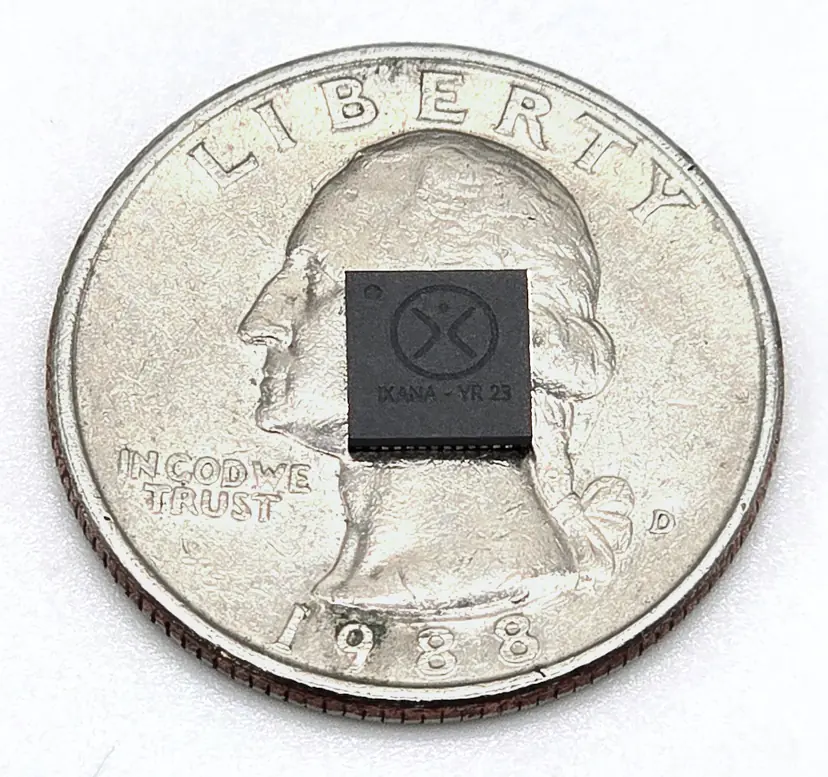
Ixana stated that its chip currently being supplied to clients (XA-WIR2001) consumes only 1/38th of the communication energy per bit compared to major Bluetooth Low Energy (BLE) chips.
-What difference does it make in AI glasses?
“Even with glasses weighing less than 50g, you can send camera footage to the AI on your phone all day long. BLE’s 2Mbps mode struggles to handle such video tasks, and Wi-Fi uses significantly more power. The next-generation chip, ‘YR31,’ supports 20 megabits per second (20Mbps), allowing the glasses to continuously stream what they see to a smartphone.”
-Do both the glasses and the phone need to have the chip?
“Not every smartphone needs to have Wi-R from the start. Existing smartphones can be connected via small USB-C accessories. Wi-R will be used alongside Bluetooth and Wi-Fi, but the goal is to become the new connectivity standard for the personal AI era.”
-What about collaboration with South Korean companies?
“Samsung Next has invested in us, and we are developing ways to utilize Wi-R with Korean companies. Korea led the mobile revolution with the commercialization of CDMA in 1996. Since it possesses the entire stack of smartphone, semiconductor, display, and wearable industries, it can bring not just parts, but the entire AI glasses experience to the market.”
Ixana plans to demonstrate color video transmission using the 20Mbps chip at CES 2027 next January. The launch schedule for commercial products will be announced by the device manufacturers, who are Ixana's clients. CTO Sen remarked, “AI glasses today are in a similar position to touchscreen smartphones about 20 years ago,” adding, “I wouldn’t be surprised if they see explosive adoption within the next five years, similar to what happened back then.”