

[비즈한국] Apple’s first foldable smartphone, the 'iPhone Duo,' has successfully made a splash by quickly exhausting its initial supply in major global markets, despite controversies over its high price. However, durability has once again become a point of contention after some buyers reported that their internal screens broke shortly after launch. Controversy over defects surrounding new iPhone products is nothing new. In the past, some models have led to so-called "gates" involving overall product design and quality control, while others were limited to isolated cases of device failure. The industry is now focused on whether the iPhone Duo issues are isolated early-batch defects or a common structural problem.
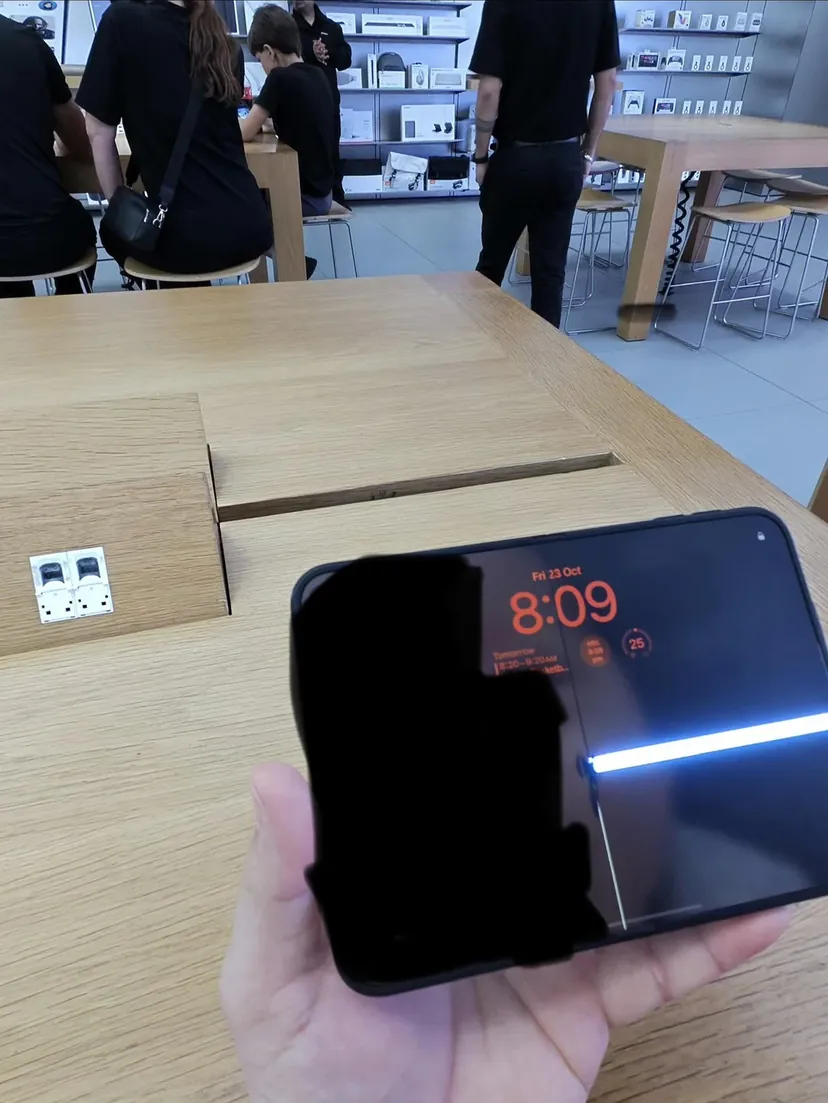
On October 23, an Australian buyer who posted on the community site Reddit claimed the damage occurred after owning the product for about 6 hours with less than 20 folds. The user explained that while unfolding the phone to show a friend, they felt something catch near the internal hinge, followed by a cracking sound as the screen broke. The author stated they were later able to exchange it for a new unit at an Apple Store. The usage time and circumstances of the damage are based on the buyer's account, and the exact cause has not been verified.
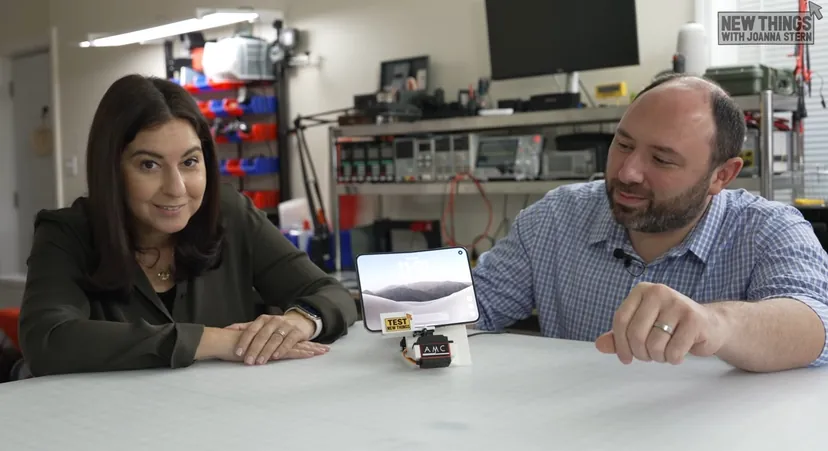
On the other hand, there have been instances where the device was opened and closed tens of thousands of times in repetitive folding tests released before launch. Tech journalist Joanna Stern revealed she folded the iPhone Duo over 32,000 times using a custom-built device, giving a positive assessment of the hardware's durability. It essentially means that while one side reports the device survived tens of thousands of folds, another side reports it broke after only a few. To understand this discrepancy, one must examine not just the number of folds, but the testing conditions and the state of the individual devices.
'How it was tested' is as important as 'how many times it was folded'
Repetitive folding tests are an important method for evaluating the durability of foldable phones. By repeating the same motion multiple times, one can check if the hinge and screen function properly. However, it is difficult to accept the number of times a specific device survived under fixed conditions as the product lifespan for all users.
It is also necessary to look at the conditions of Stern's test. According to MacRumors, the test device had a case attached, and while the machine unfolded the screen flat, it did not close it completely every time. This is why it is difficult to compare it to other tests that involve complete opening and closing cycles. That does not mean the test is meaningless; rather, it should be interpreted as proof that it withstood repetitive motions under those specific conditions.
The subject of the test is also important. Samsung Display announced last year that the foldable OLED panel used in the Galaxy Z Fold 7 functioned normally after a 500,000-fold test, verified by the testing and certification agency Bureau Veritas. Here, the subject of verification is the display panel. This should be distinguished from tests on a finished product that includes the hinge and exterior components.
Temperature is also a separate verification item. In addition to room-temperature folding tests, Samsung Display has also disclosed folding tests conducted at minus 20 degrees Celsius. In actual consumer use, various conditions such as temperature changes and physical shocks act upon the device in addition to opening and closing motions. Therefore, to compare the durability of different products, one must check the number of test cycles along with temperature, range of motion, speed, and the number of devices tested.
In this respect, the existence of devices that passed tens of thousands of folds alongside devices that broke after short use is not necessarily a contradiction. Test results simply mean that the specific device survived the given conditions. They are not a guarantee that the manufacturing state and usage environment of every sold product are identical. Conversely, one cannot conclude that the entire model is vulnerable to repeated use based solely on the initial breakage of a few devices.
The screen is separate from the hinge… Analysis of broken products is key
The durability of a foldable phone is not determined solely by the strength of the hinge. Even if the hinge moves normally, problems can occur in the screen or other components that comprise it. Whether the device folds smoothly, the screen displays normally, and the touch functionality works correctly are items that must be checked together.
A foldable display is a structure made of multiple layered materials. It must be designed to regulate the force applied to each layer when bending and to ensure the hinge folds the screen into the proper shape. In particular, the industry views structural design to reduce stress on the component layers and hinge design as the most important factors. This means that besides bending the screen, it is crucial to ensure that force does not concentrate on a specific area during the bending process.
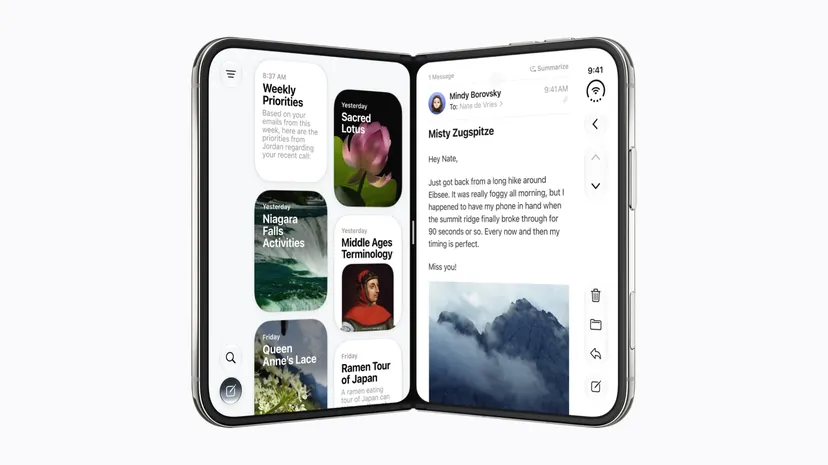
Apple also explains that they have applied a screen protection layer, adhesives, and a support structure together. Official materials mention a custom polymer cover layer, glass above and below the display, adhesives to aid movement between layers, and a titanium plate at the bottom. As multiple parts and materials work in unison, it is difficult to pinpoint which part had a problem based solely on the fact that the screen broke.
Experts are of the opinion that to determine whether this breakage is a manufacturing defect of an individual product, a problem with a specific production batch, or a common structural vulnerability, the actual broken products must be analyzed. It is necessary to verify the buyer's usage history and the damaged area, and to check whether similar symptoms are repeating in other devices. It is premature to conclude there is a defect based on early reports alone, just as it is to dismiss the issue as mere isolated incidents.
However, Apple's post-purchase response is also subject to evaluation. The instance where the buyer was able to exchange for a new product on the spot is meaningful in that it resolved the immediate inconvenience. But it is unclear whether such an exchange is an official Apple service policy or an arbitrary measure taken by that specific store. This is why an explanation is needed regarding what symptoms were confirmed and what procedures consumers facing the same problem can follow.