

[비즈한국] As recently as the end of last year, the market's primary question was, "When will interest rates drop further?" However, the narrative has flipped this year. With oil prices and inflation climbing again, concerns have emerged: "Shouldn't we be raising the rates we just lowered?" After cutting rates three times in the second half of last year, the U.S. Federal Reserve has held steady at 3.50–3.75% this year, while the Bank of Korea even raised its base rate to 2.75% last month.
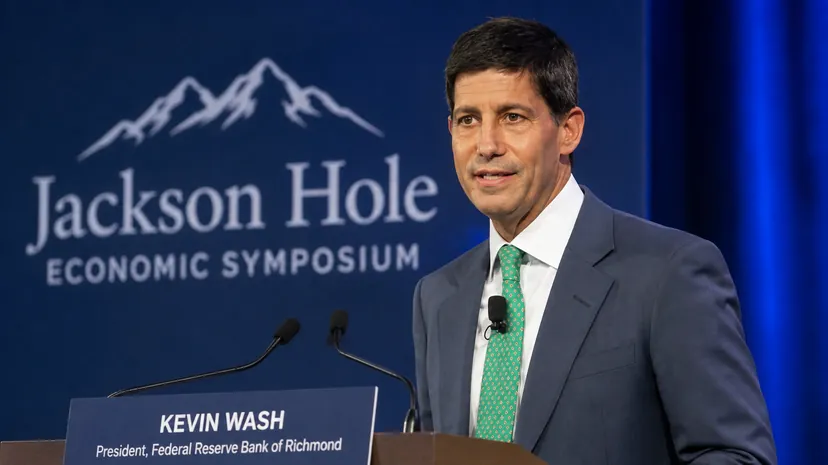
This is why all eyes are on the Jackson Hole Symposium starting on the 27th. The key point is how much the Fed, under the new leadership of Chair Kevin Warsh, will signal the possibility of further hikes versus waiting to see if inflation slows down at current rates. Coincidentally, the Bank of Korea's Monetary Policy Board meeting is scheduled for the same day.
A look at inflation explains why there is concern about potential rate hikes. While the U.S. consumer price index rose 3.4% in July, down from 3.5% in June, the June PCE inflation rate—the Fed's target metric—sat at 3.7%, with core PCE at 3.3%, both well above the 2% target. Furthermore, rising international oil prices remain a potential catalyst for further inflation. While the market-implied probability of a September rate hike (per CME FedWatch) dropped from over 40% immediately after the August 12th inflation report to the low 30% range on the 14th, the market has not completely ruled out an increase. The situation in Korea is similar. Although July consumer inflation fell to 2.8%, Deputy Governor Yoo Sang-dae, who will not attend the upcoming meeting on the 27th due to his pending retirement, recently mentioned the need for preemptive action, stating, "Barring any special shocks, the possibility of a further rate hike remains high."
So, what should individual investors do? Don't try to predict the direction of interest rates; instead, align your money with your timeline. Even central banks cannot guarantee whether rates will rise or fall further. Rather than clinging to something difficult to predict, it is far better to tailor your accounts to the "fund timetable" that you can control.
Let’s start with deposits. It is unclear if current deposit rates represent the peak of this cycle, as the possibility of further hikes remains. Therefore, rather than pouring your entire lump sum into a single product under the assumption that "this is the last chance," it is better to stagger maturities based on when you plan to use the money. By separating funds needed within a year from those needed in two to three years, you reduce the risk of regret regardless of whether rates rise or fall.
Bonds carry both temptations and traps. It is true that if the potential for further policy rate hikes is limited, the price burden on bonds decreases. However, long-term interest rates are influenced not only by policy rates but also by inflation expectations and government bond supply and demand; therefore, the peak of policy rates does not necessarily mark the bottom for all bond prices. In this climate, the principle is to choose maturities you can hold until the end for individual bonds, and for bond-type ETFs, to check their sensitivity to interest rate changes, rather than betting on long-term bonds to time a rate cut.
If you have loans, the question is not "When will interest rates fall?" but "When is my interest rate scheduled to be reset?" Variable-rate loans are recalculated at set intervals based on the rates at that time. With the possibility of hikes still on the table, you must calculate in advance how much your burden might increase at the next reset date. Increasing debt in expectation of rate cuts is the riskiest move in a reversal phase.
The same applies to the dollar. The KRW/USD exchange rate has fallen from the 1,500 range to the low 1,400s. While U.S. interest rates being higher than Korea's is a factor in KRW weakness, exchange rates are driven by oil prices, risk-aversion sentiment, and foreign capital flows, not just interest rate differentials. Therefore, instead of betting on exchange rate trends, it is safer to buy dollars incrementally when you actually need them, such as for tuition or travel expenses.
What individual investors need right now is not the ability to accurately guess if rates will rise or fall. In this phase, where the possibility of a reversal after last year's cuts has opened up, the goal is to reconfigure your accounts: set deposits for when you need to spend, bonds for maturities you can handle, loans for their reset periods, and dollars for when you actually require them. Don't try to predict the direction of interest rates; align them with the timing of your money. At a turning point, what matters is not guessing the direction, but building an account that can withstand movement in either direction.