

[비즈한국] I recently had the opportunity to serve as a judge for the Asia-Pacific Regional Semi-Final of ClimateLaunchpad 2026. ClimateLaunchpad is the world’s largest green business idea competition, initiated by Climate-KIC in 2014. It currently operates in over 50 countries, providing bootcamps, coaching, and pitching programs to help entrepreneurs develop their ideas into business models and scale into the global market. To date, startups emerging from this program have raised over 500 million euros (810 billion KRW) in funding.
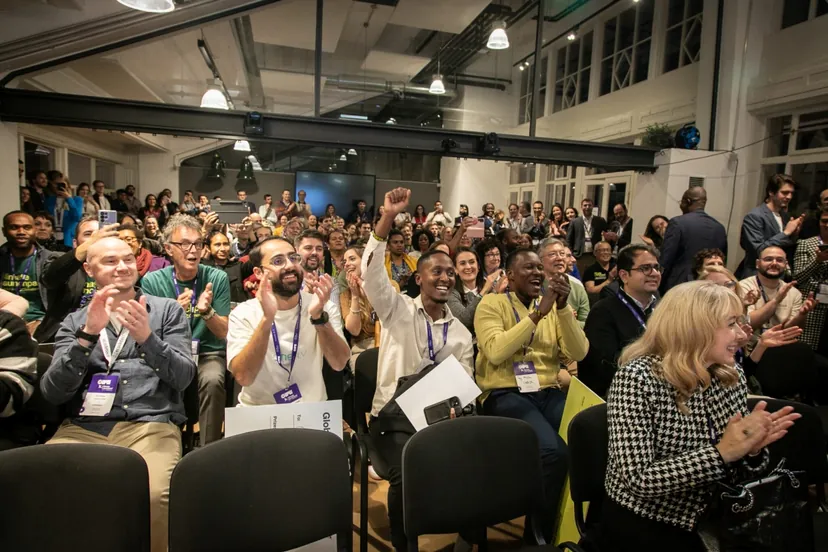
Climate-KIC: A Connecting Platform for European Climate Innovation
Understanding Climate-KIC, the organization behind ClimateLaunchpad, clarifies the nature of this competition. Climate-KIC started in 2010 as a "Knowledge and Innovation Community" (KIC) for climate change, established by the European Institute of Innovation and Technology (EIT) under the European Union (EU). Its original role was to bring together universities, research institutions, corporations, startups, and policy-making bodies to ensure that research and technology translate into real market and social change.
After growing for 15 years with EIT’s support, Climate-KIC became financially and operationally independent in 2025 and currently operates as a non-profit public interest organization based in the Netherlands. While not an official EU agency, it has established itself as one of the leading climate innovation organizations that implements European climate policy on the ground and connects diverse stakeholders. Its scale and role differ from typical startup accelerators.
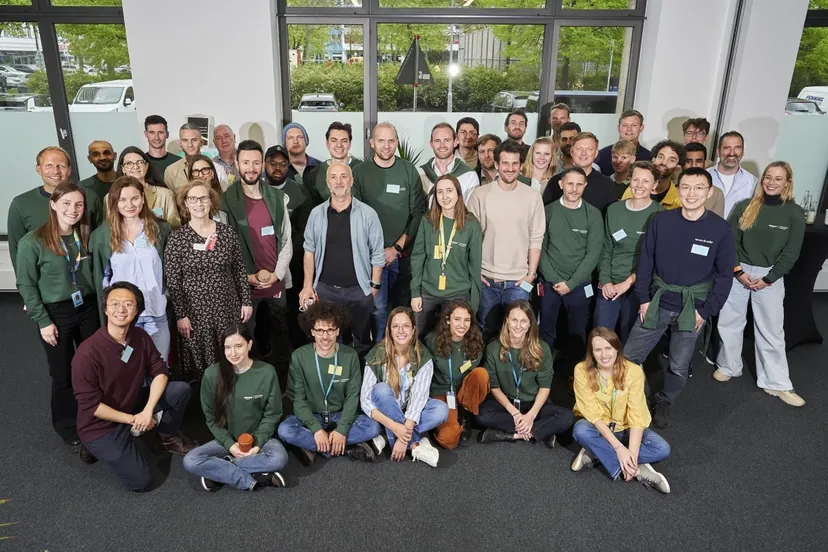
According to EIT, Climate-KIC has supported the growth of over 2,300 startups in the past 15 years, and these companies have attracted approximately 1.1 billion euros (1.78 trillion KRW) in investment, creating 15,000 full-time jobs and 790 new products. However, startup incubation is only one pillar of Climate-KIC’s activities. Currently, it places greater weight on its role in connecting nations, cities, local governments, industries, financial institutions, universities, and civil society to turn the goals of climate neutrality and climate resilience into actual policies, investments, and businesses. This is why Climate-KIC defines itself not merely as a 'cleantech support organization,' but as a European climate innovation agency and community.
A prime example is 'NetZeroCities,' which supports the EU’s '100 Climate-Neutral and Smart Cities by 2030' mission. To foster leading cities that will achieve climate neutrality by 2030, the EU selected 112 cities across 35 European countries, and Climate-KIC leads a consortium of 33 organizations to support these cities' transitions. This project goes beyond simply helping to introduce eco-friendly technologies. Its goal is to transform transport, energy, buildings, resource circulation, as well as urban policy, administration, finance, and citizen participation. This is one of the projects that most concretely reveals the European approach of viewing the climate crisis not as a single technical problem, but as a challenge requiring the transformation of an entire urban system.

Climate-KIC also plays a significant role in the field of climate change 'adaptation.' 'Pathways2Resilience,' which represents the EU’s climate adaptation mission, is also led by Climate-KIC, and as of 2026, 100 European regions and local governments are participating in creating long-term climate resilience strategies. The scope of this program covers not only climate risks such as floods and heatwaves but also water management, public infrastructure, health, land use, and local economies. Ultimately, what Climate-KIC does is not just selecting and supporting a few good eco-friendly technologies, but designing the 'stage of transition' where technology, policy, finance, institutions, and civic behavior move in concert.
Because of this background, Climate-KIC’s perspective on startups does not stop at technology. The core concept emphasized by the organization is 'system innovation.' It is based on the idea that the existence of one superior technology does not automatically solve climate problems; rather, that technology must be chosen by customers, diffused in the market, and backed by policy and investment to create actual changes in behavior. ClimateLaunchpad can be seen as a program where this philosophy of Climate-KIC is applied to entrepreneurs at the earliest stages.
What was personally interesting in this semi-final was who made it to the final round, and the criteria by which a European-originated climate startup program evaluates early-stage companies. The ClimateLaunchpad headquarters provided guideline materials for judges before the evaluation and held a preliminary briefing for participating judges. A point that was consistently emphasized during this session was, “Judge on potential, not maturity.”
The instruction was to look at the potential for the impact they could create in the future, rather than how complete the company is now. One should not favor advanced technology alone. The program defines itself as being "solution agnostic." Whether it is complex high-tech or a simple nature-based solution, what matters is the potential to create a significant climate impact.
The actual evaluation sheet is also quite interesting. Judges evaluate companies based on six criteria: market and business potential, job creation and social impact, innovation or technical potential, climate impact, management capacity, and pitch quality. Technical prowess is merely one of the six items.
Three Korean Startups in the Regional Semi-Finals
This year, three companies from South Korea advanced to the regional semi-finals.
The first, 'Chingoohaja,' which took 1st place in the Korean final, is developing an AI engine called 'Dolva AI.' Dolva AI analyzes the daily conversations of the elderly to monitor signs of cognitive changes over the long term. It is designed to analyze voice, language, and interaction, allowing existing care service providers, such as nursing facilities or telehealth operators, to use it in the form of an API. The company received a transfer of related technology and intellectual property rights from Samsung Electronics and aims to serve as infrastructure that continuously detects changes in daily life, rather than a one-time screening.

What is interesting is how this company explained its medical/care service as a 'climate business.' The logic is that if the elderly are helped to maintain independent living for longer, the need for resource-intensive long-term care services can be delayed, thereby reducing the carbon emissions generated by the medical and care system. The company presented a potential for a reduction of approximately 205,000 tons of CO₂e if it reaches 1% of the target population through its own impact model.
When we think of climate tech, it is easy to think of solar power, batteries, or carbon capture technology first, but at ClimateLaunchpad, this approach is also subject to evaluation. The important question is not 'is this typical climate tech?' but 'how persuasively and measurably can you explain the causal link to climate impact?' If the elderly are the most vulnerable group in a climate crisis, a solution for them is truly the most necessary technology in the era of the climate crisis.
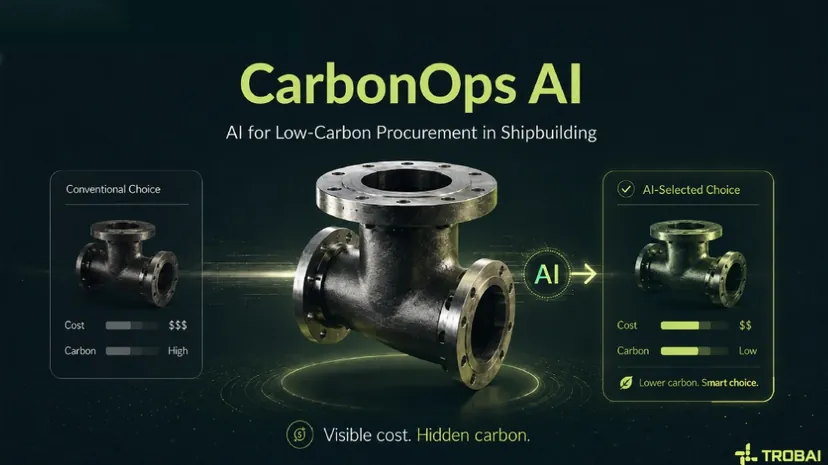
The second company, Trobai’s 'CarbonOps AI,' is a bit more direct. Let’s assume you are purchasing a single part in the shipbuilding supply chain. If you only compare prices, you would just choose the cheapest product. However, in an actual industrial site, one must simultaneously consider not just price, but specifications, certification, delivery, supply chain, and carbon emissions.
CarbonOps AI is a solution where AI reads requirements scattered across various documents and recommends actionable purchasing options after reviewing cost, delivery, compliance, and carbon emissions together. If the most eco-friendly product does not meet specifications or is excessively expensive, it cannot be a realistic choice. Therefore, what the company aims for is not simply finding the 'product with the least carbon,' but finding the option that produces lower carbon emissions among choices that are actually purchasable.
The third company, 'HeatAI,' addresses another issue. Governments around the world pour massive public budgets into the installation of heat pumps and energy efficiency improvements in buildings. However, after the equipment is installed, proving objectively whether energy consumption has actually decreased and how much carbon emissions have been reduced is surprisingly not easy.
What HeatAI intends to sell is not a simple building monitoring dashboard. It is a service that analyzes building operation data to create evidence of the actual performance of public climate projects at a level that can be audited, i.e., 'audit-grade evidence.' It also set its initial customer not as general building owners, but as government energy agencies.
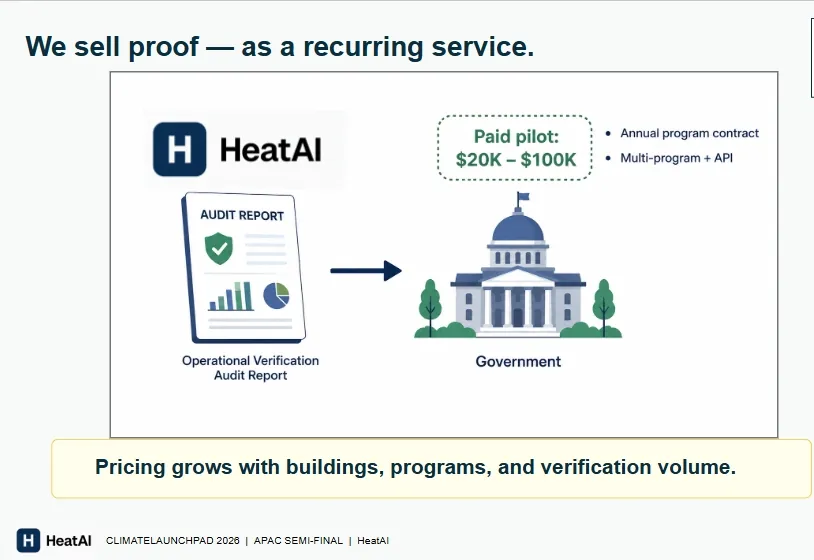
The company’s product direction changed after interviewing stakeholders over 20 times and discussing with experts and pilots over 10 times. At first, they thought customers wanted better monitoring technology, but what customers actually needed was evidence of operational performance that could be used for audits and verification. Therefore, they shifted the center of the product from monitoring to data quality verification, calculation rules, and an evidence system capable of audit trails.
The three companies seem completely different at first glance. One is AI for elderly care, one is a procurement solution for shipbuilding/manufacturing, and one is verification infrastructure for building energy policy. However, they share a common point: they do not stop at measuring carbon, but seek to change actual decision-making. They attempt to change the judgments on who to care for first, which parts to purchase, and whether energy projects supported by the government have achieved actual effects—all through data.
This was the very point I confirmed again while observing this evaluation. In the European climate startup ecosystem, the expression 'Climate Impact' does not simply mean a declaration that "our technology is eco-friendly." It means who the customer is and whether their needs have been verified, how the climate impact is measured, how the business model generates sustainable revenue, to which market it can scale, and what assumptions are made in the business and impact models. Ultimately, it is closer to a process of finding companies where technology, market, customers, business model, and climate effects are connected in a single logic, rather than just looking for good climate technology.
Another point to note is the starting point of the three Korean companies that advanced this time. They are not from large global accelerators or corporate internal ventures. They are startups that have grown through local startup hubs in Seoul, such as the DDM Youth Startup Center Unicorn operated by the Kwangwoon University Industry-Academic Cooperation Foundation, and the Gangbuk Youth Startup Maru.
Korea’s local startup centers are often perceived as infrastructure that merely provides space and educates early-stage founders. However, this case shows that companies grown in small, local startup hubs can also be evaluated in a program where early-stage climate companies from over 50 countries compete, provided they refine their business models and global pitches sufficiently.
In particular, climate tech does not necessarily require massive research facilities or tens of billions of won in investment from the beginning. Defining a problem discovered in the field in a new way, meeting customers to verify it, and designing a path for it to lead to actual carbon reduction or social change is also important climate innovation. In Korea, too, the question of looking at climate startups needs to move one step further from "what technology do you have?" to who will pay to use this technology, what decision-making changes due to that usage, how much climate impact that change creates, and how to prove it.
It is a quite significant change that on the stage of a global climate innovation program started in Europe, companies grown in small local startup hubs in Korea have begun to explain their technology in the language of 'measurable climate business.'
The author Lee Eun-seo majored in law in Korea and studied theater in Berlin. Based in Berlin, a city of art and a European startup hub, she grows alongside the city and leads 123Factory, which connects the startup ecosystems of Korea and Germany.