

[비즈한국] With the deadline for the conclusion of rehabilitation proceedings fast approaching, Homeplus is making an all-out effort to secure consent for the installment repayment of public interest claims. Homeplus is requesting that current and former employees agree to the deferral and installment payment of their wages and severance pay. While the company explains that employees are actively participating in the normalization of Homeplus, backlash is growing among retirees regarding the delay in severance payments and the waiver of late interest.

Employees say “We have no choice but to accept,” consent rate at 75%
Recently, Homeplus began the process of requesting consent from employees for the installment repayment of public interest claims. The company is seeking employee consent to delay or split the payment of outstanding wages and bonuses. It is understood that Homeplus has proposed paying wages two months later than the original payment date and distributing bonuses over a six-month period.
Under the Debtor Rehabilitation and Bankruptcy Act, employees' wages and severance pay are classified as public interest claims that must be repaid preferentially, unlike general rehabilitation claims. Consequently, Homeplus employees who are owed wages or severance pay are also considered holders of public interest claims.
Homeplus views the consent rate of public interest creditors for installment repayments as a critical metric for gauging the feasibility of its rehabilitation plan. If it fails to secure sufficient consent, the company’s financial burden will increase due to the higher amount that must be repaid in the short term.
Homeplus officials explained that if the immediate repayment burden becomes too high, the court might evaluate the rehabilitation plan’s feasibility as low, which could affect whether the plan is approved. According to data reported to the Homeplus Creditors’ Council, the total balance of public interest claims reached approximately 1.0999 trillion won as of the end of May.
Among current Homeplus employees, there is a sentiment that they have no choice but to agree, as the company’s survival is directly linked to their jobs. One employee said, “Since employees can only keep their jobs if Homeplus survives, there is an atmosphere where we have no choice but to accept some delay in wage payments to save the company.”
A Homeplus official explained, “Employees are stepping forward to consent because they believe that saving the company is the most important thing right now,” adding, “The current consent rate has exceeded 75%.”
Retirees unhappy with demands to wait years for severance and waive interest
On the other hand, backlash is mounting among retirees. It has been learned that Homeplus is requesting consent from retirees by proposing a plan to pay severance only after gradually filling the current shortfall in severance pension reserves by 2030. It is also reported that the agreement includes a clause requiring them to waive any interest on the delayed payments.
Homeplus’s capacity to fund its severance pension reserves has fallen significantly. According to the "Current Status of Homeplus Defined Benefit (DB) Pension Reserves" submitted by the Ministry of Employment and Labor to the National Assembly, the required reserve as of February this year was 466.111 billion won, but the actual reserve stood at only 372.835 billion won. The reserve ratio was 79.9%, a 3.2 percentage point drop from the 83.1% recorded during the same period last year. This leaves a shortfall of approximately 93.276 billion won.
An official from the Homeplus branch of the Mart Industry Union said, “The severance pension reserve is currently short by about 21%, and the company’s stance is that it will pay severance only after fully funding it by 2030,” adding, “It is inevitable that retirees are frustrated because the company is also asking them to waive the interest resulting from these delayed payments.”
The issue of waiving late interest is a major point of contention for retirees. Under current laws regarding severance benefits, interest rates for delayed payments can reach up to 20% per year if certain conditions are met. Since the interest would be substantial if payments are delayed for several years, retirees are finding it difficult to accept a demand to both wait for their severance and waive the interest.
There is also significant dissatisfaction with the consent process. Some retirees point out that the company is focusing solely on securing signatures rather than sufficiently explaining or discussing the payment terms and the waiver of interest. As former employees repeatedly receive phone calls and text messages, resentment toward the consent process is growing.
The union official mentioned earlier pointed out, “Retirees understand the company’s dire situation where it cannot pay severance immediately. The problem is that the company is asking them to wait for years and waive interest without providing a sufficient explanation,” adding, “When retirees push back, the company just explains it as a ‘process required by the court.’ The attitude of demanding unconditional consent without clear communication is the issue.”
Homeplus has a stakeholders’ meeting scheduled for September 2nd. The Seoul Rehabilitation Court plans to review the second modified rehabilitation plan submitted by Homeplus on that day and hold a vote for creditors and other stakeholders. The deadline for passing the rehabilitation plan is September 4th, two days later. If the plan is passed at the stakeholders’ meeting, it will proceed to court approval and the full implementation of the rehabilitation plan. If it fails to meet the requirements for passage, there is a possibility that the rehabilitation proceedings could be discontinued.
With the stakeholders’ meeting approaching, efforts by Homeplus to secure the consent of public interest creditors are expected to accelerate. Although public interest creditors are not direct voting parties at the stakeholders' meeting, the level of consent secured could influence the court’s judgment on the feasibility of the rehabilitation plan.
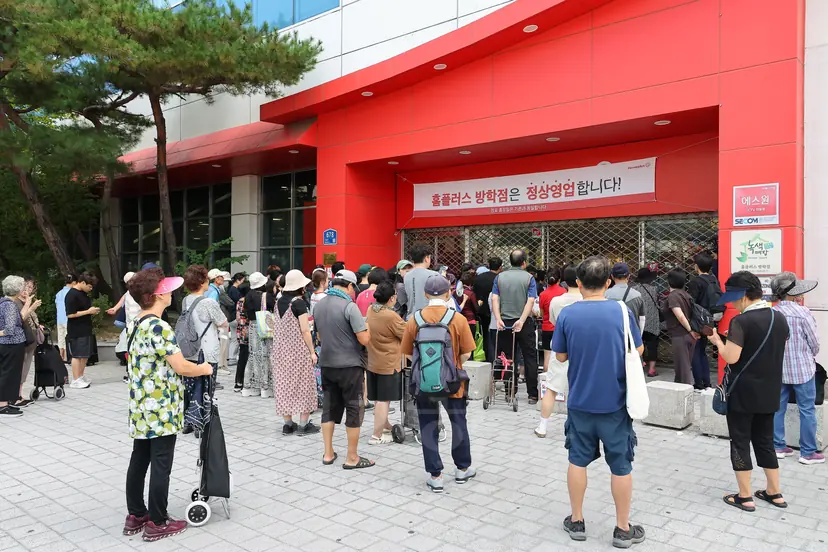
A Homeplus official stated, “Expectations for a successful rehabilitation are growing since the reopening,” adding, “Approval of the rehabilitation plan is essential to maintain this momentum. Currently, how many public interest creditors we secure consent from is a crucial factor for the rehabilitation of Homeplus.”