

[비즈한국] Homeplus has decided to discontinue its cultural center business. Despite having introduced cultural centers to the hypermarket industry for the first time in 1999 and cultivating them as a signature customer service, the business is coming to an end after 27 years. This is interpreted as a move to clean up non-profitable businesses while focusing on management normalization and cost efficiency following the rehabilitation process.
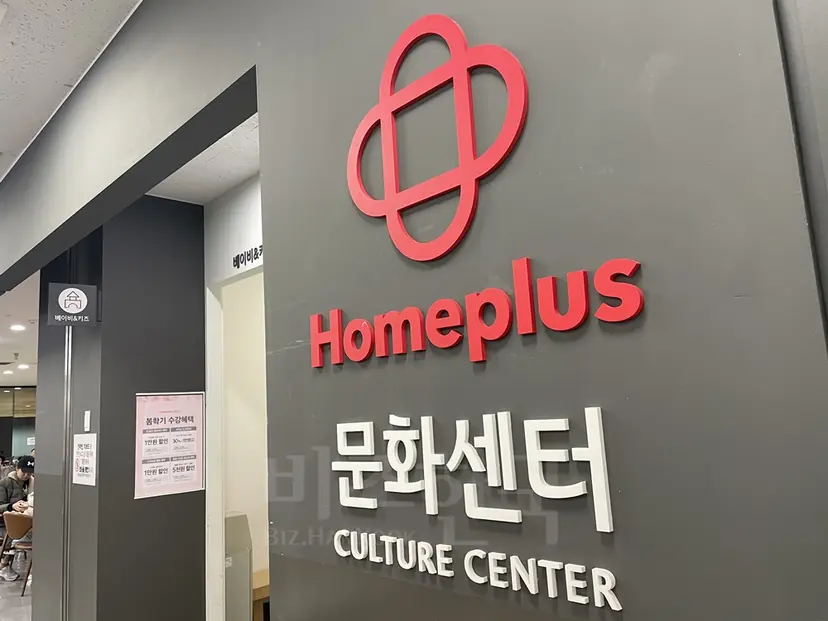
First Hypermarket Cultural Center, Operations to End on September 30
Homeplus is shutting down its cultural center business, which has run for 27 years. According to industry sources, Homeplus recently decided to terminate the cultural center operations as of September 30 and notified employees of the decision.
An official from the Homeplus branch of the Mart Workers' Union said, “When the stores entered temporary suspension in July, cultural center operations were also halted. As business resumed, some branches restarted their cultural centers, but we were recently notified by headquarters that operations will end on September 30.”
Homeplus launched its first cultural center in 1999, a first for the hypermarket industry. Given that cultural centers were primarily operated by department stores at the time, introducing them to hypermarkets was an unusual attempt. Subsequently, the cultural centers grew rapidly; by around 2010, they had reached the world’s largest scale, boasting 850,000 annual students and over 5,000 professional instructors.
In particular, these centers established themselves as key traffic-generating facilities that attracted parents with young children to Homeplus stores. By expanding their scope beyond programs for infants to include cooking, foreign language, and health classes for adults, they played a role in broadening the purpose of mart visits from simple shopping to culture and education.
However, the number of cultural center branches began to dwindle in the 2020s. The count fell from 123 in 2020 to 121 in 2021, 110 in 2022, 93 in 2023, and down to 87 in the spring semester of 2024. At the time, Homeplus cited store renewals, space reallocation, and a lack of students due to the declining birth rate as reasons for the reduction in operations.
Even as recently as last year, Homeplus had shown a willingness to continue operating the centers by launching new courses. However, as the rehabilitation process has prolonged and business conditions have worsened, it appears difficult for the cultural centers to maintain normal operations.
Industry experts believe it is highly likely that Homeplus decided to terminate the business to reduce financial burdens, as the centers serve more as a traffic-driving and social contribution tool rather than a direct profit-generating business.
Employees who have been working at the cultural centers are expected to be reassigned to other business sites. Any remaining tuition fees for current students will be fully refunded.
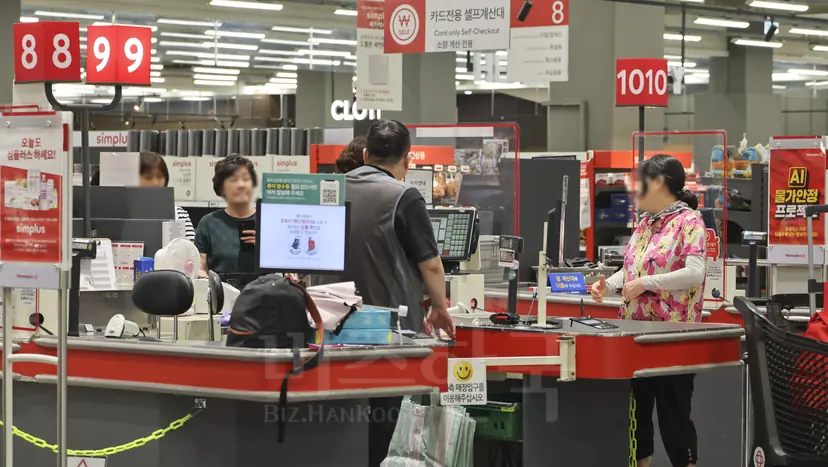
Setbacks in Salary and Chuseok Bonus Payments… Minimum Personnel Operation
Homeplus avoided an immediate liquidation crisis after the court approved its rehabilitation plan on the 2nd. However, challenges such as debt repayment and business normalization remain.
Recently, Homeplus shared its management status at a meeting with the union, stating that current sales are hovering at about 40% of the initial target. A Homeplus employee said, “I understand that current sales have dropped even compared to right after the reopening.”
As financial pressure mounts, there are ongoing setbacks in paying employee salaries and bonuses. Homeplus decided to split the payment of the unpaid July salaries, originally due in September, into two installments on September 23 and 30. While the Chuseok bonus was also supposed to be paid in installments, it is reported that the company has notified employees that payment this month is difficult.
A union official said, “The Chuseok bonus was supposed to be paid over six months, and according to the schedule, payments should have started this month. However, we received notice from the company that it is difficult to pay this month.”
To normalize operations, Homeplus is prioritizing available funds for securing inventory, while operating stores with minimum personnel. As the number of employees unable to report to work increases due to this, the company has recently begun reviewing the introduction of a rolling shift system.
A union official stated, “Because many employees are unable to work, a rolling shift system is being discussed. We are in the stage of preparing relevant manuals to operate with all employees working in rotation.”
Along with this, plans for workforce reduction have also been raised. It is known that Homeplus recently mentioned the need for voluntary resignation to cut about 1,000 personnel during discussions with the union. However, the union has opposed this, and the push for voluntary resignation is currently on hold.
Since management normalization is practically impossible through cost-cutting alone, attention is focused on whether the sale of Homeplus will be successful. Homeplus announced on the 17th that it would begin M&A for 67 hypermarket stores, including its headquarters and online business division. The company also plans to sell 19 properties owned by Homeplus among its closed stores separately.
A union official said, “After the approval of the rehabilitation plan, Homeplus must pay employee salaries and supplier payments normally through actual business, but that is difficult in the current situation. Since additional investment is not easy, a sale must be successfully concluded for normalization.”