

[비즈한국] As attorney Han Moon-chul, who has covered traffic accident cases, announced his intention to start disclosing the names of insurance companies, the non-life insurance industry has expressed growing concerns. The industry argues that relying only on limited footage and information could oversimplify the facts of individual accidents. Furthermore, they worry that pairing the disclosure of a specific insurer's name with accident details could lead to privacy infringements—such as identifying the parties involved—and spark unnecessary disputes.
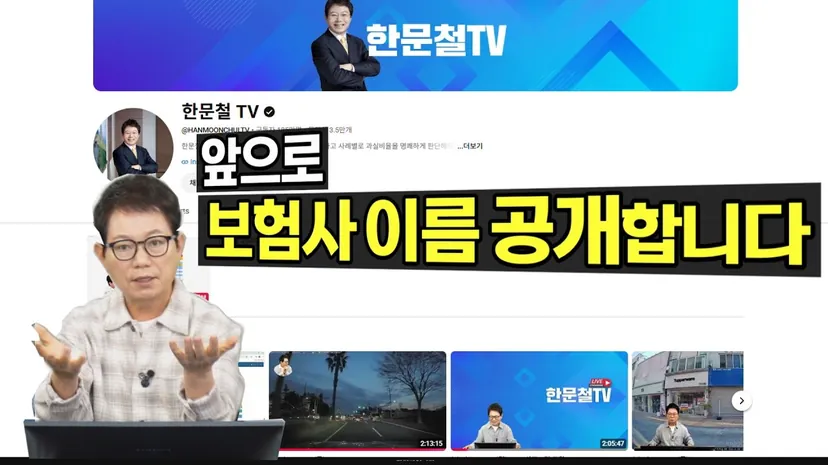
On September 30, during a live broadcast on his YouTube channel "Han Moon-chul TV," attorney Han Moon-chul announced that he will begin revealing the real names of insurance companies in future traffic accident cases. Previously, excluding DB Insurance with which he has had a collaborative relationship, he referred to other insurers as "one of the Big 4." However, he stated that he will now disclose the names of each company and present both their official stances and his own professional opinion.
Attorney Han explained that the intent behind disclosing insurer names is not to criticize specific companies. Rather, as judgments on negligence ratios can vary between insurance companies or even individual adjusters, he aims to inform viewers of how each company reaches its decision while offering his own perspective. However, he noted that he would continue to point out cases where he believes even DB Insurance has made an incorrect judgment.
Han cited a case reported by an employee at Insurance Company A as the trigger for his decision. In that accident, both parties were insured by the same company, but the adjusters had conflicting views on the negligence ratio, and one of the parties involved disputed their own liability. Upon receiving consent from both sides, the employee at Company A requested that Han provide a determination on the negligence ratio.
Through this, Han explained, he realized that insurance adjusters are not necessarily trying to make unfavorable judgments against customers, but are following existing training and decision-making criteria. He emphasized the need to move beyond existing standards—such as the General Insurance Association of Korea’s negligence ratio guidelines or police assessments—and establish new standards closer to reasonable court rulings.
The non-life insurance industry has voiced concerns regarding this decision. Critics point out that if accident details and video footage are exposed alongside the insurer’s name, it could lead to the identification of the individuals involved, potentially infringing on their personal information or rights, and could trigger unnecessary controversy or disputes.
An official from a non-life insurance company stated, "Since accidents are individual matters, there is a clear need to fully consider the protection of both the perpetrator's and the victim's personal information," adding, "Disclosing insurer names could potentially give rise to unnecessary issues."
Another official from a different non-life insurance company, B, also expressed concern, saying, "Disclosing insurer names risks simplifying complex facts or legal judgments based only on limited material shown on a broadcast, and could infringe upon personal privacy or the rights of those involved in a dispute."
However, the industry clarifies that even if insurer names are disclosed, the external judgment of someone like Han, or the public opinion formed through such broadcasts, does not constitute the legal or institutional standard for determining actual negligence ratios. They emphasize that negligence ratios for individual accidents are determined based on accident footage, on-site investigation reports, the General Insurance Association of Korea's recognition standards, and relevant laws and precedents.
Meanwhile, some have also taken a critical view of the way Han presents his assessments of negligence ratios on his show. An official from a non-life insurance company said, "Disputes over negligence ratios can already be contested through formal procedures such as reviews and re-reviews by the Over-the-Counter Dispute Mediation Committee, or through litigation," adding, "It is difficult to agree with a method that attempts to resolve matters through broadcasts or public opinion when established standards and procedures are already in place."
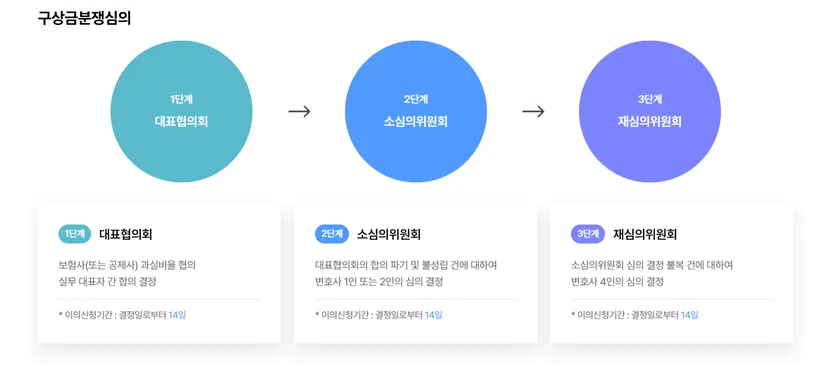
In fact, the General Insurance Association of Korea operates a set of standards for recognizing negligence ratios in car accidents and manages a dispute mediation committee. If there is a disagreement over negligence ratios between insurance companies or mutual aid associations, they can go through procedures such as the Representative Council, the Minor Review Committee, and the Re-review Committee. Accident parties who disagree with the results can proceed with litigation through their insurance company to receive a court ruling.