

[비즈한국] Shin Dong-kook, Chairman of Hanyang Precision and the largest shareholder of Hanmi Science, has won the first trial in a 60 billion won penalty lawsuit filed against him by Hanmi Pharmaceutical Group Chairwoman Song Young-sook and Hanmi Science Vice Chairwoman Lim Ju-hyun.
Internal conflicts within the "four-party alliance," formed to resolve the management dispute at Hanmi Pharmaceutical Group, have escalated into a high-stakes legal battle, and the court ruled in favor of Chairman Shin. As this is a first-instance ruling, attention is now focused on whether Chairwoman Song and Vice Chairwoman Lim will appeal, and whether the four-party alliance can maintain its existing cooperative relationship.
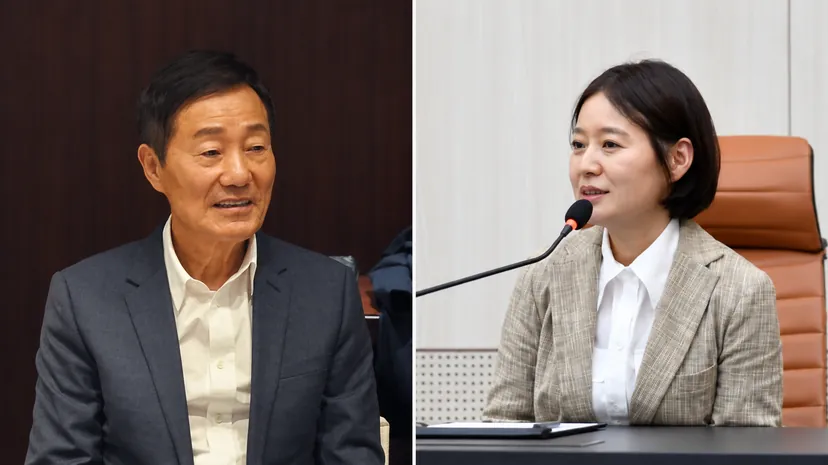
The 30th Civil Division of the Seoul Central District Court (Presiding Judge Kim Seok-beom) dismissed all claims by the plaintiffs—Chairwoman Song, Vice Chairwoman Lim, and Killington Ltd.—in the penalty lawsuit filed against Chairman Shin on the 1st. The court also ordered the plaintiffs to bear the full cost of the litigation.
Chairwoman Song's side had argued that Chairman Shin owed 10 billion won for breaching an agreement related to the Banpo Senior Care project by holding a board meeting, and another 10 billion won for voting against participation in the project, totaling 60 billion won when combined across the three entities at 20 billion won each.
Hanmi Science held board meetings twice, on June 5 and 10, 2025, to discuss whether to participate in the Banpo Senior Care business. The first board meeting gave conditional approval to invest 16 billion won, contingent on the active cooperation of Seoul St. Mary's Hospital. However, five days later, the second board meeting retracted the investment plan, citing difficulties in obtaining specific commitments from the hospital and the potential for long-term delays in recovering the investment.
Chairwoman Song and Vice Chairwoman Lim claimed that Chairman Shin had originally agreed to participate in the project and then reversed his decision. In contrast, Chairman Shin's side countered that there was no definitive agreement to invest unconditionally, and that the second board meeting was a follow-up process to verify whether the conditions set during the first meeting had been met.
The first-instance court accepted the arguments of Chairman Shin's side. The court ruled that since the first board resolution was a conditional approval, discussing the investment again at the second meeting could not be viewed as arbitrarily introducing a new agenda item different from the previous one.
The court also rejected the claim that Chairman Shin's opposition to the investment at the second board meeting was a violation of the shareholders' agreement. The court found no evidence that the four-party alliance had agreed to definitively commit to the investment, beyond simply agreeing to put the item on the Hanmi Science board agenda.
Immediately following the ruling, Chairman Shin's side stated, "The facts and legal principles were clear from the beginning, and this is the result we expected."
Banpo project continues without Hanmi Science… MOU signed with Catholic University
The Banpo project continues to be pursued by other stakeholders even after Hanmi Science decided not to participate.
Currently, Pole Korea Banpo PFV is pushing forward with a complex development project combining residential, hotel, and healthcare facilities at the former site of the Sheraton Palace Hotel in Banpo-dong, Seocho-gu, Seoul. The project site was selected for preliminary negotiation by the Seoul Metropolitan Government this past April.
In June, Pole Korea Banpo PFV signed a memorandum of understanding (MOU) with the Industry-Academic Cooperation Foundation of the Catholic University of Korea to establish a "Medical Hub," a wellness facility within the complex. The foundation plans to cooperate on supporting service linkages with affiliated medical institutions, including Seoul St. Mary's Hospital, and planning medical and healthcare services.
This is noteworthy given that during the Hanmi Science board meeting last year, Chairman Shin's side had argued for caution regarding project participation, citing that the active cooperation of Seoul St. Mary's Hospital had not been finalized.
60 billion won lawsuit followed by 10 billion won attachment: Where is the four-party alliance headed?
Legal disputes surrounding the four-party agreement are not limited to this case. Chairman Shin had previously requested a 10 billion won provisional attachment on shares of Hanmi Science held by Vice Chairwoman Lim, claiming she violated the obligation to exercise voting rights jointly as stipulated in the four-party agreement; the court granted this request in July.
The issue involved 2.7% of the 9.15% stake in Hanmi Science that Vice Chairwoman Lim revealed she held. Lim had traded these shares with Equity First under a repurchase agreement, and as the shares were subsequently sold in the market, she was unable to exercise voting rights at the 2025 and 2026 regular shareholders' meetings. Chairman Shin's side viewed this as a violation of the obligation to exercise joint voting rights.
While Chairwoman Song, Vice Chairwoman Lim, and Killington sought 60 billion won in damages claiming Chairman Shin violated the four-party agreement, Chairman Shin has conversely taken steps to attach their shares, claiming a breach of the agreement by the Vice Chairwoman.
Following the attachment decision, Chairman Shin had stated, "I do not believe there is a fundamental crack in the four-party alliance." However, some in the industry remain skeptical about whether the alliance's trust can be maintained, given the ongoing multi-billion won lawsuits and the attachment of each other's shares.
Meanwhile, Hanmi Pharmaceutical Group is distancing itself from the impact of the shareholders' legal dispute on company management. A representative for Hanmi Pharmaceutical Group stated, "As a professional management system has already been established, the legal battles of the four-party alliance will not affect the company's business or management."