

[BizHanKook] The ‘Korean Art Support Project’ Season 12 has launched, aimed at cultivating the fertile soil of Korean art. This initiative is now recognized by the art world as a meaningful event for discovering and fostering artists. It has established a reputation among artists as a project they aspire to participate in. The core keywords that the ‘Korean Art Support Project’ has pursued from the beginning are ‘the acceptance of diverse currents in Korean art and the pursuit of developmental change.’ As a result of these principles, it is credited with establishing a perspective for viewing contemporary Korean art.
Eastern painting is an art form centered on lines, whereas Western painting focuses on space. To express three dimensions on a two-dimensional surface, various methods were developed. The goal was to make it look like a space using optical illusions. This led to the creation of perspective, techniques for expressing three-dimensionality, and chiaroscuro (light and shadow).
Ultimately, these methods achieved realistic results in capturing the world as seen by our eyes. This served as the driving force for the steady development of Western painting, which is why it stands at the center of art today.
Rather than realistically depicting nature, Eastern painting sought to find the mysterious energy behind it, which is difficult to explain. Therefore, it attempted to infuse various characters into lines.
12 solo exhibitions (2025 'drift of leaves'-M collect.19, 2021 'my miracle'-Sejong Gallery, etc.), numerous group exhibitions (2026 'WISH'-Tibaeg Samcheong Showroom, 2024 'Telepathy'-Gallery Colorbeat, 2024 'The Heart That Paints Flowers' - Nam Hak-hyun, Park Jung-won, Han Cha-yeon trio exhibition-M.collect.19, etc.)
Works in Collections
dorocy Ikseon Showroom, Government Art Bank, Diheir Cheongdam, Hongik Neurosurgery Clinic, Eland Cultural Foundation, etc.
Awards
2026 Selected for Incheon Foundation for Arts & Culture Creative Support Project, Selected as one of the 10 artists for the 9th Gwangju Hwaroo, 2023 Selected for Eland Cultural Foundation’s 14th Open Call
Education and Experience
Graduated from Dongduk Women’s University with a major in Korean Painting, Department of Painting; Master’s degree from the same graduate school
Consequently, it became a line-centered art form, and it is true that it continued without significant, visible changes. Since the last century, when the visual environment expanded rapidly, it has effectively failed to keep pace with Western painting.
However, if one carefully examines our traditional painting, we have attempted to express space in our own way. A representative example of this is Gyeomjae Jeong Seon (1676–1759), who lived in the late Joseon Dynasty.
Artists active during this period endeavored to capture our beautiful nature in their works. They traveled to find scenic spots and painted them on-site. This is the same principle by which Impressionist painters practiced outdoor sketching, chasing changes in light. This is called 'Silgyeongsansuhwa' (real-landscape painting).
Gyeomjae did not stop at simply painting the appearance of the scenery but sought to find the fundamental essence of the landscape. He intended to capture the truly realistic feel of the site on canvas. This is known as 'Jingyeongsansuhwa' (true-view landscape painting).
What is the 'true view' that is the essence of a landscape? It is not just looking at a scene, but understanding it. We can feel many things before a magnificent landscape. Not just the outstanding scenery, but the movement of the wind, the scent of forests or trees, the freshness of the air, and the emotions that resonate through the body. When we embrace a landscape with all five senses, we truly come to know it. This is 'Jingyeong' (the true view).
To this end, Gyeomjae expressed space within his canvas, but in a way different from Western painting. Many of Gyeomjae’s works show buildings or trees with well-defined three-dimensionality. In particular, in his masterpieces such as 'Bakyeon Falls' and 'Inwangjesaekdo' (Clearing after Rain on Mount Inwangsan), he used the ink's density to express the thickness of rocks and the depth of space.
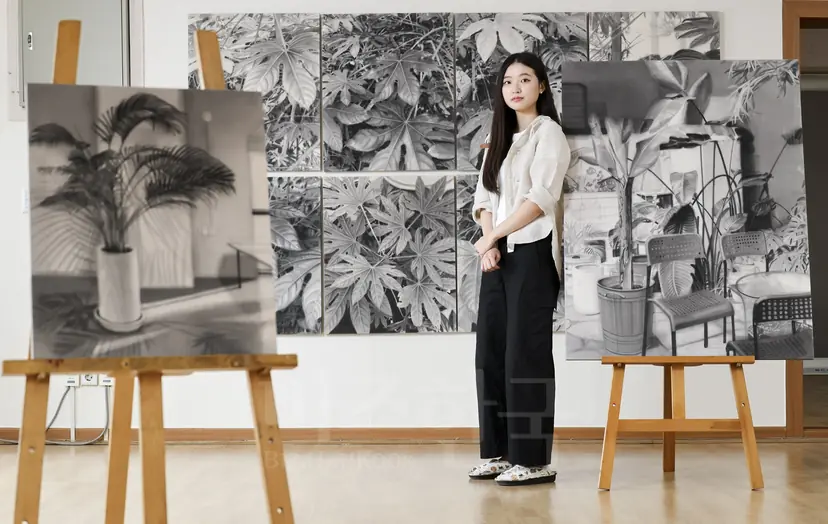
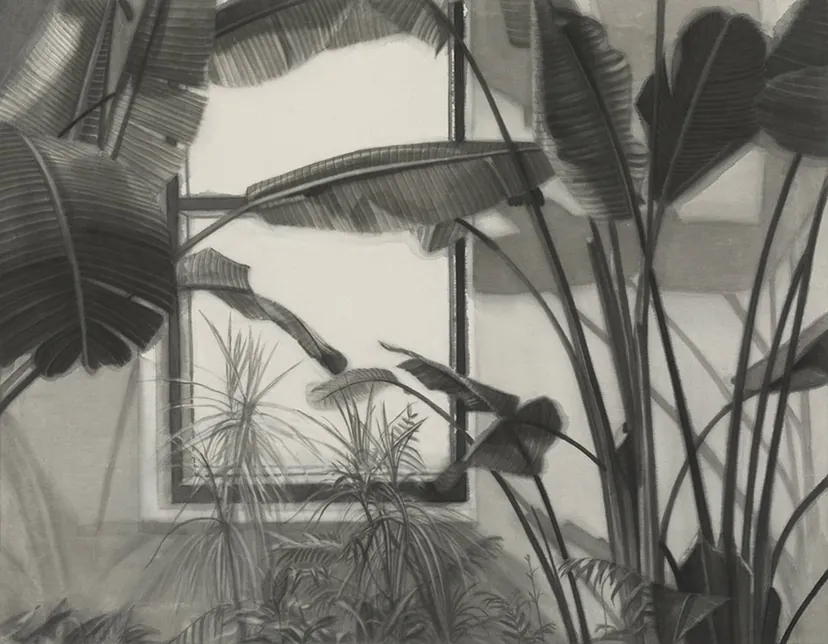
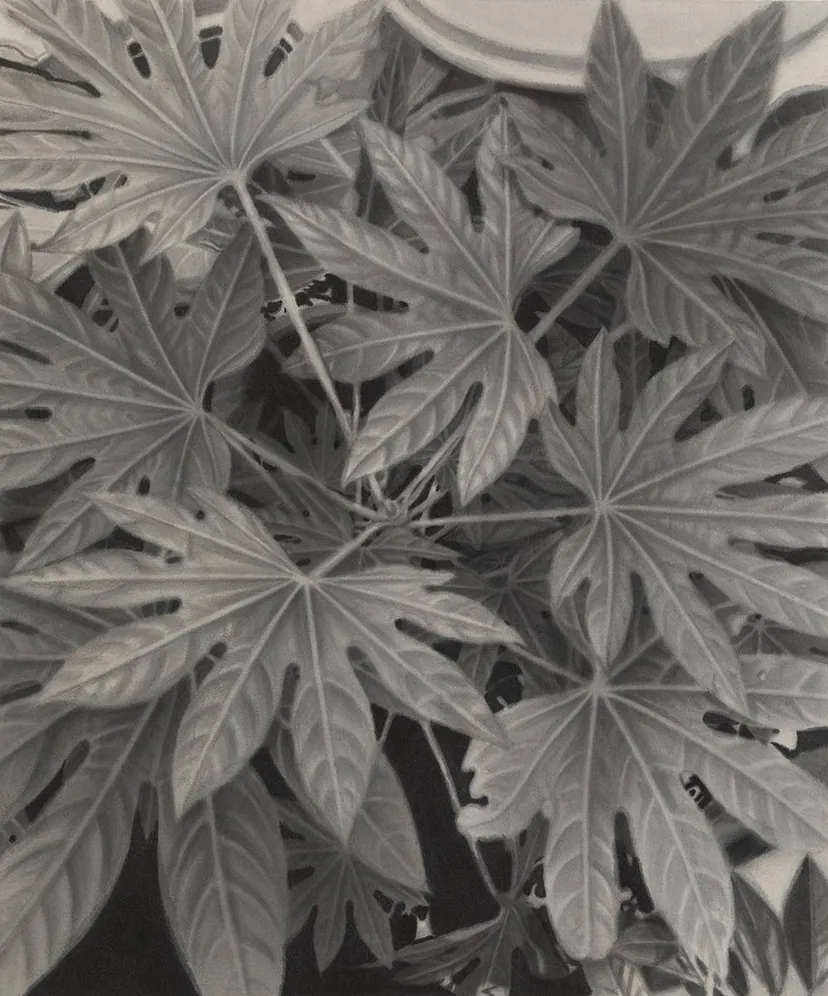
Han Seung-hee, who is recognized for the realism of her ink paintings, is showcasing a new form of ink wash painting in the same vein. She expresses light on the canvas to bring out a sense of space rarely seen in ink wash painting. She paints interior spaces and plants with exceptional descriptive ability. In the spaces Han expresses solely with ink, the feeling of the air is clearly present. This is the result of her creating a unique sense of depth and bleeding effects of ink in her own way.