

[비즈한국] Häagen-Dazs Korea has officially begun a generational shift by appointing a third-generation owner as CEO for the first time since the company's founding. With the founder's eldest son stepping down after leading the company for nearly 30 years and his granddaughter moving to the forefront of management, the company is seeing a full-scale transition to a third-generation management structure, accompanied by the relocation of the company's headquarters and a reorganization of the management teams for key businesses operated by the founder's family.
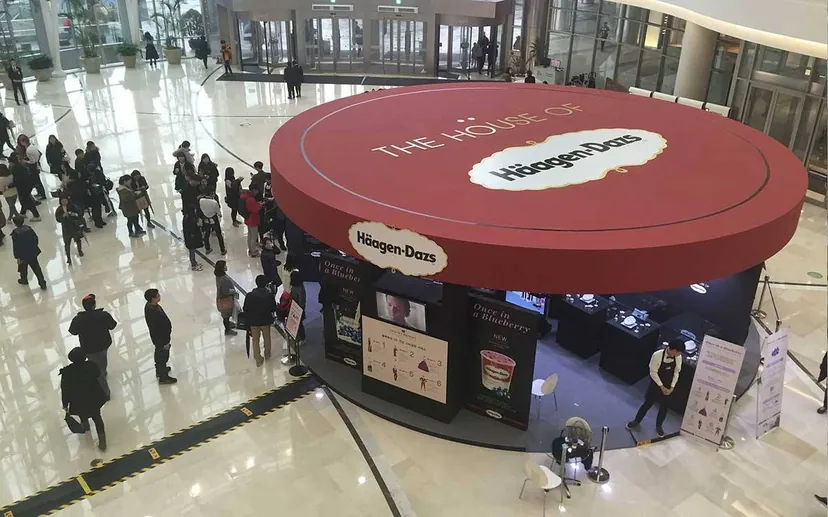
Siblings Divide Roles… Office Relocated After CEO Change
The second-generation leader who steered Häagen-Dazs Korea has stepped down from the front lines of management. According to industry sources, Baek Soon-seok, former CEO of Häagen-Dazs Korea, resigned from his position in May. The former CEO, the eldest son of the late Baek Jong-keun, the founder of Häagen-Dazs Korea, had been managing the company representing the owner family.
Baek Jae-yeon has stepped into the role vacated by the former CEO. Born in 1985, CEO Baek Jae-yeon was appointed as co-CEO and will lead Häagen-Dazs Korea alongside the incumbent CEO, Kwon Yoo-jung. This marks the first time a third-generation owner has served as CEO at Häagen-Dazs Korea.
Häagen-Dazs Korea is a domestic business entity established in 1991 through a joint venture between the late founder Baek Jong-keun and the American food company Pillsbury. Although the overseas shareholder changed to a General Mills subsidiary after Pillsbury was acquired by General Mills, the late founder's family has continuously participated in the company's equity and management on the domestic side.
Founder Baek Jong-keun managed the company in its early stages, and his eldest son, former CEO Baek Soon-seok, took office in 1996. Excluding some brief gaps, the former CEO held the position for about 30 years.
With the inauguration of CEO Baek Jae-yeon, there has also been a change in the management structure of the major businesses operated by the founder's family. While CEO Baek was appointed as an internal director of Sharp Aviation K, the family's aviation business, in January of this year, she resigned from that post in May shortly after taking the helm at Häagen-Dazs Korea.
Around the same time, her younger brother, Baek Jae-hwan, was appointed as CEO of Sharp Aviation K. Consequently, the siblings' roles have become clearly defined, with CEO Baek Jae-yeon taking charge of Häagen-Dazs Korea and CEO Baek Jae-hwan leading Sharp Aviation K. With the third generation taking on major businesses, the generational shift within the founder's family appears to be in full swing.
The fact that Häagen-Dazs Korea relocated its headquarters shortly after CEO Baek Jae-yeon's inauguration is also noteworthy. According to BizHankook's coverage, Häagen-Dazs Korea changed its registered office address from Yeoksam-dong to Daechi-dong in the Gangnam district of Seoul this past June. The move, ending an address held for about 15 years since 2011, is significant as it occurred immediately following the change in leadership. Following the replacement of management that had led the company for a long time, the change in location suggests that Häagen-Dazs Korea is realigning its entire organization in line with the third-generation management system.
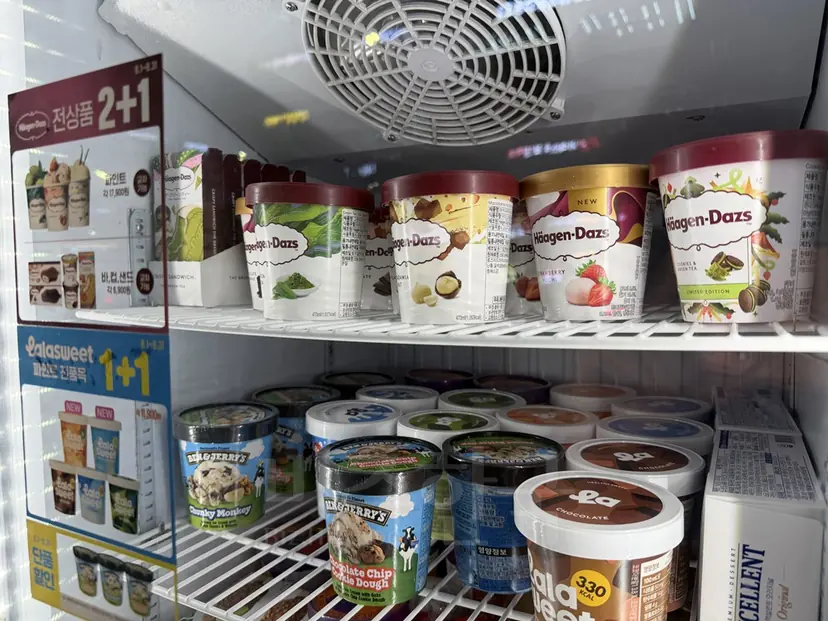
Premium Competition Intensifies with Hanwha and Twosome Amidst Ice Cream Market Slump
The domestic ice cream market continues to face a downturn. According to the Korea Agro-Fisheries & Food Trade Corp (aT), the size of the domestic retail ice cream market (based on sales) shrank from 2.0184 trillion won in 2015 to 1.4864 trillion won in 2024. This represents a market contraction of approximately 26% over 10 years. Analysts attribute this to a decline in the child population—the primary consumer demographic for ice cream—due to low birth rates, as well as the growth of substitute dessert markets like coffee and bakeries, which have squeezed the traditional frozen treat market.
Despite the overall market contraction, Häagen-Dazs Korea has consistently grown its top line by leveraging its competitive edge as a premium brand. Revenue, which stood at 45.9 billion won in the 2016 fiscal year (June 2015–May 2016), grew to 65.2 billion won in fiscal 2021 and expanded to 87.8 billion won in fiscal 2024. In fiscal 2025, it recorded 98.5 billion won, bringing the company on the brink of crossing the 100 billion won revenue mark. This means the revenue scale has more than doubled in about a decade.
In contrast to its growth in size, recent profitability has shown signs of slowing. While fiscal 2025 revenue increased by 12.2% compared to the previous fiscal year, reaching a record high for the second consecutive year, operating profit fell from 4.4 billion won to 3.0 billion won. During the same period, net profit also dropped from 3.7 billion won to 2.2 billion won. This is the first time in six years, since fiscal 2019, that operating profit has declined year-on-year.
The future business environment is also expected to be challenging. As new brands claiming to be "premium ice cream" continue to emerge, market competition is becoming increasingly fierce. Hanwha Galleria introduced its own premium ice cream brand, "Benson," last year and is nurturing it as a new business. A Twosome Place has also recently entered the domestic market with the American premium ice cream brand "Van Leeuwen."
As the competition for premium ice cream intensifies, attention is turning to the future business strategy under CEO Baek Jae-yeon. Maintaining existing brand competitiveness while responding to shifting consumer trends and a changing competitive landscape is expected to be a primary task.
A Häagen-Dazs Korea official explained, "We are continuing our efforts to strengthen product competitiveness and enhance consumer experiences both online and offline. Häagen-Dazs plans to showcase not only a differentiated product portfolio but also the values of experience and lifestyle that the brand aspires to in various ways."