

[비즈한국] North Gyeongsang Province (Gyeongbuk) is moving away from its traditional focus on industrial complexes and subsidies to attract companies. Instead, it is launching an integrated investment platform that bundles finance, research and development (R&D), talent, and logistics. The vision is to create an industrial ecosystem where anchor companies, research institutions, partner firms, and investment capital enter the region together, rather than just attracting individual production facilities.
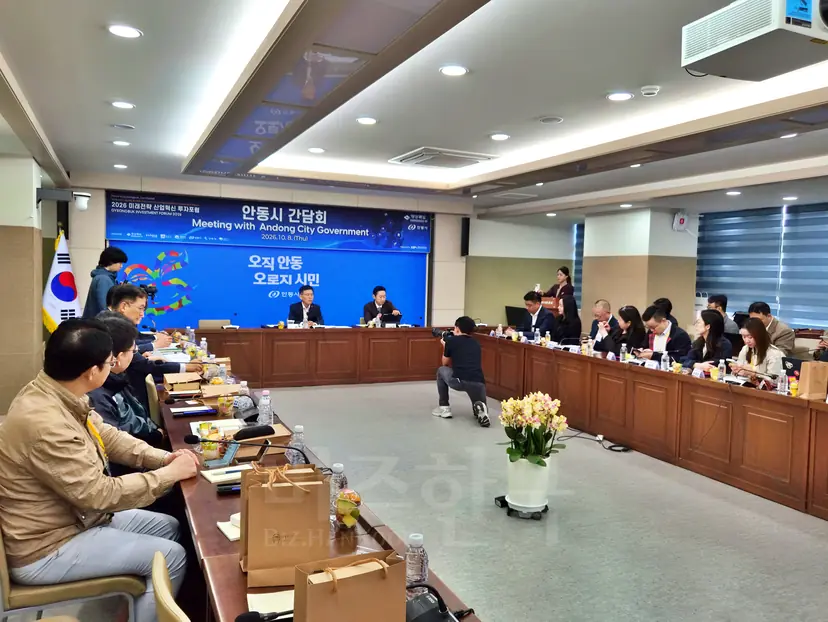
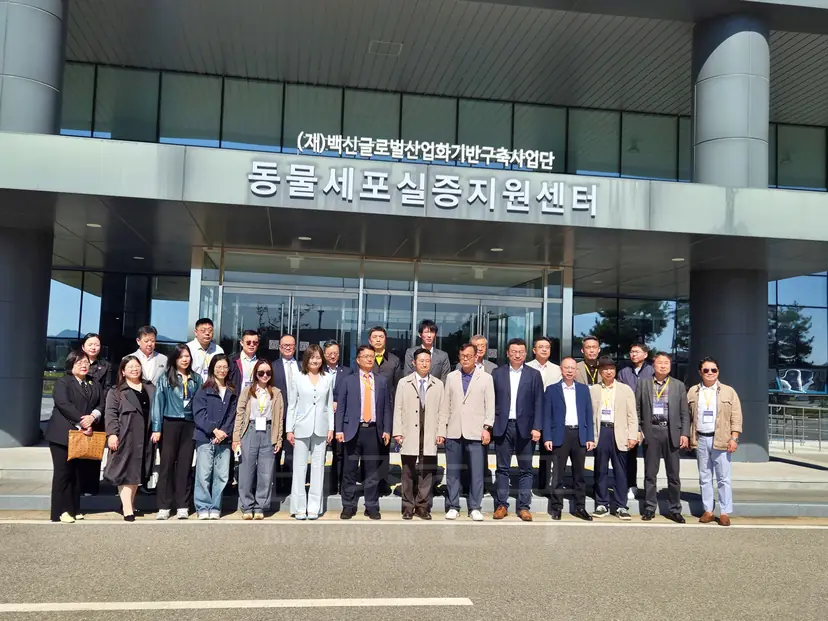
On the 7th and 8th, Gyeongbuk Province held the ‘2026 Future Strategy Industrial Innovation Investment Forum,’ attended by approximately 20 Chinese delegates, including representatives from investment attraction platforms, investors, and legal advisors. After introducing Gyeongbuk’s investment environment and strategic industries—such as bio, machinery parts, and defense—in Seoul on the 7th, the group toured Andong City Hall, the Animal Cell Demonstration Support Center, Yeongju City Hall, and the Yeongju High-Tech Bearing National Industrial Complex on the 8th.
Gyeongbuk’s decision to invite Chinese investors to tour industrial sites follows the recent trend of Chinese companies expanding overseas. In October last year, five Chinese government departments—including the Ministry of Commerce, the Ministry of Foreign Affairs, and the National Development and Reform Commission—jointly decided to build a comprehensive overseas service system covering legal, financial, logistical, and customs affairs. In February this year, they upgraded the existing ‘Zouchuqu’ (Going Out) public service platform into a national-level overseas comprehensive service platform. This signals a shift toward policy-driven support for market development, local settlement, and risk management for companies venturing abroad, rather than just encouraging foreign investment indiscriminately.
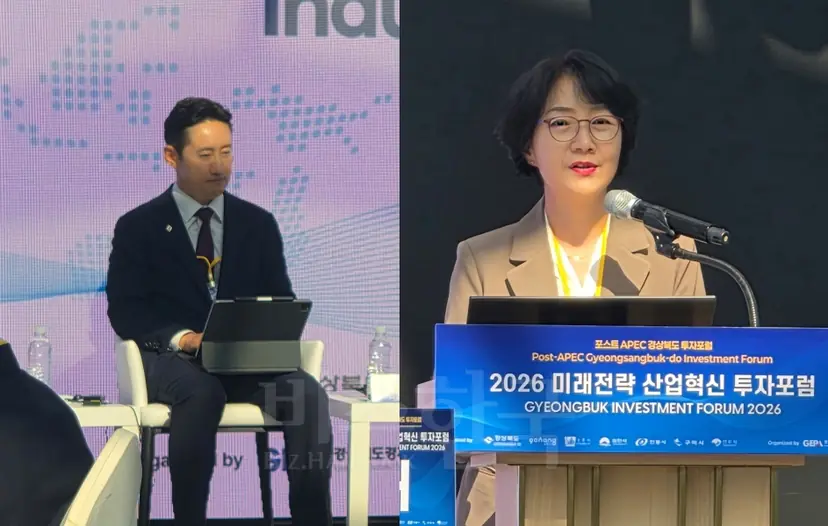
The solution proposed by Gyeongbuk is to transform the entire province into a single investment platform. Lee Nam-eok, Head of the Gyeongbuk Airport Investment Headquarters, stated, “Our ultimate goal is for North Gyeongsang Province itself to become one massive investment platform. It is meaningful because it goes beyond attracting individual companies to building an entire industrial ecosystem.” Gyeongbuk plans to connect finance and logistics to regional industrial bases, such as bio and vaccines in Andong, secondary batteries in Pohang, semiconductors and defense in Gumi, and bearings in Yeongju.
The province is also strengthening its financial capabilities. While forming a 100-billion-won investment fund with groups like Hanwha, it is also pushing to establish ‘Gyeongbuk Investment Finance Co., Ltd.,’ a regional public investment institution. The concept is to go beyond simple subsidies by using the company to invest in firms and projects while bridging private and policy financing. Gyeongbuk held an expert roundtable in May to kick-start discussions on its establishment.
Andong is putting forward bio-industry as the representative sector for this integrated investment strategy. The city hosts both private and public research and production infrastructure, including anchor company SK Bioscience, SK Plasma, the Gyeongbuk Bio Industry Research Institute, and the Animal Cell Demonstration Support Center.
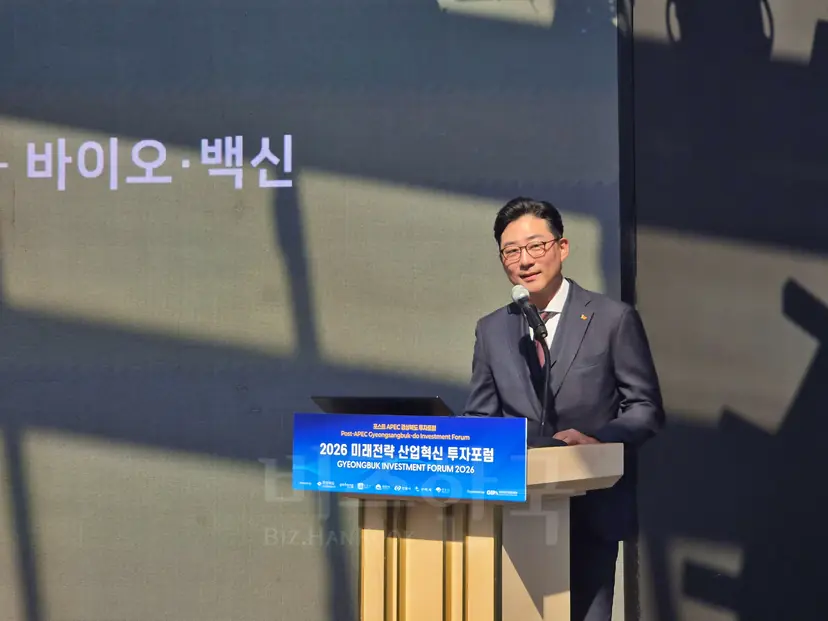
SK Bioscience is currently expanding the production capacity of its Andong vaccine facility, L HOUSE. Last year, the company expanded the existing vaccine production building from one story to three, securing approximately 4,200 square meters of new space. This facility is intended for the global commercial production of GBP410, a 21-valent pneumococcal vaccine being co-developed with Sanofi.
“I am often asked, ‘Why Andong? Why Gyeongbuk?’ but over a decade ago, Andong and Gyeongbuk were already prepared,” said Kim Barun, Vice President of SK Bioscience. “It’s because they didn’t just provide land for a single company, but helped build an ecosystem where companies could grow together.”
However, the distance from the capital region and the difficulty in securing specialized talent remain challenges for the local bio-industry. Concerns about talent recruitment were raised even on-site. Cho Young-guk, CEO of Syntekabio, noted, “The biggest difficulty for AI bio-companies is securing specialized talent within the region. Local governments must go beyond simply providing funds or land; they need to provide conditions and networks where hybrid talent who understand both AI and bio can settle and reside.”
Gyeongbuk Province plans to cultivate talent by linking local universities with companies. Lee Nam-eok stated, “To overcome the talent concentration in Seoul, we will work with companies to establish new pharmaceutical departments and foster customized talent in collaboration with POSTECH, Kyungpook National University, and Yeungnam University.”
Andong City is also expanding support to attract research functions in addition to production facilities. The city has established a system to provide up to 1 billion won—equivalent to 20% of the investment amount—if a research institute invests more than 500 million won. Gyeongbuk Province is also pursuing the establishment of contract departments and customized talent cultivation with universities like POSTECH, Kyungpook National University, and Yeungnam University.
Ahn Jae-hong, Head of Andong City’s Investment Attraction Division, said, “Andong prioritizes building an industrial ecosystem that supports a package of logistics, personnel, location, and infrastructure, rather than attracting a single firm. We will actively discuss incentives and partnerships tailored to the needs of each company.”
Chinese investors focused on how this support would work in the actual investment process. During the roundtable at Andong City Hall, questions continued regarding the scale of support for establishing research institutes, minimum investment conditions, site acquisition for foreign companies, and tax benefits. As they are currently at the stage of information exchange, market research, and identifying potential partners, they seemed to be evaluating real-world support available during the entry process into Korea rather than just the scale of subsidies.
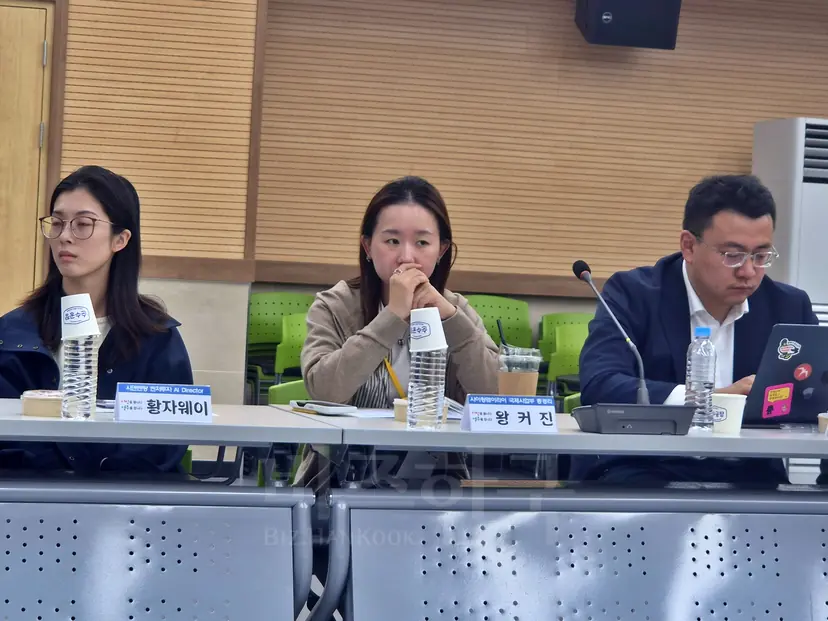
Wang Kejin, General Manager of Sai Chuang Weilai, a company that provides platforms for industrial cooperation between Korea and China, met with this reporter and explained, “We are currently having regular business consultations with Gyeongbuk-related agencies to conduct preliminary research and link corporate and industrial resources. We visited the site with Chinese companies interested in entering Gyeongbuk Province.”
Regarding the possibility of cooperation with the Andong bio-industry, he stated, “We are paying attention to companies producing bio-materials and vaccine ingredients/auxiliary materials, medical device and in-vitro diagnostic firms, and functional health food and bio-processing companies. Some companies hope for overseas expansion and international R&D cooperation.”
He cited policy transparency and support for local settlement as the key conditions for deciding on actual investments. “We expect clear disclosure of investment subsidies, tax benefits, and land policies, as well as professional guidance on licensing, certification, recruitment, labor management, and compliance with local regulations,” said Wang. “It is also important to support foreign companies in settling into the regional industrial ecosystem by connecting them with upstream and downstream partners in Korea.”
He also left the door open for cooperation with Gyeongbuk’s financial investment platform. “We are familiar with the method of attracting companies through local government and industrial funds in China, and we have actual experience in executing it,” Wang said. “If a real-economy project of mutual interest is discovered, we are willing to consider the possibility of fund-level cooperation.” However, he noted that no concrete discussions are underway yet.
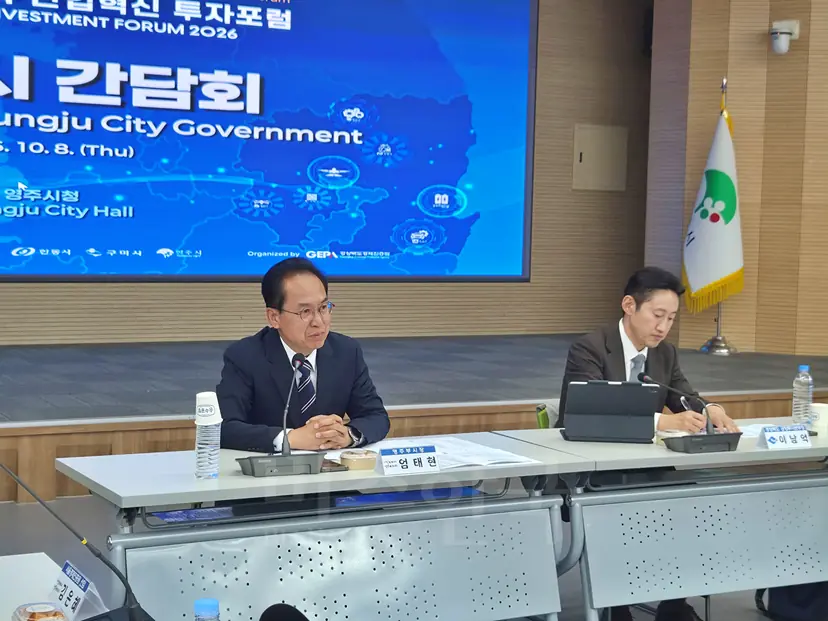
In Yeongju, investors’ questions were also specific. A Chinese delegate, identified as 'A', asked about land support and technical requirements for moving into the High-Tech Bearing National Industrial Complex, while 'B' asked about regulations regarding military and strategic goods and the scope of potential investment for Chinese firms. Yeongju City offered location subsidies of up to 50% and reductions in fees for bearing testing and evaluation equipment. The 1.18 million-square-meter high-tech bearing national complex is currently under construction, with a target completion date of 2028.
Throughout the two-day tour with the investors, Gyeongbuk Province presented an investment support model that integrates finance, R&D, talent, and logistics. The Chinese representatives looked beyond mere site visits to examine the potential for establishing research labs, production facilities, and local entities, as well as possibilities for cooperation with the local supply chain. The next challenge for Gyeongbuk will be whether it can translate the investment platform it is building into actual investment and successful corporate settlement.