

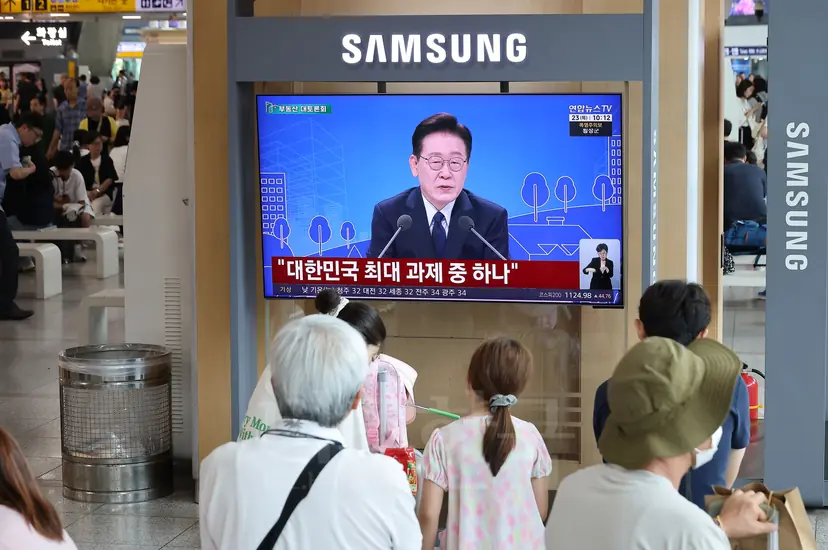
[비즈한국] On August 3, the government will release its real estate tax reform proposal. The framework has already been leaked to the market through the tax policy forum on July 16 and the grand national debate on real estate presided over by the President on July 23. In summary, it boils down to three words: actual residence, value, and time lag.
Benefits are being shifted from the holding period to actual residence. The basis for taxation is moving from the ‘number’ of homes to the ‘value’ of the homes. And all of this will be implemented in phases from 2027 to 2029. The direction itself is as expected. What is surprising is not the direction, but the speed and the multiplier.
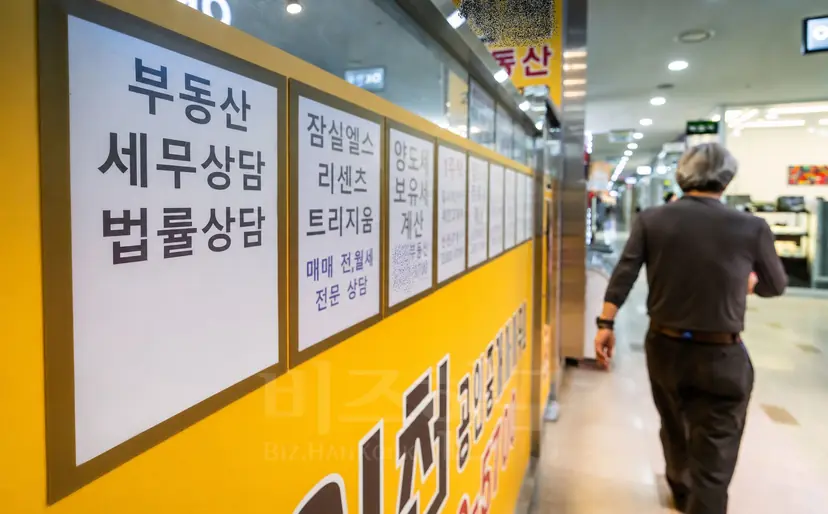
Capital Gains Tax: Holding Becomes a Sin, Residence Becomes a Qualification
Currently, the long-term holding special deduction for a one-home household allows a maximum of 80% combined, with 40% for holding and 40% for residence. According to the reform proposal, the deduction rates will change to 6% for residence and 2% for holding in 2028, and 8% for residence and 0% for holding in 2029. This effectively abolishes the deduction for the holding period. Additionally, a new deduction cap, which does not currently exist, will be set at 2 billion won (in 2028) and 1 billion won (in 2029).
The target of this clause is clear: the ‘non-resident one-home owner.’ Given that nearly half of the homes in Seoul are owned by people who do not reside in them, the intention is to force the liquidation of so-called ‘parked’ properties. Since it has long been pointed out that tax benefits were concentrated on owners of high-priced homes who do not live in them, it is difficult to argue against it in terms of tax equity.
The problem is that the side effects outweigh the justification. People who live in the provinces but own one home in Seoul, office workers who cannot meet residency requirements due to job transfers and rotations, and households that rent while their own homes are leased due to children’s school districts—all these people are caught in the same net. And the properties they were putting on the market were the very sources of the jeonse (long-term deposit rental) supply.
The punitive tax rates for multi-home owners are even more interesting. In 2026, the basic tax rate will be increased by 20 percentage points (p) for two-home owners and 30p for those with three or more homes. However, the punitive rates will be drastically lowered to 5% and 10% respectively in 2027, before returning to 20% and 30% in 2028 and 2029. The year 2027 is the window. The government has unveiled a timetable that essentially says, “If you sell now, we will tax you lightly; but if you don’t sell by 2029, we will tax you at the original rates.” It is a rational design for inducing listings.
However, how the market interprets this timetable is another matter. Over the past 10 years, punitive taxes on multi-home owners have repeatedly gone through cycles of introduction, deferment, extension, and re-deferment, and the market has learned from this. As long as the suspicion that “it might be delayed again in 2029” remains, it is highly likely that people will not rush even if the window is open. While the predictability of the policy has increased, trust in the policy is a separate issue.
Elderly One-Home Owner Deductions: The Quietest yet Most Ambitious Clause
There is an item that is less noticeable but must be addressed. For those aged 65 or older who have resided in the metropolitan area for at least 5 years, if they dispose of their home and move to a non-metropolitan area, they will receive a 50% (up to 500 million won) capital gains tax reduction in 2027, and 30% (up to 300 million won) in 2028.
The essence of this clause is not tax policy, but population policy. The government has identified the concentration in the metropolitan area as the root cause of housing market instability, and this clause is a tax-based prescription for that diagnosis. It is a dual-purpose design to increase property listings while simultaneously relieving population density in the metropolitan area.
What will the effect be? To be cold-blooded, it will be limited. The reason the elderly cannot leave the metropolitan area is not taxes, but medical care. Tertiary hospitals and specialists are concentrated in the metropolitan area. Their children and grandchildren are also there. It is difficult for a 500 million won reduction to overcome these two factors. However, for those who were already considering moving to the provinces, it acts as a powerful trigger. For those planning to return to their hometowns after retirement or those looking to upgrade to new apartments in provincial metropolitan cities, it provides a substantial incentive. This means that high-end areas in provincial metropolitan cities could see warmth earlier than expected in 2027.
Comprehensive Real Estate Tax: Taxes Rising via Multiplication
The reform of the Comprehensive Real Estate Tax (Jongbu-se) is the real center of gravity in this proposal. The basic deduction for a single-home resident owner will be raised from 1.2 billion won to 1.4 billion won. Conversely, the basic deduction for a non-resident one-home owner will be lowered from 1.2 billion won to 9 billion won. For other homes, the basic deduction will be calculated using the formula 400 million won + (500 million won × resident home value / total home value), differentiating based on the residency ratio. This is the first measure to shift the axis from the number of homes to the value of homes.
The official market value ratio will rise to 60% in 2026, 70% in 2027, and in 2028, it will reach 70% for one-home owners and two-home owners in provincial areas, and 80% for those with three or more homes. Tax rates will also increase; for the 600 million to 1.2 billion won bracket, it will rise from 1.0% to 1.3% in 2027, and for the bracket exceeding 9.4 billion won, it will rise from 2.7% to 3.5%. By 2028, it will be integrated into a single system regardless of the number of homes owned.
We must pinpoint the core here. The Comprehensive Real Estate Tax is a multiplicative structure. As the officially assessed price, the official market value ratio, and the tax rate all rise, three variables are multiplied. If the official ratio changes from 60% to 80%, that’s a 1.33-fold increase; if the tax rate moves from 1.0% to 1.3%, that’s a 1.3-fold increase. Just multiplying these two exceeds 1.7 times. If you add the increase in the officially assessed price on top of that, the perceived increase rate is much higher than what the calculator tells you.
That is why the tax burden cap was raised from 150% to 200%. One should not ignore this clause. The fact that the cap was raised to 200% means that the government itself anticipates cases where taxes will nearly double year-over-year. The cap is not a safety device; it is a trailer.
Public Sentiment, Delayed Ignition
Public opinion is currently quiet. The perception that “I am a one-home resident owner, so this doesn’t apply to me” is spreading. The calculation is that with a 1.4 billion won basic deduction, which translates to a market value of around 2 billion won, most people are unaffected.
However, this reassurance has an expiration date. In 2027 and 2028, as the years pass, the official market value ratio will rise, and the officially assessed prices will rise along with it. A house that is currently outside the 1.4 billion won threshold could be included in the tax bracket two years from now. As of the fourth week of July, Seoul apartment prices have risen for 76 consecutive weeks, up 0.25%. Although the pace of the rise has slowed, the direction remains the same. The fact that the Gangbuk area is leading the rise—with 0.53% in Jungnang-gu, 0.46% in Nowon-gu, and 0.39% in Seongbuk-gu—means the taxation threshold is gradually coming down.
Tax resistance does not explode when the tax is announced, but when the tax bill arrives. November 2028 will be the true judgment day for this reform proposal. The government’s three-year deferment gives the market time to adapt, but it also pushes the political explosion to the second half of its term.
One more thing. The justification of tax equity is valid. It is also true that the effective tax rate relative to real estate value is about half of the OECD average. However, the point where the public gets angry about taxes is not the absolute level of the tax rate. It is the structure where taxes rise even when my income stays the same, and the experience that the housing problem is not solved even after paying those taxes. We have already played this game once before.
Future Impacts, Three Prospects
First, the ‘smart single home’ phenomenon will not disappear. The conditions will simply become narrower. While the government said it would reduce special favors for a ‘smart single home,’ the penalty for owning multiple homes remains greater. The conclusion drawn from this reform is not a ‘smart single home,’ but a ‘smart, reside-able, under-1.4-billion-won single home.’ Demand will more precisely cluster toward properties that are reside-able even in high-end areas, and segments just below the tax threshold. Concentration will not be mitigated, but reshuffled.
Second, the rental market will react first and most painfully. Non-resident one-home owners and multi-home owners are the actual suppliers of jeonse in this market. If you raise holding costs for them and demand actual residence, the rental supply will decrease. The reduced supply will be passed on as higher rents. Seoul jeonse prices have already recorded a 0.25% rise, the same as home prices, and the nationwide jeonse index rose 0.10%. This coincides with the fact that Seoul’s new move-in supply in 2027 is at its lowest level since 1990. If property lock-up and the disappearance of jeonse occur simultaneously, it cannot be solved by tax policy.
Third, the National Assembly remains. This proposal is a government plan. National Assembly deliberation and legislative procedures remain, and the final confirmed details may differ. In particular, there is significant room for adjustment regarding the cap on long-term special deductions and the speed of the official market value ratio increase. There is a year and a half until implementation in 2027, giving market participants time to judge. There is no reason to move hastily.
This reform proposal is a well-designed tax scheme. The principle of favoring actual residence is consistent, the phased implementation disperses the shock, and the shift to a value-based standard is the right direction. As a tax policy, it earns a passing grade.
The problem is that it is being consumed as a real estate policy. Tax policy is a tool for distribution, not supply. Raising holding taxes may reduce the number of homes held, but it does not increase the supply of homes. The fact that only 13,000 apartments will be ready for occupancy in Seoul in 2027 will not change even if the Comprehensive Real Estate Tax rate is raised to 3.5%.
The cause of the 77 consecutive weeks of price increases is not that taxes are light. It is because we did not build where houses needed to be built. Taxes cannot build homes. Keeping this sentence in mind will be the most accurate lens for reading the market over the next three years.
Kim Hak-ryeol, Director of the Smart Tube Real Estate Research Institute, known by the pen name ‘Pachong,’ previously served as a team leader at the Gallup Korea Real Estate Research Division. He operates the Naver blog ‘Pachong’s World Exploration’ and the YouTube channel ‘Stue TV.’ His books include ‘3040 Beginner’s First Real Estate Investment (2026),’ ‘Rewritten User Manual for Korea Real Estate (2025),’ ‘The Power of Gyeonggi-do Real Estate (2024),’ ‘The Absolute Principles of Seoul Real Estate (2023),’ ‘The Future of Incheon Real Estate (2022),’ ‘Kim Hak-ryeol’s Absolute Principles of Real Estate Investment (2022),’ ‘Korea Real Estate Future Map (2021),’ and ‘From Now On, Only Places That Rise Will Rise (2020).’