

[비즈한국] Ahead of the Chuseok holiday, the government is releasing a series of measures to ease the burden of fuel costs and grocery prices. As the instability of international oil prices has increased the burden of fuel costs, and with demand for holiday shopping peaking during this period, the plan is to simultaneously lower costs ranging from fuel for hometown visits to the price of ancestral rite food. Attention is focused on whether these government measures will actually lead to price stabilization.
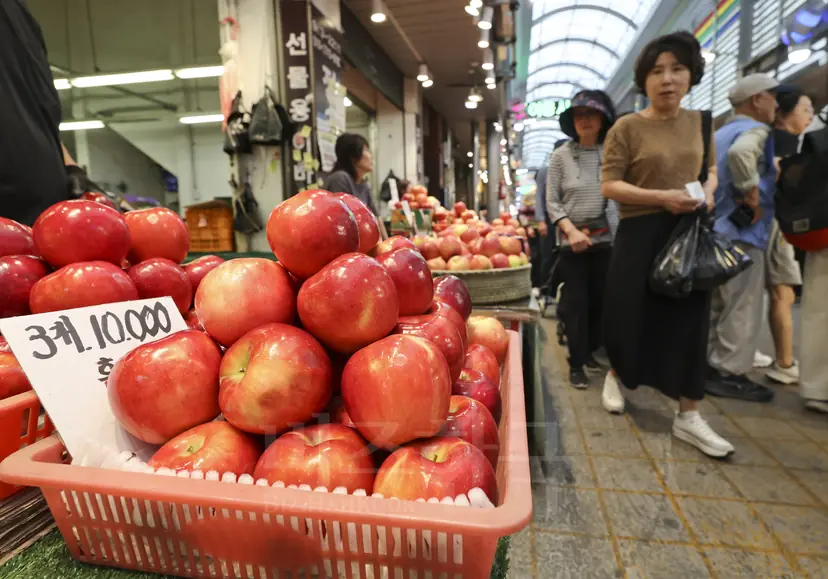
Extended fuel tax cuts… Lowering the burden of fuel costs for hometown visits
The government has taken action to lower the burden of fuel costs ahead of the Chuseok holiday. At an emergency economic headquarters meeting and meeting of ministers related to the economy presided over by Deputy Prime Minister and Minister Koo Yoon-cheol on the 18th, the Ministry of Economy and Finance announced that the temporary fuel tax cut, which was scheduled to end at the end of this month, will be extended for another two months. It was explained as a measure to reduce the public's fuel cost burden while securing room for future responses amidst continued instability in the Middle East.
Accordingly, the fuel tax reduction rates of 15% for gasoline and 25% for diesel and LPG butane will remain in effect until the end of November. The current fuel tax per liter is 698 won for gasoline, 436 won for diesel, and 152 won for LPG butane.
During the Chuseok holiday, fuel prices at highway gas stations will also be temporarily lowered. The target includes 226 state-managed highway gas stations overseen by the Korea Expressway Corporation. From the 24th to the 27th, the prices of gasoline and diesel will be reduced by 100 won per liter compared to the 17th. In addition, the government plans to offer discounts on electric vehicle charging fees during the Chuseok period, particularly during daytime hours when supply from renewable energy sources like solar power is high.
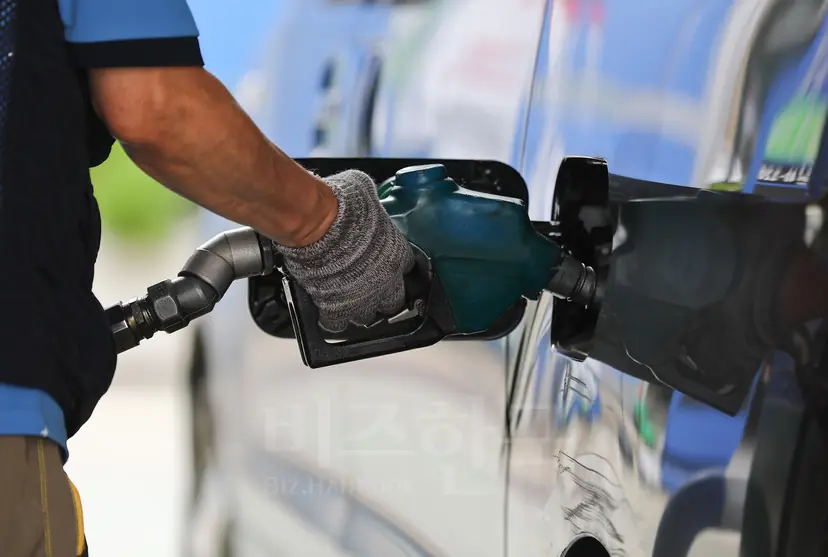
The government's decision to issue a series of measures to stabilize fuel prices comes as international oil prices have been rising again recently. Uncertainty over energy prices is growing, with Brent crude reaching the $100 per barrel range on the 16th due to instability in the Middle East.
Deputy Prime Minister Koo stated, "Uncertainty surrounding the situation in the Middle East is expanding again, as seen by the sharp rise in international oil prices recently. The government will not let down its guard, will maintain an emergency response system, and will do its utmost to ensure energy supply and price stability."
Increasing supply and expanding discounts for Chuseok seasonal goods
The government is also promoting measures to lower the cost of groceries for Chuseok. Following the announcement of the 'Chuseok Public Livelihood Stabilization Measures' on the 1st, it announced additional measures on the 9th to strengthen discount support for agricultural and livestock products.
The government decided to supply 183,000 tons of Chuseok seasonal goods, which is 1.6 times more than usual. The intention is to lower price burdens by increasing the supply of items with high holiday demand, such as Napa cabbage, radish, apples, pears, and beef and pork. It has also decided to invest 103 billion won in discount support for agricultural, livestock, and fishery products.
The Ministry of Agriculture, Food and Rural Affairs further expanded discount support for agricultural and livestock products on the 9th. The scale of support this year is 149 billion won, about three times the 50 billion won provided last year. The discount period has also been extended by one week, from the original 23rd to the 30th, when the Chuseok holiday ends.
Additional discounts are also being offered for Hanwoo beef and pork, which place a heavy burden on prices. At places like Hanaro Mart, Hanwoo sirloin, brisket, soup cuts, and domestic pork shoulder are being discounted by 30-50%. The National Agricultural Cooperative Federation (Nonghyup) is also investing an additional 29.1 billion won to expand online and offline discount events.
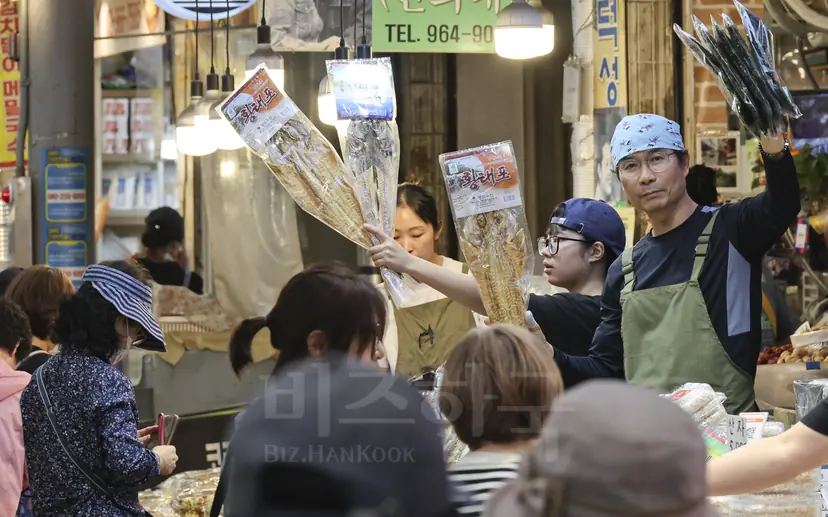
This year's Chuseok grocery price, based on the national average, was found to be slightly lower than last year. According to a survey of traditional markets and large retailers in 22 regions nationwide by the Korea Agro-Fisheries & Food Trade Corporation (aT) on the 18th, the average cost for a Chuseok ancestral rite table for a family of four this year is 196,630 won, a 1.5% decrease from last year. In particular, the cost of the ancestral rite table at large retailers fell by 7.6% compared to the previous year due to the effects of government discount support and discounts provided by Nonghyup and retailers themselves.
However, price burdens remain for certain items. In the aT survey, livestock product prices rose 2.5% from last year. A survey by the Seoul Agro-Fisheries and Food Corporation also showed a notable rise in vegetable and livestock product prices. Vegetables rose 14.7% and livestock products 7.4% from the previous year, while zucchini jumped 43.8% and radish 24.9%.
The government plans to check the supply and price situation of seasonal goods daily until Chuseok. For items with concerns about supply instability, it plans to use available stock to expand supply and continue measures to ease consumer burdens, such as discount support.
The government will also strengthen crackdowns on unfair practices, such as "gouging" prices and price-fixing, targeting the holiday peak season. Nine ministries, including the Ministry of the Interior and Safety, and local governments will conduct joint inspections on traditional markets, tourist attractions, and local event venues until the 22nd. Major targets for inspection include violations of the price labeling system, tampering with measuring instruments, price fixing, and price gouging.
Minister of the Interior and Safety Yoon Ho-jung stated, "We will preemptively block factors contributing to illegal price hikes by thoroughly inspecting the livelihood front, from stabilizing prices for Chuseok seasonal goods to establishing order in commercial transactions."