

[비즈한국] So-called "Yacha-rules," where peers film and share videos of themselves fighting, or students mimicking mockery of victims of the May 18 Gwangju Democratization Movement as if it were a joke. Recent incidents inside and outside of schools show that children are not just passively consuming the violence and hatred they encounter online, but are translating it into real-world words and actions. It is a phenomenon where children, repeatedly exposed to provocative content, accept hatred and mockery as a form of play or a trend before they even have a chance to think about why it might be problematic.
In an era where provocative media content like YouTube and short-form videos is part of everyday life, it is difficult for parents or schools to block all problematic content. This is why, if we want to prevent children from learning hatred and violence as entertaining content, it is more important to foster their ability to identify the problems in the information they see and hear rather than simply keeping them from seeing it.
“Children these days live in a flood of content. It’s impossible to block every single piece of problematic material. Ultimately, I believe we must cultivate their ability to judge for themselves what is wrong, even if they do encounter such content.”
Starting as a children’s book curation service, “Wodada” goes beyond just selecting and providing good content for children; it creates a newspaper that helps them understand the world and make their own judgments. On the 30th of last month, I met with Yoo Ji-eun, CEO of Wodada, at KT&G Sangsang Planet in Seongdong-gu, Seoul, to hear about the role of content and education needed for children in a provocative media environment.
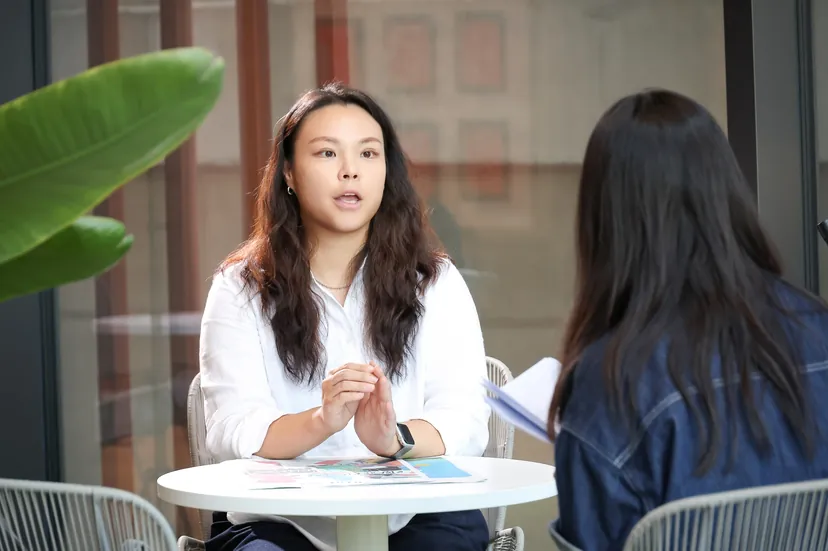
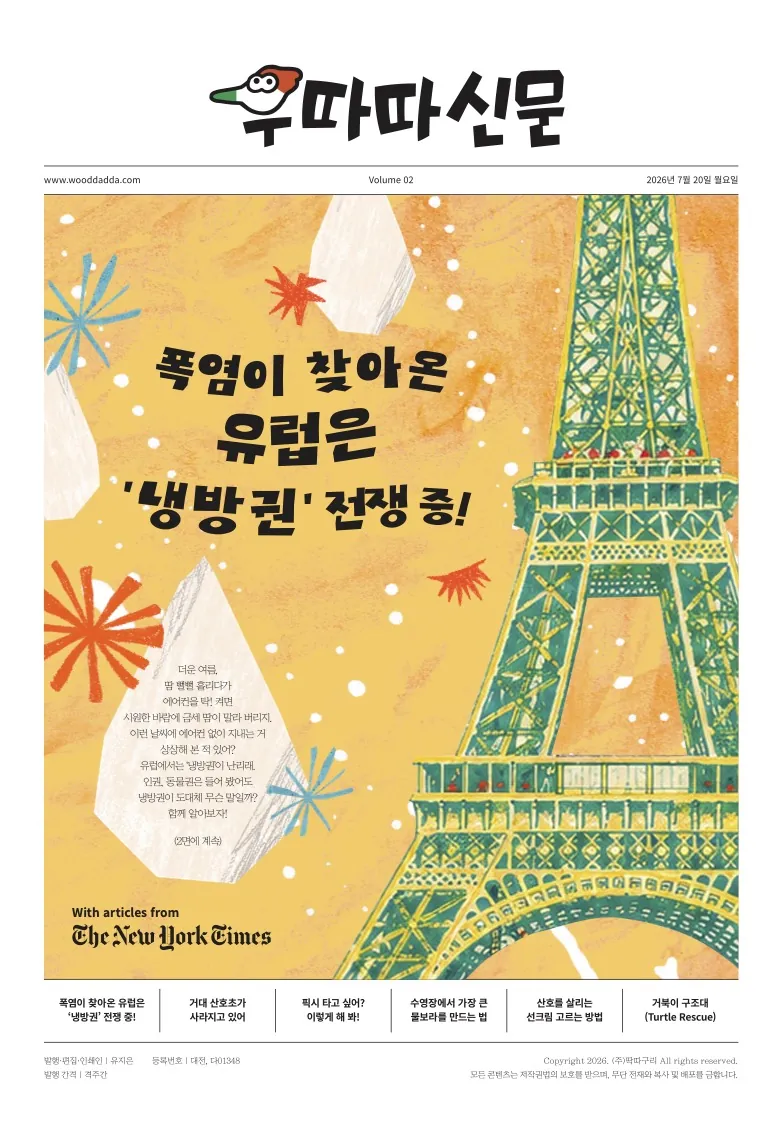
Starting as a children's book curation service, Wodada is a startup that offers picture book curation for infants and toddlers, and publishes a newspaper for elementary school students in grades 3 to 5. They explain various issues in society, the economy, and science at a level children can understand, and have signed a licensing agreement with The New York Times to introduce content for children to the domestic market.
One day, while watching the animation ‘Pororo’ with her six-year-old niece, Yoo assumed children's content would naturally be made from a child's perspective, but she noticed that roles seemed to be fixed based on gender. Traditional gender roles were repeated, with characters like Loopy mainly taking on tasks like preparing meals for friends or being the one who gets sulky. This led CEO Yoo to look into other children's content, and she discovered that there were far more works lacking diversity than she had thought. “Since the content is made by adults, I realized that their perspectives and biases are naturally reflected in children's content as well.”
This critical awareness led to a curation service for gender-equal picture books in 2019. However, while running the service, Yoo felt the limitation that the single topic of gender equality was not enough to explain the world children would live in. This was because social agendas that children needed to understand, such as disability, the climate crisis, and cultural diversity, were much broader.
Experiencing the COVID-19 pandemic and the Itaewon tragedy, she also realized that there was almost no content explaining society from a child's perspective. The concerns of parents she met in the field were similar. She often heard, “I don’t know how far or how to explain social issues to my child.” Starting the current children's newspaper was her answer to that question.
“Why do I have to study if there’s AI?” “Is tteokbokki really bad for your body?” The editorial team plans each issue based on: △ topics frequently discussed in current society, △ topics that are difficult for parents to explain, and △ topics that directly affect children’s lives. They also take questions from children. The KOSPI article on the cover of the first issue of Wodada Newspaper started from a tip sent by a child. “Children are also curious about society,” Yoo said. “They aren't uninterested; they just lack background knowledge. There needs to be a process of explaining the world in the children's own language.”
“Problematic content can be encountered anywhere. What matters is the strength to think for oneself why it is a problem.”
Children often lack sufficient social experience and background knowledge, making it easy for them to accept expressions they see in content as facts or to imitate them. They even learn disparaging remarks about specific groups or violent expressions as if they were fun slang. “Children absorb what they learn from content like sponges,” Yoo noted. “Once a distorted perspective takes root, it is not easy to change it later.”
However, unconditionally blocking content is not the solution. For children who return home late at night after attending academies, the space where they meet friends is mostly “online.” In an environment where platforms change rapidly, there is a limit to the method of unconditionally blocking content, Yoo said. Instead, she emphasized that they must go through the experience of reading content, organizing their own thoughts, and then sharing opinions with others.
Wodada Newspaper puts a QR code on every article. This is so children can leave their own opinions and read different thoughts from others. In an article discussing the issue of banning mobile phone use in schools, they conducted a survey directly targeting child readers. Contrary to expectations, about 80% of respondents were in favor of the ban. Their reasoning was that when using a mobile phone, they are constantly distracted by notifications and it is difficult to properly play with friends during breaks. “Even children can make their own judgments if given enough information and time to think.”
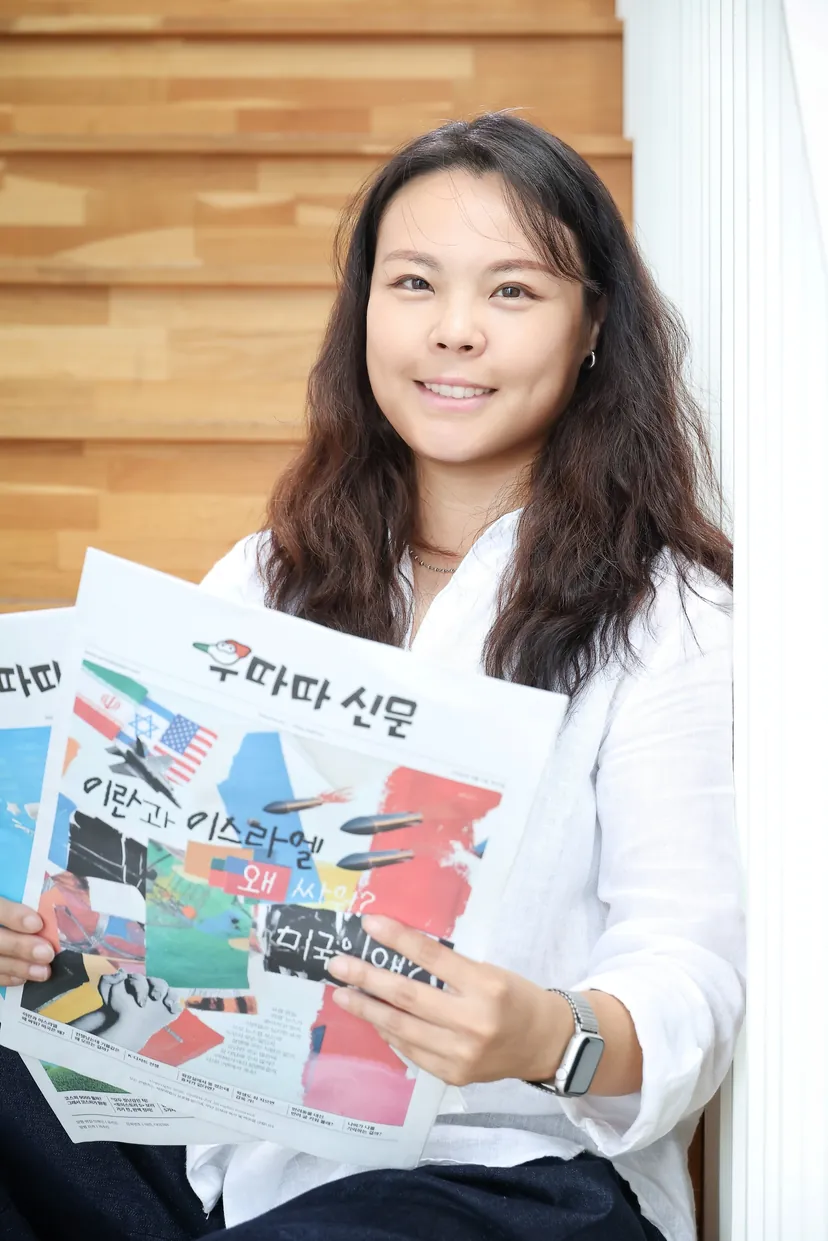
Ultimately, the world CEO Yoo wants to create is an environment where children can encounter social issues, share different opinions, and form their own thoughts. She emphasized that to achieve this, children should not be viewed merely as “objects of protection.” Rather than blindly blocking provocative content, it is better to cultivate their ability to distinguish right from wrong for themselves. Yoo said she would continue to create content that facilitates such experiences. She is also preparing an online program where children can share opinions and debate controversial topics after reading the newspaper.
“Children are beings that need to be protected, but they are also citizens who will live in society. I believe that only when they have sufficient opportunities to understand the world can they grow into people who judge and act based on their own thoughts.”