

[BizHanKook] A 645-unit residential complex is set to be developed on the former E-Mart Gayang site in Gangseo-gu, Seoul, which had been left adrift after repeated changes to business plans following the store's closure. The project became viable due to the Seoul Metropolitan Government's deregulation of semi-industrial zones, which improved the economic feasibility of residential development. Local residents expressed particular excitement about the inclusion of an E-Mart re-entry in the development plan. Experts viewed the shift in direction as a reflection of market demand but pointed out the need to assess infrastructure, such as transportation and education, in connection with surrounding development projects.
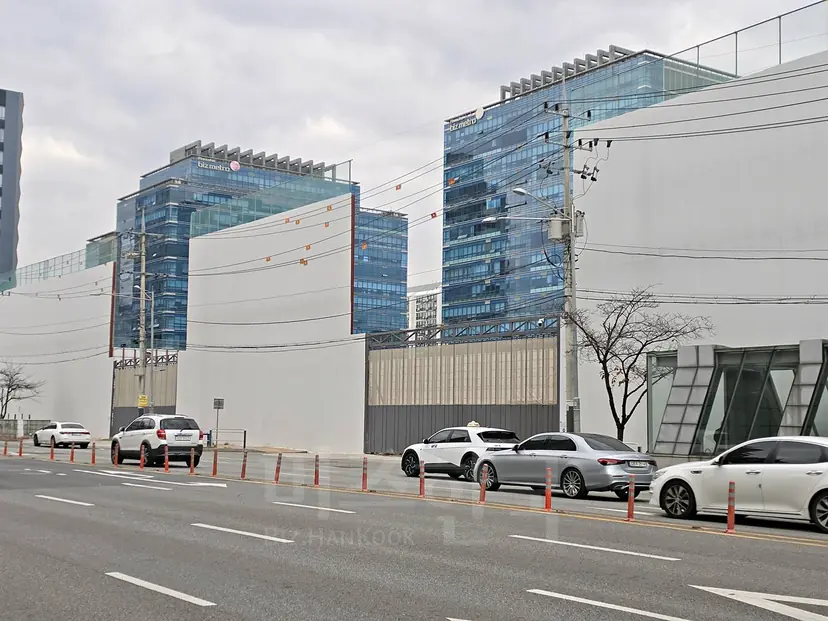
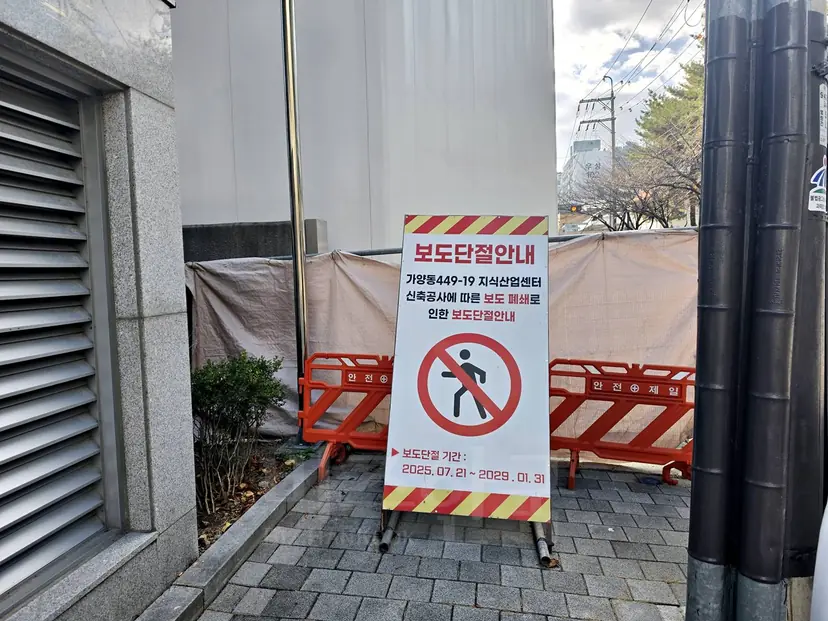
The former E-Mart Gayang site in Gangseo-gu, Seoul, visited on the 25th, was silent and surrounded by tall construction barriers. Through the gaps in the barriers and gates, the site appeared empty, with no signs of construction activity. A remaining notice about sidewalk closures near the site indicated that a knowledge industry center had previously been planned for this location.
The former E-Mart Gayang site (449-19 Gayang-dong) is a 22,871.3-square-meter area in a semi-industrial zone located right next to Jeungmi Station on Subway Line 9. With easy access to major business districts such as Magok and Yeouido, it is considered a prime location for residential housing near workplaces. In 2021, E-Mart sold the site and the building to a Hyundai Engineering & Construction consortium for 682 billion won to improve financial stability and secure investment capital.
Subsequently, plans were made to build a 28-story mixed-use facility featuring officetels and shopping malls. During this time, the E-Mart Gayang store ceased operations in September 2022. However, as the high-interest-rate environment and real estate market slump dampened the officetel sales market—and local apartment residents opposed the development due to concerns over light access—the business plan had to be re-evaluated. A knowledge industry center emerged as an alternative, as it allowed for a higher floor area ratio than officetels, and recent deregulation at the time made it possible to include large-scale retail facilities, improving project feasibility.
In March 2023, the project operator changed the plan and pursued the construction of a knowledge industry center and retail facilities spanning five basement levels to 21 above-ground floors. The project received architectural approval in 2024 and completed its construction report in September last year. However, construction is currently halted due to the slump in the knowledge industry center market, driven by oversupply and rising numbers of unsold units.
With the project facing another dead end, the Seoul Metropolitan Government's deregulation of semi-industrial zones provided a new breakthrough. In March last year, Seoul amended its urban planning ordinance to raise the maximum floor area ratio for residential developments in semi-industrial zones from 250% to up to 400% when establishing district unit plans. With the knowledge industry center market stagnant, the regulatory conditions made residential-focused mixed-use development more attractive, prompting a pivot in the project's direction.
The revised development plan was unveiled on the 12th when Gangseo-gu publicly announced its district unit planning proposal. According to the proposal, the site will feature a residential complex with 27 floors above ground and six basement levels, applying a floor area ratio of 399.51%. The plan includes 645 housing units, large-scale retail facilities, neighborhood living facilities, and a public children's career experience theme park. There are also plans to build a public pedestrian walkway connecting Jeungmi Station to Gayang Apartment Complex 9, as well as green spaces and rest areas for local residents. An E-Mart is planned for the first basement level.
Residents met on-site expressed positive reactions to the prospect of a residential complex replacing the long-neglected site. A resident near Jeungmi Station said, "There are already many vacancies in the existing knowledge industry center next to the site. A residential complex seems like a good idea. Since it's right by the station, demand will likely be high."
Residents were particularly excited about the inclusion of an E-Mart. Since the E-Mart Gayang store closed in 2022 and the nearby Homeplus Gayang store also ceased operations last December, residents have faced worsening conditions for accessing large supermarkets.
Resident B, who stated they have lived in Gayang-dong for over 10 years, said, "After E-Mart disappeared, the neighborhood relied on the Homeplus commercial area, but with Homeplus recently struggling, it’s become inconvenient to go grocery shopping. If E-Mart comes back, it would certainly be convenient."
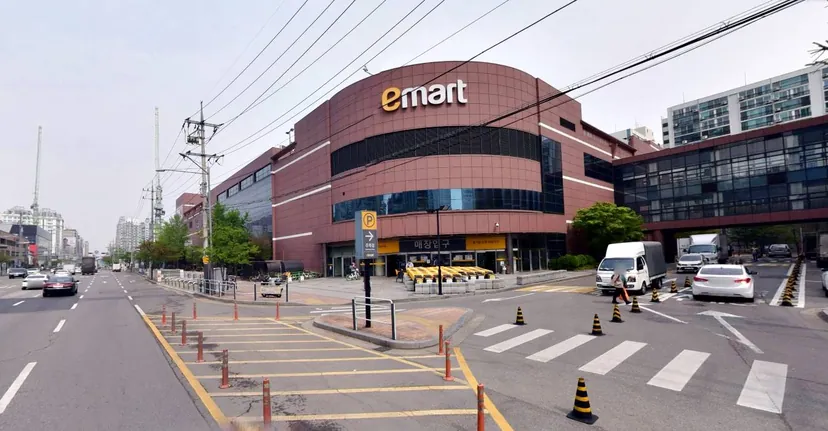
In fact, when E-Mart sold the Gayang site and building in 2021, it specified as a transaction condition that it would purchase a portion of the new building in the future to re-enter. An E-Mart official stated, "It was agreed at the time of the sale that we would re-enter after the development."
Experts analyzed that the shift in the development direction of the former E-Mart Gayang site is the result of changing demands in the real estate market combined with the deregulation of semi-industrial zones. Shin Bo-yeon, a professor at Sejong University's Department of Real Estate AI Convergence, said, "While the knowledge industry center market is stagnant due to oversupply, the demand for apartments in Seoul remains solid. Given this, the shift from officetels to knowledge industry centers to residential complexes is a rational choice that reflects market demand." She also predicted that the deregulation of semi-industrial zones could provide a lifeline for other long-stalled development projects.
She emphasized that in the process of shifting toward residential-focused development, securing an appropriate development scale and infrastructure is crucial. Professor Shin noted, "In areas like Gayang-dong and Jeungmi Station, where plots are small, the key is to design for a certain number of units through plot consolidation and joint development rather than approaching them individually. For zones where multiple projects are concentrated—like the 960 units on the CJ site and the 645 units on the E-Mart site—it is necessary to jointly assess infrastructure such as traffic and schools at the district level."
The currently disclosed development plan is a draft for the district unit plan and is not yet finalized. The plan may be subject to change during the future process of collecting resident feedback and urban planning deliberations. Once the relevant procedures are completed, the specific details of the project are expected to emerge. Having undergone two major changes in business plans, attention is now focused on whether this residential complex development will actually come to fruition.