

[BizHankook] “With the abolition of the prosecution's investigative powers and the creation of the Major Crime Investigation Agency (MCIA), there is a significant vacuum in investigations. Currently, the Financial Supervisory Service (FSS) special judicial police are the only ones investigating capital market unfair trading cases, such as stock manipulation.” (Lawyer formerly with the Financial Investigation Division of the Seoul Southern District Prosecutors' Office)
Although the prosecution’s direct investigative functions have been transferred to the newly established Major Crime Investigation Agency (MCIA), legal circles suggest that the MCIA will struggle to make an immediate impact in capital market crime investigations due to a lack of leadership and specialized personnel in its early stages.
The Financial Supervisory Service (FSS) is currently taking the lead in capital market investigations, which have effectively become a power vacuum. Beyond securing the right to initiate investigations into unfair trading in capital markets, there is talk that the FSS could expand its special judicial police powers into areas like illegal private lending and insurance fraud. This has raised concerns about a potential recurrence of a tug-of-war with the cautious Financial Services Commission (FSC).
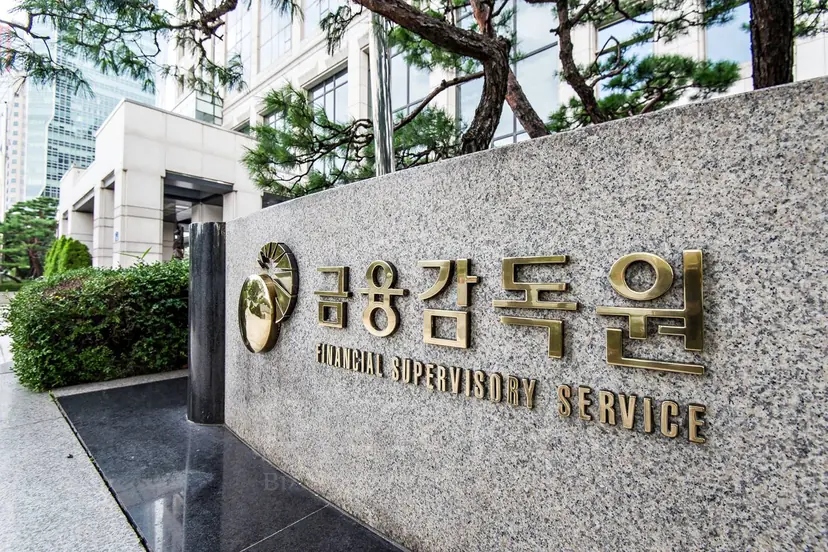
FSS Presence Grows Amid MCIA 'Vacuum'
Although the new MCIA has launched, the consensus in the legal community is that it lacks the practical expertise to delve into sophisticated financial crimes that evolve daily, such as advanced derivative product design, capital-less M&As, and complex convertible bond (CB) schemes.
Amid this confusion, the FSS is expanding its presence. In the first half of this year, after a fierce battle with the FSC, the FSS succeeded in securing a compromise that grants its special judicial police the "independent authority to initiate investigations" into capital market unfair trading. In the past, they could only investigate cases referred by the Securities and Futures Commission (SFC) under the FSC via the fast-track process, but now, the FSS special judicial police have the path open to catch suspicious transactions themselves and launch compulsory investigations.
The lawyer mentioned earlier tipped off, "Although most of the Seoul Southern District Prosecutors' Office's financial crime investigation personnel have moved to the MCIA, many in the leadership lack experience in financial investigations, and they lack a reporting system, so it will take time for them to settle in. While the FSS special judicial police have less investigative capability than the former prosecutors, you have to realize that they are currently the only entity performing search and seizures."
Of course, the process was not easy. Since the end of last year, the FSS had been pushing for the acquisition of investigative powers and the expansion of its scope, claiming it would improve responses to unfair capital market practices. However, the FSC expressed concerns about the potential for abuse of power and control issues, noting that the FSS is a private, independent organization. Another reason for opposition was the FSS's attempt to expand the scope of its special judicial police to include accounting audits and inspections of financial companies.
Ultimately, it was settled that while the special judicial police would be granted the authority to initiate investigations into capital market unfair trading, they would be controlled through the FSC's Investigation Review Committee. Leveraging its "increased authority," the FSS is solidifying its position as the "financial police."
Beyond Stock Manipulation: Illegal Private Lending and Insurance Fraud?
What is noteworthy is that the FSS's focus is not limited to unfair trading in the capital market. Recently, Park Ji-sun, Deputy Governor of the FSS, stated at an insurance industry CEO breakfast meeting hosted by the Korea Insurance Research Institute, "The possibility of introducing special judicial police (for insurance cases) next year is very high. While the current direction is focused on illegal private lending, once that settles, I hope to expand it to insurance fraud so the FSS can collaborate with the police."
The FSS has also built an analysis system that uses Artificial Intelligence (AI) to track the masterminds of illegal private lending organizations. They explained that by connecting individually received damage reports to uncover hidden criminal organizations, they can use the system to analyze approximately 380,000 pieces of information related to illegal private lending and find links between different cases.
They are raising the possibility of expanding the special judicial police to cover insurance fraud, one of the major crimes affecting the public. Currently, the FSS has a structural limitation in that it lacks compulsory investigative powers and must refer investigations to the police. By citing the fact that cases can be delayed because of the gap between the FSS detecting a suspicion and the police starting an investigation, the FSS is justifying the need for its own investigative powers.
It is only natural that the FSC does not view the FSS’s broad actions favorably. Within the FSC, there is still a sentiment that it is inappropriate for the FSS, a private institution, to initiate investigations.
The concern is that if the FSS—which already has the power to track accounts without a warrant as a private agency—is given even broader special judicial police authority to initiate investigations, it could operate outside of FSC control and conduct unreasonable investigations. Park Min-woo, a member of the FSC’s Securities and Futures Commission, also remarked after a work report last year, "There are concerns that if you give too much power to civilians one-sidedly, there is a risk of abuse."
A lawyer who formerly served as a deputy chief prosecutor at the Seoul Southern District Prosecutors' Office explained, "The conflict over 'special judicial police authority' between the FSS, which is trying to properly perform the role of the 'Capital Market Grim Reaper' by taking advantage of the prosecution reform, and the FSC, which is trying to prevent the bloating of public power in a private organization, is a point where we will have to watch the direction of future government policy to see how it concludes."