

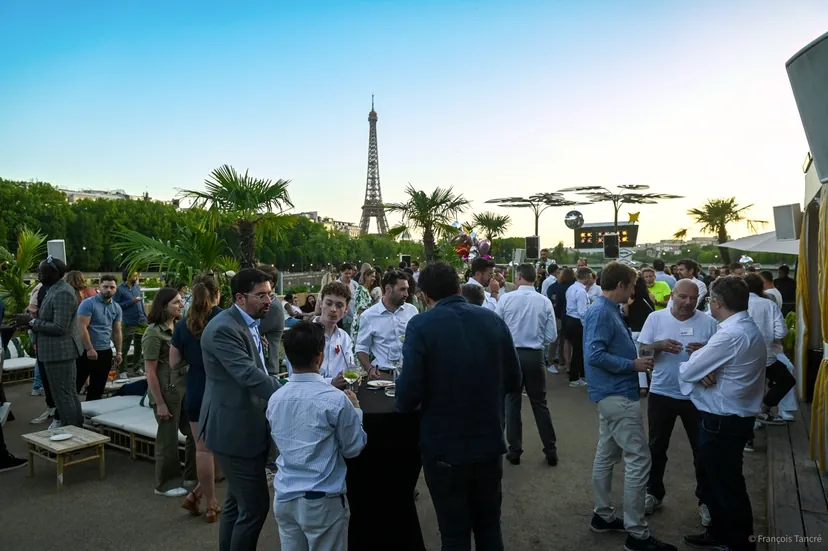
[비즈한국] Every June, Paris briefly transforms into a giant startup city. This is due to Viva Technology (VivaTech), one of the largest startup and tech events in Europe.
Marking its 10th anniversary this year, VivaTech 2026 was held from June 17th to 20th at Paris Porte de Versailles. The event drew over 200,000 visitors from 165 nationalities, featuring more than 15,000 startups and over 1,100 speakers.
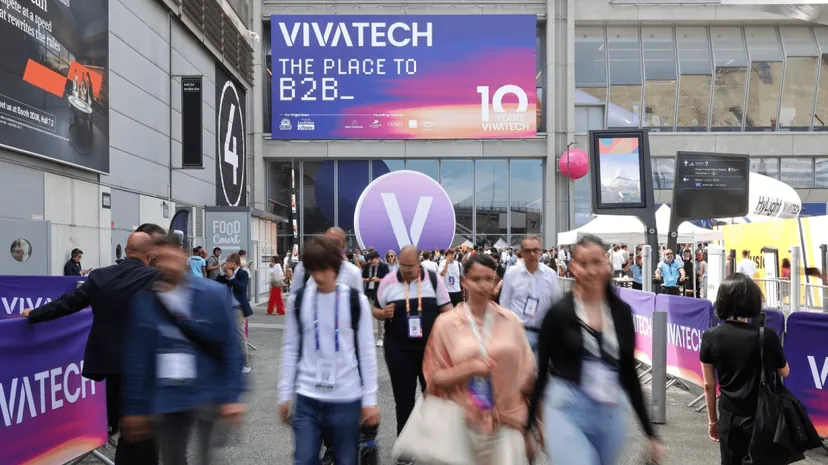
One of the things that stood out at this year's event was South Korea.
As many as 39 Korean startups participated in the 'K-Startup & K-Innovation' pavilion, organized primarily by the Ministry of SMEs and Startups and the Korea Institute of Startup & Entrepreneurship Development. If you count the companies supported separately by the Ministry of Science and ICT, local governments, universities, and private organizations, the number of Korean companies encountered throughout the venue was far greater.
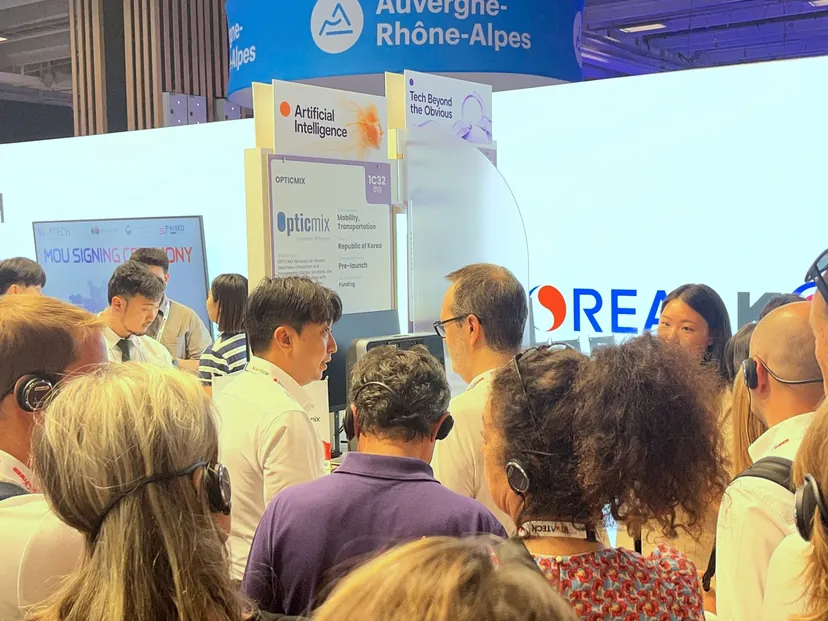
South Korea was already selected as the 'Country of the Year' at VivaTech in 2023. This year holds an additional significance: 2026 marks the 140th anniversary of diplomatic relations between South Korea and France.
During this visit to Paris, it was also impressive to hear Korean announcements on the subway quite frequently. Seeing Korean flowing naturally in the subways of a foreign city and meeting numerous Korean startups and agency officials at the VivaTech venue made me realize that the distance between South Korea and France has become much closer than in the past.
However, while looking around VivaTech, a question arose simultaneously. Where should we go after VivaTech ends? Korean companies’ business trips to Paris still tend to be concentrated during major events like VivaTech. They meet investors at the venue, hold meetings with accelerators, and participate in programs prepared by the government and local authorities. And then, once the event ends, many head straight back to the airport.
Korean Founders in Europe Met at VivaTech
What was even more interesting during this Paris visit was not just the number of Korean companies discovered inside the VivaTech venue. I found profound resonance and hope for the future in meeting Korean founders who have already established their own companies in Europe and are pioneering markets there.
On the occasion of VivaTech, Korean founders active in France and Korean founders active in Germany gathered together with the Korea Startup Forum. This gathering was interesting because it was not about Korean startups coming to "enter" Europe, but rather about people who are already operating companies in Europe.
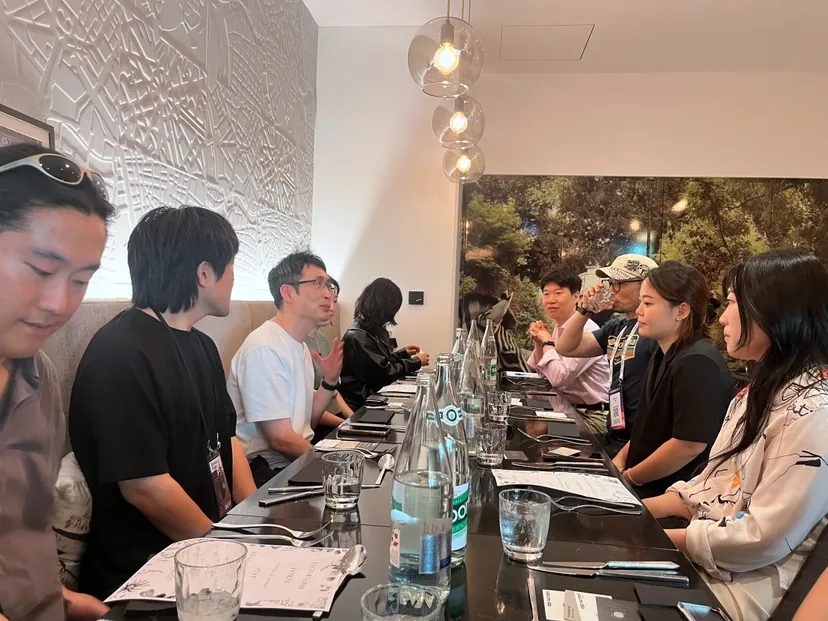
From Germany, So-hyun Park, co-founder of Veecle; Min-cheol Lee, CEO of Berlin-based momogo; and Yoon-chang Kang, CEO of SULDOK joined the gathering.
Min-cheol Lee's momogo is an Asian food startup that started in Berlin. It began as EasyCookAsia, a meal-kit service that allows people to make Asian food at home, and later expanded its brand to momogo. It currently sells products through major German distribution networks and is expanding its business beyond food to introduce various consumer goods from South Korea and Asia to the European market.
Yoon-chang Kang's SULDOK is based in Berlin and introduces traditional Korean liquor and drinking culture to the European market. Beyond simply importing and selling Korean alcohol, it is important to collaboratively create the cultural context, such as which foods European consumers should drink Korean liquor with and how they should perceive it.
Co-founder So-hyun Park leads the mobility software startup Veecle and is actively engaged as a representative German deep-tech startup.
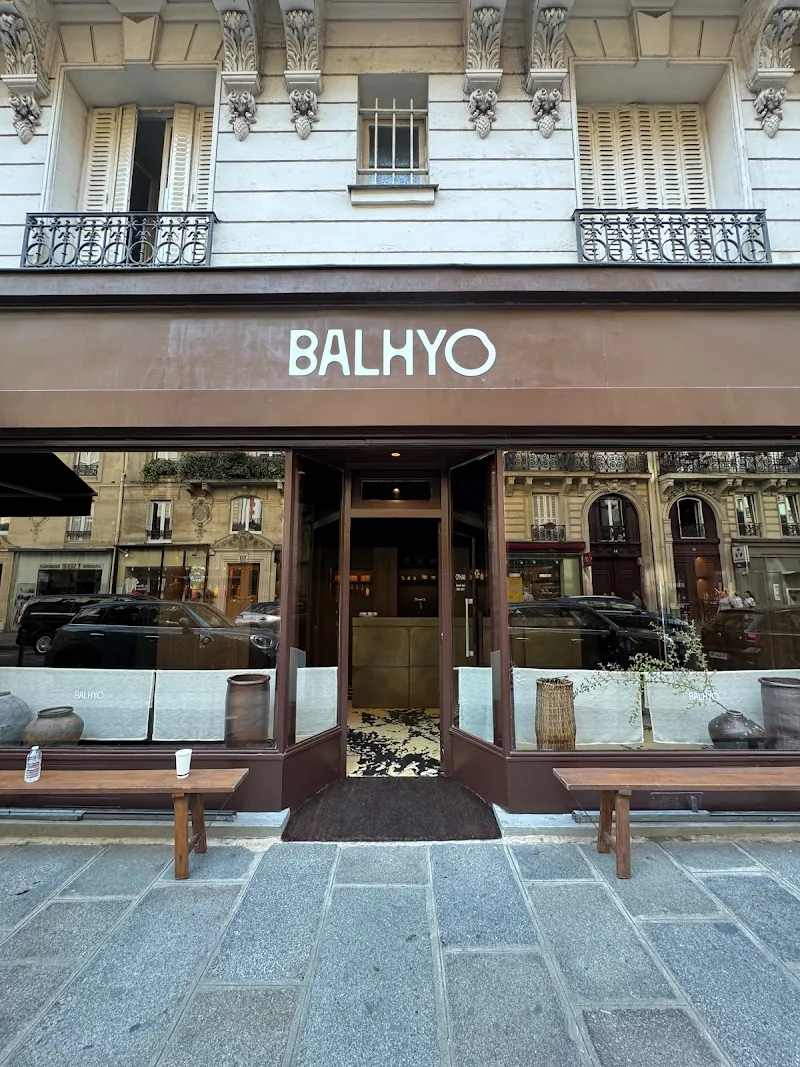
From France, Yoon-ah Seon, CEO of BALHYO; Eun-kyung Kang, CEO of Exercise 0; and Dong-soo Han, CEO of Z-emotion participated.
BALHYO creates and sells Korean fermentation culture and related products on Rue Saint-Placide in the 6th arrondissement of Paris, not far from Le Bon Marché, which is considered one of the world's first modern department stores.
It is an attempt to go beyond simply introducing Korean food to France; it aims to re-interpret Korea’s food culture—embedded in soy sauce, fermented sauces, jang (fermented pastes), and various fermented foods—into a modern language for French consumers. It was impressive to hear CEO Yoon-ah Seon talk about how to translate the fermentation technology and food culture that Korea has accumulated over a long time into a brand and experience that French consumers can understand.
Exercise 0 is a startup that solves a problem very specific to the local French fashion industry.
In the clothing manufacturing process, a significant amount of fabric is wasted depending on how patterns are arranged on the textile. Exercise 0 is developing a solution to reduce such textile waste by optimizing pattern design and placement. It is meaningful in that it is not a case of selling a service made in Korea to France, but rather discovering a problem in the Paris fashion industry and turning the technology to solve it into a business.
CEO Dong-soo Han's Z-emotion develops 3D clothing design and digital clothing simulation technology. In addition to 'z-weave,' a 3D clothing production solution that allows fashion designers to design garments and implement fabric movement in a digital environment without having to repeatedly produce physical samples, they provide clothing simulation technology that can be used in Autodesk Maya and Unreal Engine.
Its applications go beyond simple fashion design. It is expanding into virtual fitting, e-commerce, game character clothing, digital humans, and content production. It is a technology that can be utilized not only by global fashion companies like Louis Vuitton and Nike but also in the gaming and digital content industries.
In particular, looking at the businesses of Exercise 0 and Z-emotion in the city of Paris is interesting. France is a world-renowned center for the luxury and fashion industries, and at the same time, it is a market with very high demands for digital transformation and sustainability in the fashion industry. Technology that reduces physical sample production and digitizes design and garment development processes is connected not only to the issue of saving costs and development time but also to the sustainability issue of reducing fabric and sample waste. Although their business models are different, Exercise 0 and Z-emotion are alike in that their Korean founders view the changes in the French fashion industry as business opportunities.
As these Korean founders actually doing business in France and Germany gathered, the content of their conversation was naturally quite realistic.
They shared vivid experiences about the ups and downs of establishing companies in Europe, visas and taxes, difficulties in hiring local employees, trial and error arising from European regulations and complex contract structures, and attracting investment.
Their stories contained valuable information enough to serve as a 'European Market Entry Handbook' for Korean startups looking to expand into Europe, rather than just being a memoir of Korean founders' challenges in Europe. Above all, I grew hopeful that their concrete challenges—turning products and business models conceived in Korea into businesses where European customers actually pay money—will become a massive infrastructure for the Korean and European startup ecosystems.
Before Station F, There Was Silicon Sentier
And in August, I visited Paris again when the heat of VivaTech had subsided a bit. I wanted to quietly contemplate the Paris ecosystem during the vacation season. I also visited the Sentier district in the 2nd arrondissement of Paris, known as the original hub of the Parisian startup ecosystem, which I hadn't been able to visit while staying at the exhibition venue.
Known by the nickname 'Silicon Sentier,' this area saw the formation of France's early digital startup ecosystem as internet companies gathered one by one in the late 1990s.
Sentier was originally a representative wholesale area for textiles and clothing in Paris. As the industrial structure changed, some companies moved to the outskirts of Paris, creating relatively cheap office space in the city center. This, combined with good telecommunications infrastructure and a location in the heart of Paris, led to the influx of internet companies.
In 2000, an association actually named 'Silicon Sentier' was formed. In 2008, La Cantine, one of France's early coworking spaces, appeared, and in 2011, the startup acceleration program Le Camping was launched.
These movements later developed into a startup hub called NUMA. Although the offline base near Sentier is now closed, and the massive startup hub Station F, well-known even in Korea, has inherited its fame and symbolic status in the ecosystem, NUMA was a place where experiments of founders, developers, and investors gathering, working, and connecting in Paris had been taking place long before.
The Silicon Sentier I visited in August was quiet. However, even in the place where many people had left for vacation, I could see people still working with their laptops, and old clothing shops, cafes, offices, and coworking spaces were mixed on the narrow streets.
I also thought that a startup cluster does not necessarily require a huge building or a techno-valley created by the government. Perhaps what is important in a good ecosystem is the 'probability of accidental meetings.' Meeting another founder while going to meet one person, meeting an investor while drinking coffee, and the person met at an evening event becoming a customer or partner months later. Silicon Sentier is an old case showing how such density of relationships creates a startup ecosystem.
The French startup ecosystem that started in Silicon Sentier has developed into the national brand 'La French Tech.' In 2013, the French government branded these grassroots startup movements at the national level as 'La French Tech.'
It is easy to think of La French Tech as a single accelerator or a government-supported project, but its actual meaning is much broader. Although there is a dedicated organization within the government called Mission French Tech, the name 'French Tech' itself is closer to a brand for the entire French startup ecosystem, encompassing startups, investors, support organizations, and large corporations.
France did not just support a few startups. It made the very act of 'founding a technology company in France' a national brand. Subsequently, Station F, one of the world's largest startup campuses, appeared, and VivaTech grew into a world-class technology event. The movement that started with small internet companies and founder communities in Sentier has developed into a national-level network and a global platform.
Europe Also Needs a K-Founder Fund
During the Lee Jae-myung administration's visit to the United States in July 2026, the Ministry of SMEs and Startups held 'K-Founders Connect in Silicon Valley' in Silicon Valley to connect overseas Korean founders and investors, and announced a plan to create a 100 billion won 'K-Founder Fund.' It is a vision to invest in new global Korean founders by combining government fund-of-funds with capital from Korean founders and investors who have succeeded overseas.
The direction of the policy is welcome. Until now, Korea’s startup support policies have been largely designed around 'sending companies founded in Korea overseas.' But global entrepreneurship does not necessarily have to start in Korea. A Korean can start a company in Silicon Valley. One can establish a French corporation in Paris and do business targeting European consumers from the start. One can start a company in Berlin targeting the German market. These are also important global startup assets that Korea possesses.
Now, a 'K-Founder' policy is needed for Europe as well. Few would argue with the assertion that Silicon Valley is the world's best startup ecosystem. It is naturally important for Korean technology companies to challenge the US market. However, if we start using global entrepreneurship to mean almost the same thing as Silicon Valley, there are regions we miss.
That is Europe. The European Union is a single market with approximately 450 million consumers. It is one of the most important markets in the world for automobiles, batteries, energy, climate technology, bio, healthcare, manufacturing, and industrial technology.
Above all, a significant network of Korean founders already exists. Many of the founders in the Korean founder network I met at VivaTech are active across Europe, based in Germany and France. If you broaden the scope to include London, Amsterdam, Stockholm, Helsinki, Munich, etc., the network of Korean founders, investors, business people, and researchers is by no means small.
In France, there are investors who understand Korea and Asia well, and local accelerators like 123Factory have already been cooperating with Korean startups for a long time. In Germany, there are world-class manufacturing companies, research institutes, and medium-sized companies that want to cooperate with Korean technology companies.
In other words, it’s not that there is no network in Europe. It’s just scattered. That is why I hope one of the next testing grounds for the K-Founder policy that started in Silicon Valley will be Europe. It is not strictly necessary to create a separate 100 billion won fund from the start. We can begin with a regular 'K-Founder Europe' network that connects Korean founders and investors active in Paris, Berlin, London, Amsterdam, and so on.
Senior founders who have done business locally for 5 or 10 years can become mentors for Korean companies newly arriving in Europe. We can involve local Korean founders as long-term partners in government overseas expansion programs, rather than just one-off speakers. We need a structure where the center is held by people who will continue to do business in Europe, not a network that disappears when agency officials dispatched from Korea finish their terms and return.
Co-investment connecting Korean venture capital with European investors is also possible. And in the long term, we can try to create a fund where capital from Korean founders and investors who have succeeded in Europe is re-invested into new Korean global founders. There is no reason why the virtuous cycle being attempted in Silicon Valley cannot be replicated in Paris and Berlin.
Ecosystems are ultimately built by people. They meet repeatedly in the same city, share information, introduce customers, connect investors, and pass on experiences so that those who failed first do not make the same mistakes.
It is welcome news that more Korean startups will participate in the next VivaTech. But personally, there is a scene I would like to see even more. A scene where Korean and French founders discuss business at a Paris cafe on an ordinary day without VivaTech. A Korean founder in Berlin introducing a new Korean startup to German customers. Korean investors in Paris and London investing in another Korean global founder. And these things happening naturally even on days without government events.
Only then will 'Korean startups entering Europe' become an ecosystem, not just a government-supported project. I look forward to the next chapter of K-Founders, which began in Silicon Valley, being written in Europe as well.
The author, Eun-seo Lee, majored in law in Korea and studied theater in Berlin. Based in Berlin, a city of art and a European startup hub, she leads 123Factory, which bridges the startup ecosystems of Korea and Germany while growing alongside the city.