

[BizHanKook] As the standards for good branding have become widely shared, the overall level of brands has risen. Paradoxically, however, brands have begun to resemble one another, and new attempts are quickly copied, shortening the lifespan of differentiation. Jeon Woo-sung, CEO of 'Seaside City', views this situation as the 'end of the gap.' Taking the stage as the second speaker at the 'BrandBiz Conference 2026' on the 29th, CEO Jeon explained how brands can become unique amidst this 'end of the gap.'

Seaside City is a branding strategy and consulting group launched in 2024. It covers the entire spectrum of branding, from establishing brand identity and rebranding strategies to naming, slogans, and communication strategies. CEO Jeon Woo-sung is a branding director who has garnered attention in the industry to the point of being called the 'idol of the branding world.'
CEO Jeon Woo-sung explained that companies and brands have long viewed the market through a 'four-quadrant' lens. This is a method of dividing the market along two opposing criteria, identifying where competitors are positioned, and then finding one's own spot within that space.
Once a brand or product plants a flag in the market, demand is created, and competitors follow. As the market grows, more operators enter, and eventually, the four-quadrant space becomes densely packed. CEO Jeon observed that most consumer goods markets, such as fashion, outdoor, and coffee, have already entered this 'red ocean.' He stated that not only products but also marketing and design have evolved by finding positions different from those of competitors.
The problem is that there is almost no gap left for new brands to enter. "If you assume you're launching a new brand, where do you plant your flag? There are no gaps left," said CEO Jeon. "No matter where you plant it, there is bound to be some brand or product already in a similar position."
CEO Jeon emphasized that in such situations, a 'branding perspective and mindset' are essential. He defined branding as "the act of creating my own unique value that distinguishes me from others." This means not merely stopping at finding an empty spot in the existing market, but defining new value that did not previously exist.
The concept CEO Jeon presented for this is not 'positioning' but 'framing.' This is a way of changing one's perspective to impart new value rather than finding a position different from competitors within the existing market.
CEO Jeon presented two cases to explain this. The first case was 'hinok,' which started as a fabric deodorizer brand. Generally, fabric deodorizers are considered products used to remove odors from one's clothes or space. hinok changed the perspective here. It viewed the product as something used not for oneself, but to provide comfort to those around the user.
From this perspective, hinok defined itself not as a simple fabric deodorizer brand, but as a 'life etiquette brand.' CEO Jeon explained that this definition also changed the way the brand expanded. A fabric deodorizer brand would likely stop at expanding its product line by adding new scents or ingredients. However, by viewing it as a life etiquette brand, it could expand its products into various areas of daily life shared with others, such as room sprays for the room or oils applied to the body.
CEO Jeon also cited the value of the product as a gift as a distinguishing move for hinok. He explained that while it might generally be unfamiliar to give a fabric deodorizer as a gift, the meaning of the product changes when the value of 'life etiquette'—being considerate of those around you—is assigned to it.
The case of the dating app 'Willu,' for which CEO Jeon personally conducted the branding strategy and consulting, was also introduced. Willu moved away from the method of only showing photos and highlighted profiles that utilized both photos and text. Instead of random recommendations or unlimited browsing, it recommends potential matches four times a day and has an identity verification system in place.
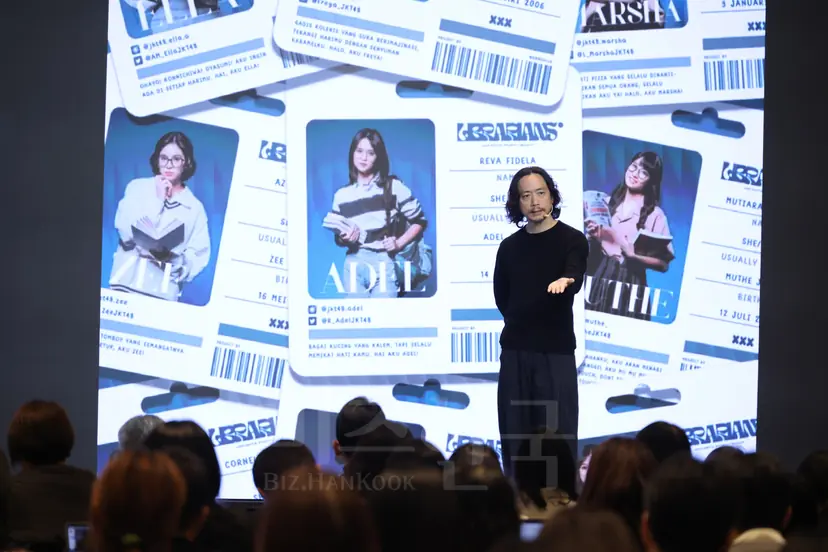
CEO Jeon viewed Willu in a new light by shifting the subject of the dating app from the user to the service itself. It was defined not as an app where users directly browse through countless people, but as a service where Willu vets people and selects and proposes suitable matches.
The concept that emerged from this process is that of a 'relationship curator.' Curation serves to reduce user fatigue by narrowing the range of choices and shortens browsing time by organizing information that fits an individual's tastes. From this perspective, Willu redefined its brand as a service that recommends matches that users can trust and choose.
Changes followed in the service as well. While strengthening identity verification and advancing the recommendation algorithm, a feature was introduced that also shows the reason for recommending a match. "It’s about delivering the context along with why Willu recommended this person," explained CEO Jeon.
According to CEO Jeon, after the rebranding, Willu’s ranking in the dating app category rose from 9th to 2nd. Sales increased by more than 30% compared to the previous month and by 266% compared to the previous year. The number of downloads also exceeded 1 million in August 2026, up from 500,000 a year ago. Quoting the CEO of Willu, he conveyed that "there is at least one piece of marriage news every week or two."
CEO Jeon diagnosed that we have entered an era where everyone is good at creating products, designs, marketing, and content. He noted that due to the advancement of technology and artificial intelligence (AI), quality is also rapidly reaching a high level of parity. He explained that even if you launch a new feature, competitors can follow quickly, making a better feature itself difficult to be a sustainable differentiating factor.
"Better features do not become our own unique value," he said. "It is important whether we are better than anyone else, but it may be more important what unique meaning we possess in this market that makes us different from others."
He continued, "The definition of value comes before the optimization of indicators," and emphasized, "You must step out of the four-quadrant space laid out by the market and competitors and think about how you can make your brand mean something different."
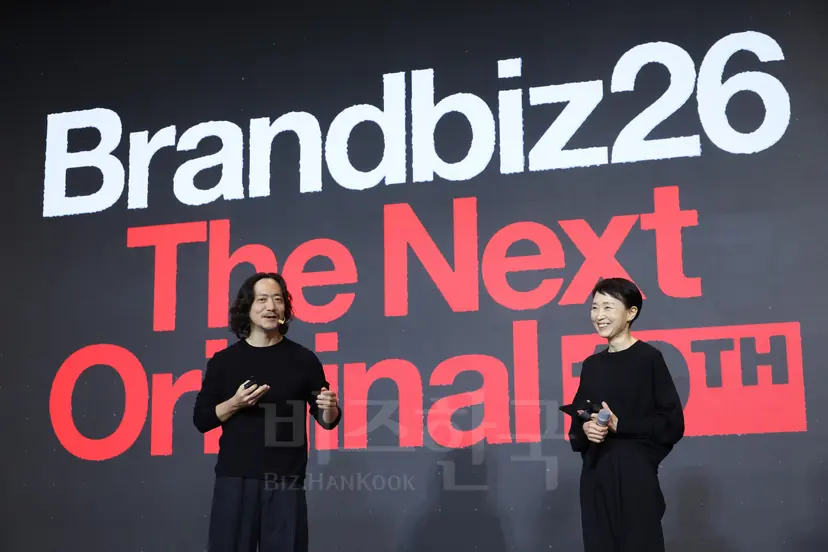
Finally, CEO Jeon posed the question: "By what standards is your brand competing right now?" He left the audience with the message that instead of moving only within the standards created by the market and competitors, one should contemplate what different meaning a brand can have through branding thinking and a branding perspective.