

[비즈한국] "Human food shortage by 2050." We have heard this countless times, but for those of us living in an age of abundance, it rarely feels like a tangible reality. However, this sobering prospect has not changed significantly even until recently.
According to the World Population Prospects 2024 released by the UN, the global population is projected to reach approximately 9.7 billion by 2050. Considering the current population is about 8.3 billion, this means that within 25 years, the number of people on Earth will increase by an amount equivalent to the entire population of China.
While the number of mouths to feed is growing, conditions for food production are conversely becoming more difficult. This is because climate change has begun to shake the foundations of agriculture. The IPCC (Intergovernmental Panel on Climate Change) projects that rising temperatures and an increase in extreme weather events like droughts and heatwaves will reduce the production of major crops.
The signs are already appearing everywhere. In 2022, Europe experienced its worst drought in at least 500 years, and that same year, India abruptly restricted wheat exports to secure domestic supply after heatwaves lowered wheat production forecasts. In Pakistan, massive flooding submerged one-third of the country. Extreme weather is no longer just a year or two of poor harvests, but has become a structural destabilizing factor for the entire global food system.
Amidst this, a provocative solution from a Finnish startup in the European food-tech scene is drawing attention. The protagonist is Solar Foods, which has entered the future food market with the claim that it will produce food from air, not land.
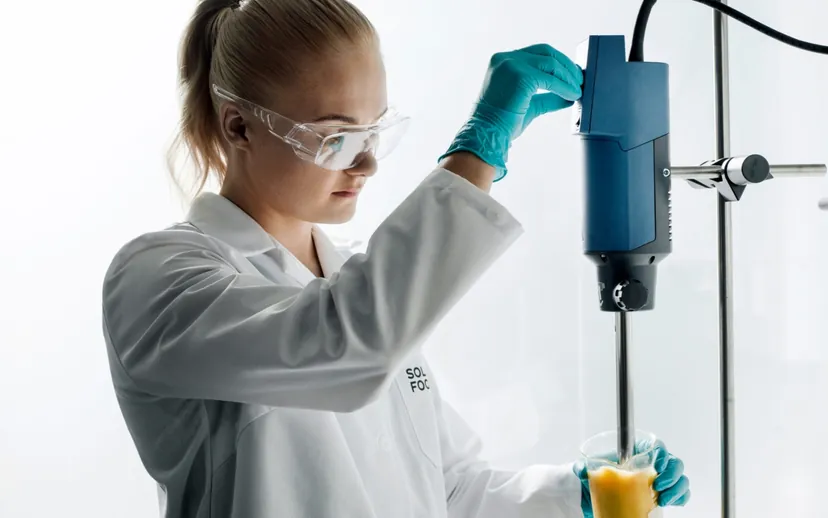
Instead of Farmland, Stainless Steel Tanks
Common solutions to the food problem have remained within the framework of agriculture, such as expanding farmland or developing more robust crop varieties. However, Solar Foods has changed the very premise of food production. The protein powder "Solein," made by the company, requires no farmland, fertilizer, or livestock. The raw materials are carbon dioxide from the air, water, electricity, and mineral and nitrogen sources. The idea itself sounds like something out of a sci-fi movie, but actual products are already being produced at a factory in Vantaa, near Helsinki.
Solein is created through microbial fermentation. First, electricity is used to split water to obtain hydrogen. This hydrogen, along with carbon dioxide from the air, oxygen, and trace nutrients, is put into a fermentation tank to cultivate specific microbes. While the principle of obtaining protein through fermentation is similar to that of making cheese or doenjang (soybean paste), the difference lies in the fact that the microbes' "feed" is hydrogen and carbon dioxide, rather than grains. Inside the fermentation tank, microbes multiply and accumulate protein; when this is dried and powdered, the yellow-hued powder, Solein, is complete.
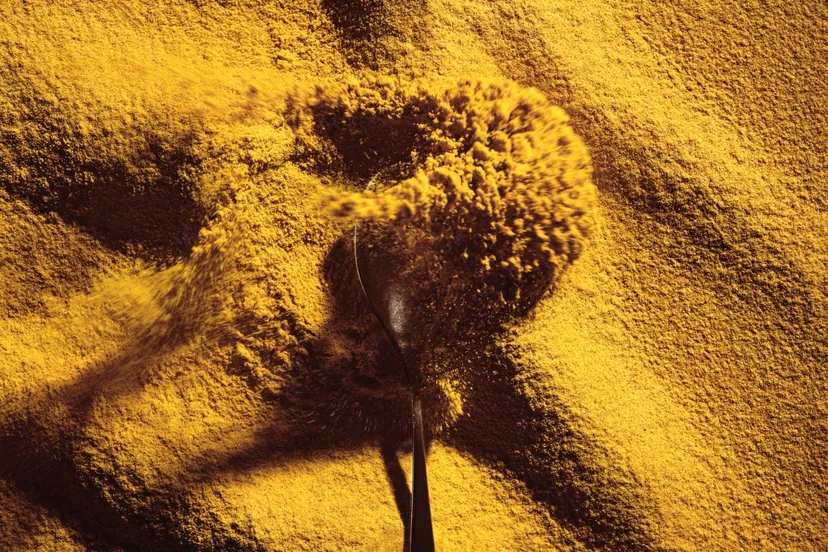
According to Solar Foods, Solein is approximately 78% protein by dry weight and contains all nine essential amino acids. Furthermore, it is almost tasteless and odorless, making it versatile for use as an ingredient in various processed foods such as protein drinks, plant-based foods, and baked goods.
According to Solar Foods' Life Cycle Assessment (LCA), Solein’s greenhouse gas emissions are about 1% of animal-based protein and about 20% of plant-based protein. Considering that it can be produced without farmland or livestock, it demonstrates the potential to significantly reduce the environmental burden of food production.
From Lab to Factory, Now to the Market
Solar Foods is a spin-off company founded in 2017, emerging from research at the VTT Technical Research Centre of Finland and Lappeenranta-Lahti University of Technology (LUT). Co-founder Pasi Vainikka, who studied energy systems, and bioprocess expert Juha-Pekka Pitkänen established the company to commercialize the technology of converting electricity and carbon dioxide into edible protein.
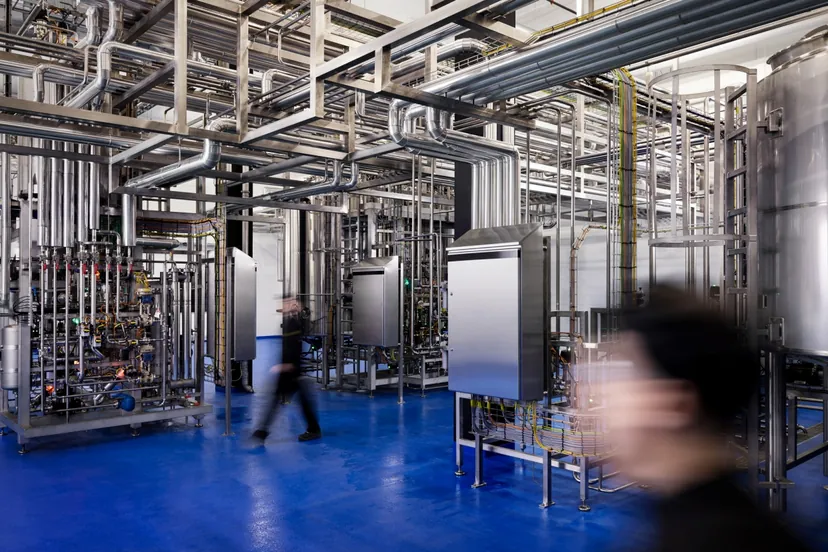
It is still too early to say that Solar Foods has completely overcome the "valley of death," the long gap between the technology development phase of deep-tech companies and commercial profit generation. However, it has crossed the first hurdle of elevating lab technology into an actual production facility. In April 2024, seven years after its founding, the company began operating "Factory 01," the world's first commercial-scale Solein production facility in Vantaa. With a production capacity of up to 160 tons per year, this factory became a decisive milestone in shifting the laboratory's vision into actual industrial-scale production.
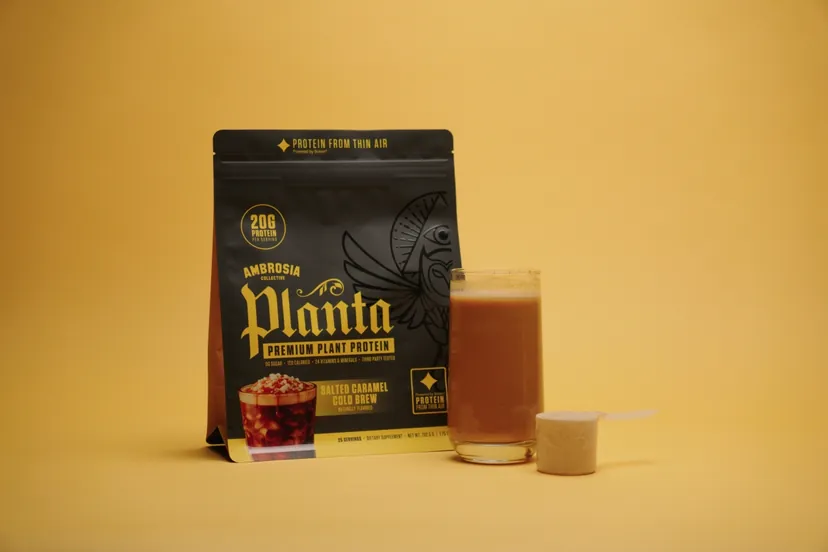
The market entry strategy is also noteworthy. Rather than blindly targeting the "meat alternative" section of supermarket shelves, the company first targeted high-value-added markets with a high willingness to pay for high-protein ingredients. In September 2024, Solar Foods secured Self-Affirmed GRAS status in the U.S., allowing it to be sold without prior FDA review, and in November of the same year, it held a launch event at the Brooklyn, New York restaurant Olmsted, testing its potential as a premium ingredient. In the first half of this year, the U.S. health supplement brand Ambrosia Collective launched 'Planta,' a protein powder made with Solein as an ingredient, marking the birth of the first consumer product using Solein.
Commercial viability is the next hurdle. The role of Factory 01 was less about mass production itself and more about verifying whether production technology could be scaled to an industrial level. Solar Foods announced that in 2025, it succeeded in scaling up its production technology at Factory 01 to 100 times the size of its pilot facility, achieving the design capacity of 160 tons per year. Now, the challenge the company must solve is to increase production volume while securing price competitiveness.
A blueprint for the construction of a next-generation factory, which will be significantly larger than the current one, has also been revealed.
According to Solar Foods' first-half performance report released on the 11th of last month, the next-generation factory, 'Factory 02,' will be located in Lappeenranta, southeastern Finland. Of the €191 million (approx. KRW 300 billion) funding plan presented by the company, 71% has already been secured, including grants from the Finnish government, with a final investment decision expected in 2026 and a target for phase 1 operation by the end of 2028. The phase 1 production capacity is 3,200 tons per year, which is 20 times that of Factory 01. After completing the phase 2 expansion, the company plans to increase production capacity to 6,400 tons per year.
Solein cannot perfectly replace humanity's staples like wheat or rice today. However, the potential that Solar Foods shows is clear. The premise of thousands of years of agricultural society that "food must come from the ground" is no longer absolute. Whether it is a desert with insufficient rainfall or a megacity with a severe lack of farmland, protein can be produced with raw materials obtained from electricity and air, regardless of the existing agricultural environment.
If such technology gains sufficient scale and price competitiveness, the location of food production could also change. This is because protein can be created where there is electricity, water, and production facilities, rather than on farmland. While it is still close to the stage of demonstrating possibility, the fact that a small Finnish startup is running an actual factory shows that this potential is no longer confined to the laboratory.
The author, Lee Jung-woo, has worked as a journalist for 17 years, covering a wide range of fields including major industries such as automobiles, secondary batteries, and heavy industry, as well as national defense, diplomacy, environment, education, and health and welfare. He has specifically reported on-site on structural changes in industry focused on mobility, energy transition, and sustainability. He currently resides in Berlin, Germany, and works as a partner at the startup accelerator '123 Factory'.