

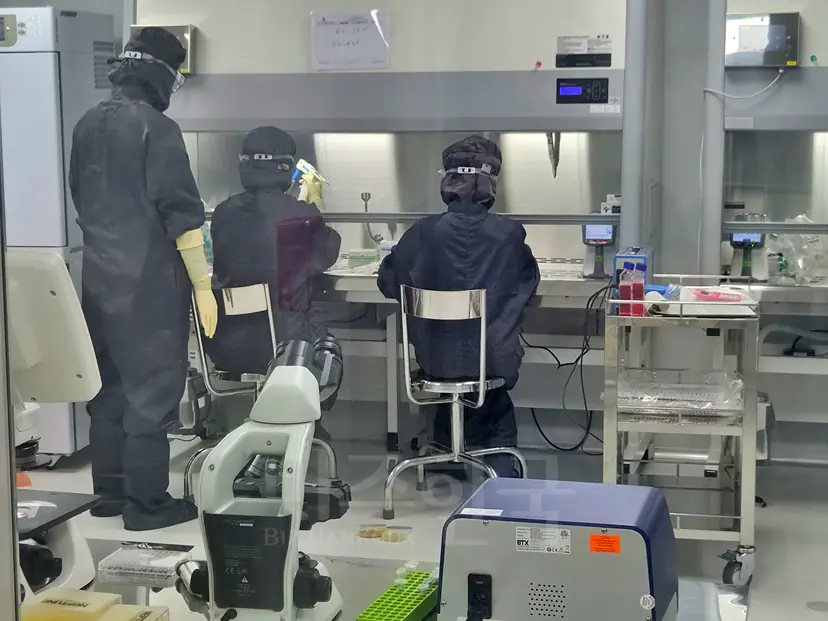
[비즈한국] On the 22nd, at the V-Cell Center on the 11th floor of ViGenCell’s headquarters in Geumcheon-gu, Seoul. Through a glass viewing window, workers are packaging cells into small IV-bag containers. On the workbench sits 'VT-EBV-N,' an autologous blood-derived antigen-specific T-cell therapy produced using blood collected from the first patient in Korea to receive treatment under an advanced regenerative medicine plan.
“What you are seeing now is the final packaging process for the immune cells of the very first patient to receive therapy under the Advanced Regenerative Medicine and Advanced Biopharmaceuticals Act,” explained Shin Chang-ae, Manufacturing Team Leader at the ViGenCell GMP Center, as workers sealed the cultured cells into containers. Having left the patient’s body at Yeouido St. Mary's Hospital several weeks ago, these immune cells are now being prepared to return to the same patient.
The patient is suffering from EBV (Epstein-Barr virus)-positive extranodal NK/T-cell lymphoma, a condition where the patient has reached complete remission but remains at high risk of recurrence. While VT-EBV-N is not a drug that has received formal marketing authorization from the Ministry of Food and Drug Safety, it is being administered according to an advanced regenerative medicine treatment plan approved this past April.
Complete remission means no signs of cancer are detected during tests, but it cannot be definitively stated that the cancer cells have completely vanished. Particularly in high-risk groups, microscopic cancer cells remaining in the body can proliferate and lead to a relapse. The goal of this treatment is to lower the risk of such recurrence even after achieving complete remission.
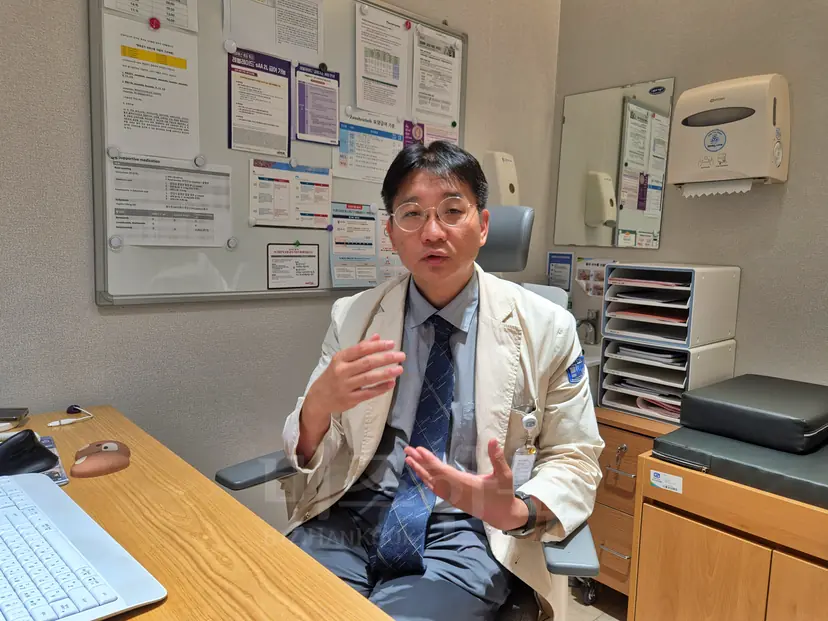
Professor Jeon Young-woo of the Department of Hematology at the Catholic University of Korea Yeouido St. Mary's Hospital, who is leading the treatment plan, met with Bizhankook on the 14th and explained, “Existing chemotherapy is like a missile that affects normal cells as well as cancer cells, but this cell therapy is more like a ‘sniper’ targeting a specific mark.”
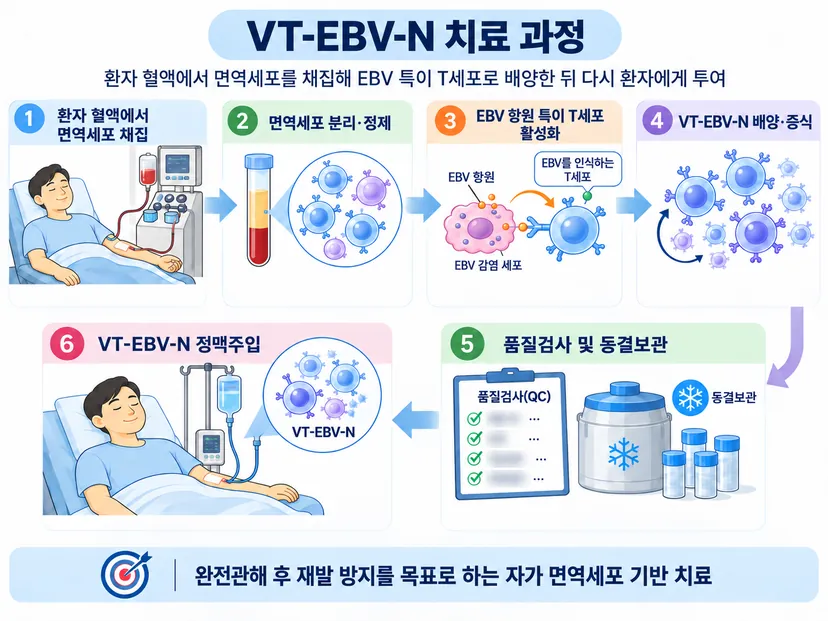
According to Professor Jeon, extranodal NK/T-cell lymphoma is closely linked to EBV. The principle of the treatment involves collecting immune cells from the patient, culturing and strengthening them in vitro to recognize EBV-related antigens, and then re-administering them so that the immune cells find and eliminate the EBV-positive cancer cells.
“This is not a mass-produced drug, but an autologous, personalized cell therapy using the patient’s own blood,” said Professor Jeon. “We extract immune cells from the patient’s body, send them to ViGenCell, culture them to recognize and attack EBV-specific antigens, and then re-infuse them into the patient.”
He cited maintaining a state of complete remission for a long time as the greatest expected benefit of this treatment. The goal is to have the immune cells monitor and eliminate any remaining EBV-positive cancer cells after the visible cancer has been removed by conventional treatments, thereby lowering the risk of recurrence.
The potential for suppressing recurrence was also confirmed in Phase 2 clinical trials. The 2-year disease-free survival (DFS) rate was 95.0% for the VT-EBV-N group compared to 77.6% for the control group. During the same period, DFS events (recurrence or death) occurred in 1 out of 21 patients in the treatment group (4.8%), compared to 8 out of 25 in the control group (32%). In a 4-year long-term follow-up, the DFS of the treatment group was maintained at 95%, while the control group was at 56.3%, and the 4-year overall survival (OS) rates were 100% and 83.8%, respectively.
Professor Jeon emphasized the safety based on past clinical experience. “There were no serious adverse reactions other than mild fever or stiffness, similar to receiving a flu shot,” he explained. However, the safety and treatment results must continue to be monitored even after the actual treatment of patients under this new law (the Advanced Regenerative Medicine and Advanced Biopharmaceuticals Safety and Support Act).
The research findings are being presented one after another at major international academic conferences. “Following the European Hematology Association (EHA) and the American Society of Clinical Oncology (ASCO) meetings, we are scheduled to present on the same topic at the American Society of Hematology (ASH) meeting this December,” Professor Jeon said.
Strengthening EBV recognition in patient immune cells to monitor for recurrence
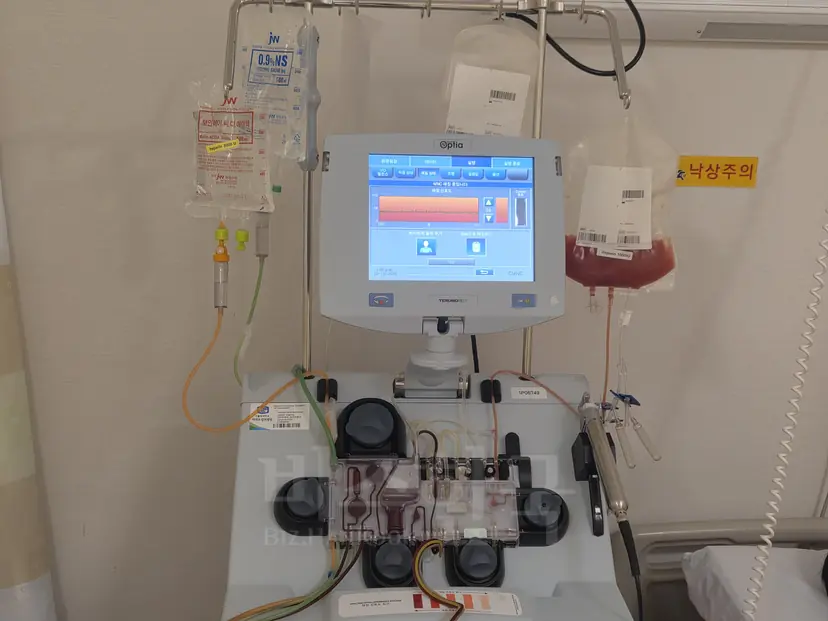
The first stage of treatment begins at the hospital. On September 23, Yeouido St. Mary's Hospital collected cells from the first patient under the advanced regenerative medicine plan. The process uses an apheresis machine to secure the necessary immune cells from the patient’s blood, returning the remaining blood components to the patient. It is similar in principle to plasma or platelet donation in that only the required components are separated and the rest are returned to the body.
The collected cells are then delivered to the ViGenCell GMP Center. From here, personalized manufacturing—unlike standard drug production—begins. Simply receiving the patient’s blood at the GMP center does not immediately trigger cell expansion. First, a process is needed to enable the T-cells to recognize EBV.
According to ViGenCell, antigen-presenting cells (APCs) are differentiated and matured from the patient's blood, after which mRNA containing information on EBV viral antigens is transferred into them. Once the mRNA is converted into antigen proteins within the APCs, these are presented to the T-cells. Subsequently, the APCs and T-cells are co-cultured, and cytokines are applied to activate and proliferate the T-cells that recognize EBV.
In simpler terms, it is a process of ‘training’ the patient’s T-cells outside the body to recognize the EBV marker and then increasing their population. A ViGenCell representative explained, “The key lies in the technology that uses mRNA and APCs to present EBV antigens and the technology to massively culture EBV antigen-specific T-cells.”
Separate culturing for each patient to “prevent cross-contamination”
Given that autologous cells are used, one of the most important principles in the manufacturing process is to ensure that cells from different patients do not mix.
There are a total of 7 cleanrooms at the V-Cell Center. Raw materials enter the manufacturing area through a separate sterilized pass-through, and the flow is separated from the waste disposal route. Workers enter the manufacturing facility after donning sterile jumpsuits, hair caps, masks, and gloves.
Pointing to the actual manufacturing room, Team Leader Shin Chang-ae said, “To prevent cross-contamination between batches, we never work on two or more batches in the same cleanroom at the same time. We clean and disinfect before and after each task, and manage incubators separately for each batch.”
ViGenCell uses dedicated incubators for each patient. When manufacturing cells for the next patient in the same workspace, they undergo a ‘Line Clearance’ procedure to ensure that no raw materials or items from the previous batch remain.
As the patient's cells themselves are the raw material, not every manufacturing process proceeds identically. According to ViGenCell, there have been cases where manufacturing could not be completed because the patient’s cells were not in suitable condition. Based on past manufacturing experience, the success rate is approximately 95%.
The V-Cell Center currently has 7 cleanrooms and 4 incubators within its processing rooms. Team Leader Shin explained, “We can produce about 4 batches per month in one processing room, and if we operate all facilities, we can produce up to 300 batches per year.” The company believes that current facilities are sufficient to meet the expected domestic demand for extranodal NK/T-cell lymphoma treatment.
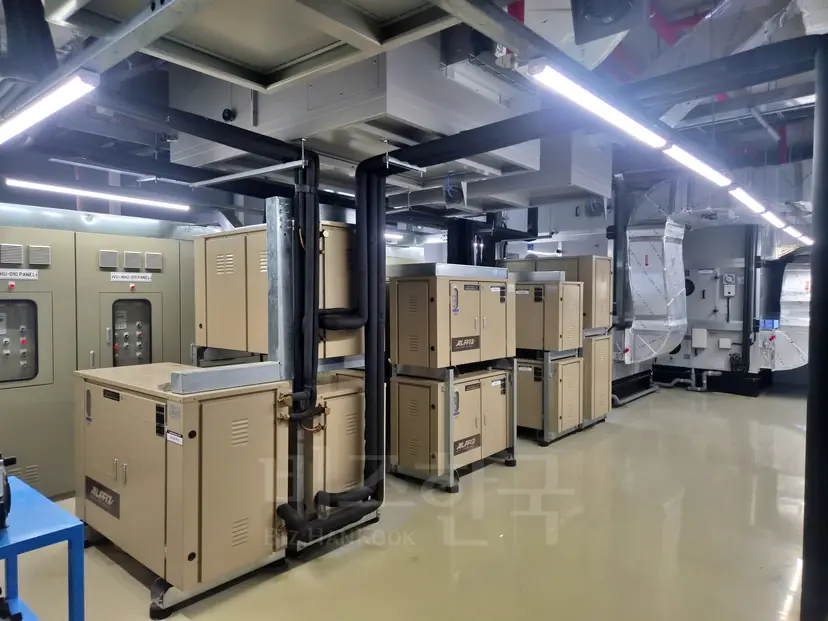
The manufacturing environment is monitored 24 hours a day. Air conditioning systems maintain the temperature and pressure of the manufacturing rooms, and any abnormalities trigger an immediate alert to the person in charge. Uninterruptible power supply (UPS) systems are also in place to maintain the facility during emergencies.
About two months from blood collection to administration
ViGenCell explained that it takes about one day from patient cell collection to entry into the GMP center and the start of manufacturing, and 27 days to complete cell culturing. Completion of culturing does not mean the cells can be administered immediately. Because living cells are being infused into a patient, contamination checks and safety verification are required.
Subsequently, quality control (QC) requires another 28 days, and it takes about one additional day to ship to the hospital and administer to the patient after the tests are completed. In particular, tests for adventitious viruses and mycoplasma require culturing for a certain period to verify the results.
Once packaging is complete, VT-EBV-N is cryopreserved at temperatures below minus 140 degrees Celsius. Once it passes quality control, it is delivered to Yeouido St. Mary's Hospital via cold chain, and the shelf life stated by the company is 12 months.
There is a slight difference in expectations between medical staff and the manufacturer regarding the actual administration date for the first patient. ViGenCell expects administration to be possible between late November and early December, considering the remaining quality control and shipping schedules. Professor Jeon anticipates it will be around the end of December, near Christmas. The final schedule is expected to be determined based on the quality control results and the patient’s condition.