

[BizHanKook] November 9 is a special day in Berlin. It was on this day in 1989 that the Berlin Wall fell. Launched in 2009 to commemorate the 20th anniversary of the fall, ‘Falling Walls’ holds one of the largest scientific gatherings in the world in Berlin every year on this date. This year’s Falling Walls Science Summit 2026 took place from November 6 to 9, and organizers described it as “the world’s largest gathering of scientific leaders.” While the name may still be unfamiliar in Korea, it is an event that Korean companies and researchers considering expansion into Europe should note, as it serves as a stage where decision-makers from the European research and innovation ecosystem gather in one place.
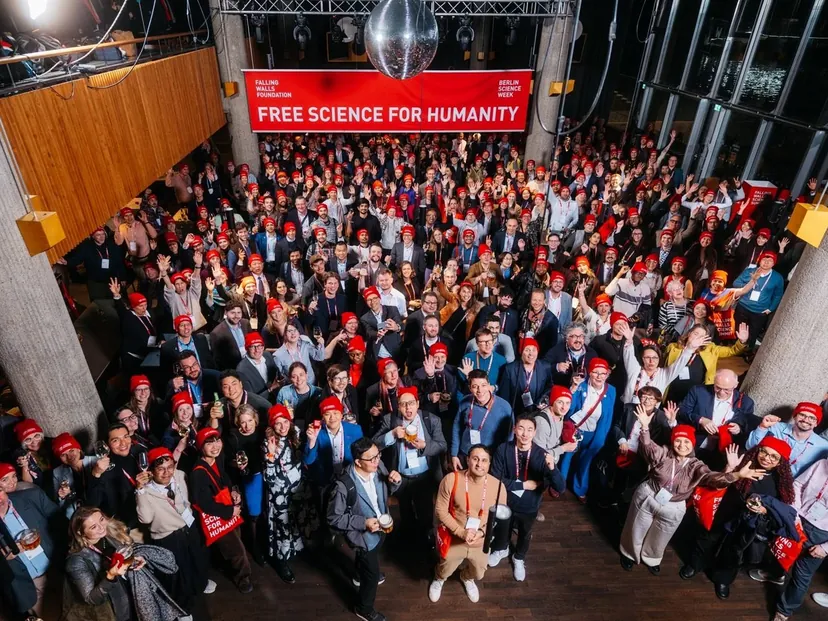
What is Falling Walls?
The Falling Walls Foundation (Falling Walls Foundation gGmbH) is a non-profit foundation based in Berlin. The core question of the event is simple: “Which walls will fall next?” That is why all presentation titles follow the format “Breaking the Wall of ~.” The limitations of cancer surgery, 100-year-old cooling technology, and autoimmune diseases are all referred to as ‘walls.’
The summit operates on three main pillars. First, there are the pitch sessions where emerging researchers, startups, and science communicators selected through the ‘Global Call’ (a worldwide open competition) take the stage. These include Falling Walls Lab for young researchers, Falling Walls Venture for science-based startups, and Falling Walls Engage for projects connecting science and society. Second, there are roundtables and discussions involving ministers, university presidents, research institute heads, and investors from various countries. Third, there is the selection and presentation of the ‘Science Breakthroughs of the Year’ in each field.
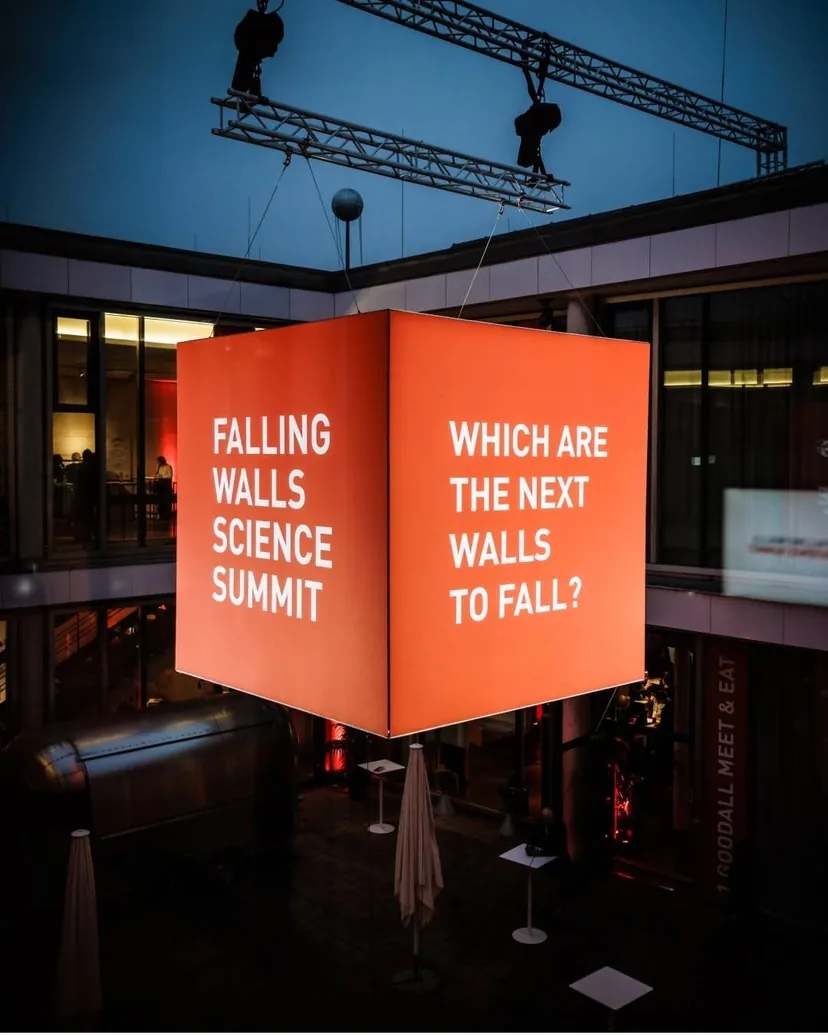
The 2026 Summit by the Numbers: From Lab to Market
This year's summit brought together over 2,700 science and innovation leaders from more than 100 countries and regions. Twelve science ministers and chief science advisors from Australia, Canada, Germany, the European Union (EU), Mexico, and the UK attended, alongside 100 university presidents, 40 heads of major philanthropic foundations, and 400 leaders from industry and venture capital. Nobel laureate in Physiology or Medicine Peter Hegemann and Turing Award winner Yoshua Bengio participated as keynote speakers for 2026.
The summit's pitching competition received over 5,500 applications from more than 130 countries, with 140 finalists presenting on the opening day stage. On November 8, over 120 university presidents, representatives from more than 60 scientific philanthropic foundations, and leaders of national academies from across Europe gathered in Berlin.
From a startup perspective, the most notable winner was Helix Earth in the venture category. The company tackled the problem of moisture removal, which accounts for a significant portion of cooling energy. Using filters based on technology developed by NASA, they claim to reduce energy consumption by up to 50% by filtering out moisture before air enters the cooling system. This is why it was described as ‘Breaking the Wall of 100-year-old air conditioning technology.’
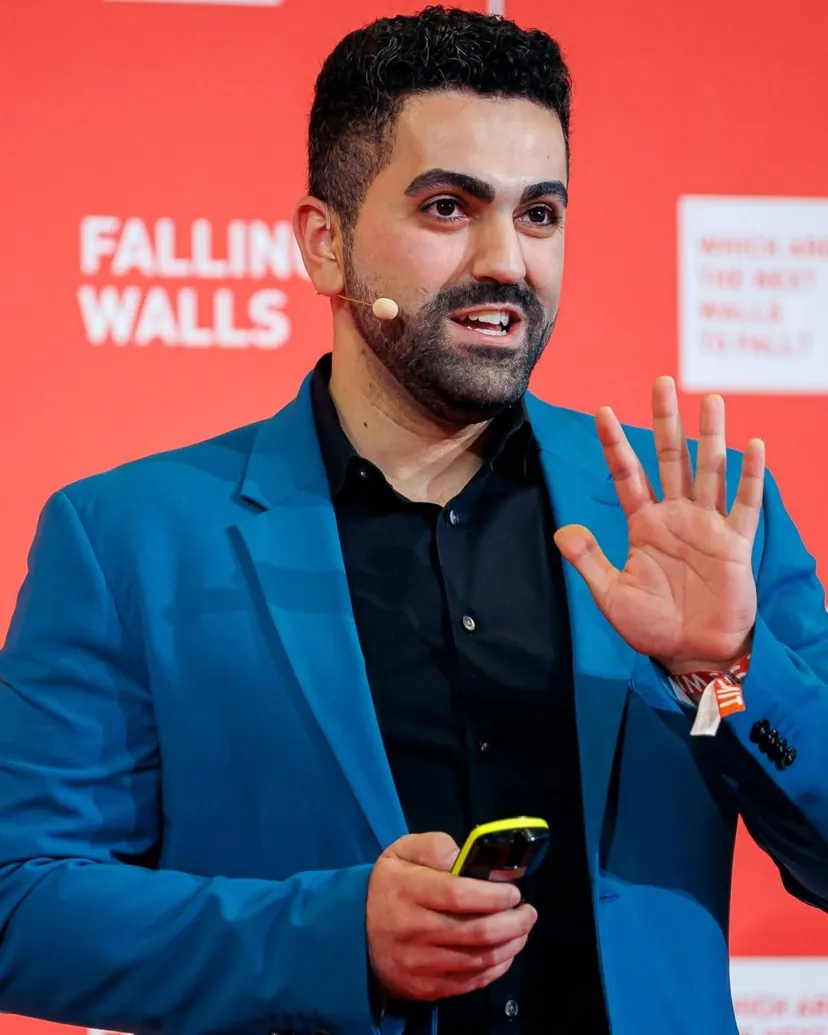
In the lab category, Davide Scandella from the University of Bern (Universität Bern) in Switzerland took first place. He developed an AI-based optical device that locates cancer tissue more quickly and accurately during surgery. The Engage category went to Svetlana Onye’s African community project, which addresses the impact of climate change on mental health.
Awards by academic discipline also carry significant industrial implications. In the Life Sciences category, Georg Schett was recognized for research on reprogramming a patient’s immune system using gene-edited T-cells to treat autoimmune diseases, while Yu Huang in Engineering and Technology was honored for research on making hydrogen fuel cells cheaper and more durable. In the Physical Sciences, David Awschalom is opening the door to quantum biology by extending quantum science to molecules and proteins.
Additionally, winners included Jessica Jewell (Social Sciences & Humanities), who analyzed the conditions to accelerate the clean energy transition; Isidora Correa (Art & Science), who revealed the environmental costs of lithium mining on microbial ecosystems; and Manali Mukherjee (Women's Impact Award), who provided biological evidence for Long COVID.
What Europe's Ventures Need: ‘Scale-up’
The part of this year’s summit most directly connected to the startup ecosystem was the debate over European innovation funding. The November 7 session ‘From Lab to Leader: Scaling Europe’s Tech Champions’ featured Michael Brigl, Managing Director of BCG Central Europe; Deepa Gautam-Nigge, VP of SAP; Judith Dada, co-lead of Visionaries; and Florian Heinemann, founding partner of Project A. They agreed that while Europe has sufficient scientific talent and economic power, it needs greater ambition, an integrated capital market, and collaboration across the ecosystem.
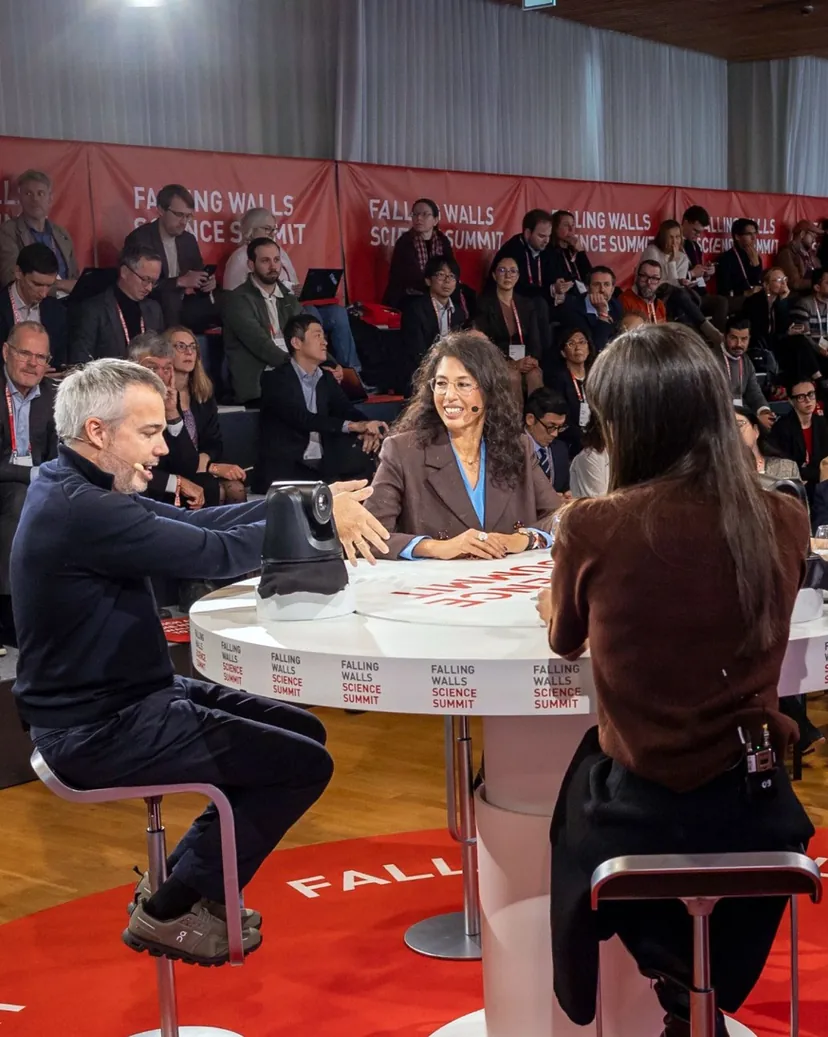
The diagnosis in the ‘Europe’s Innovation Ecosystems: Who Funds Breakthroughs?’ session on the same day was more specific. Participants like Heinrich M. Arnold of the European Institute of Innovation and Technology (EIT), Hermann Hauser of Amadeus Capital, Rafael Laguna de la Vera of the German Federal Agency for Disruptive Innovation (SPRIND), and Lene Oddershede of the Novo Nordisk Foundation identified three causes for why European basic research strength fails to translate into commercial success: a lack of scale-up capital, venture capital, and early customers. They prescribed faster funding decisions, smarter public procurement, and greater risk-taking. Oddershede urged optimism, saying, “Pessimism is a waste of time.”
In the industrial AI session, Thomas Jarzombek, Commissioner for the Digital Industry and Startups at the German Federal Ministry for Economic Affairs and Climate Action, called Germany “the new Klondike.” Comparing Germany to the land of the late 19th-century gold rush, he meant that manufacturing data and industrial sites could become the gold mines of the AI era. Panelists like Axel Deniz of Bosch Business Innovations cited trustworthy data sharing and practical regulations as prerequisites for industrial AI.
In the November 8 session ‘Rewiring Innovation,’ Michiel Scheffer, President of the European Innovation Council (EIC) board, and Alina Bassi of Earlybird Ventures discussed researchers' commercialization capabilities and alternative funding models. Bassi criticized Europe’s risk-averse culture, noting that in the U.S., people ask “How much do you need?” when faced with unconventional ideas.
Partner Country of the Year: Canada
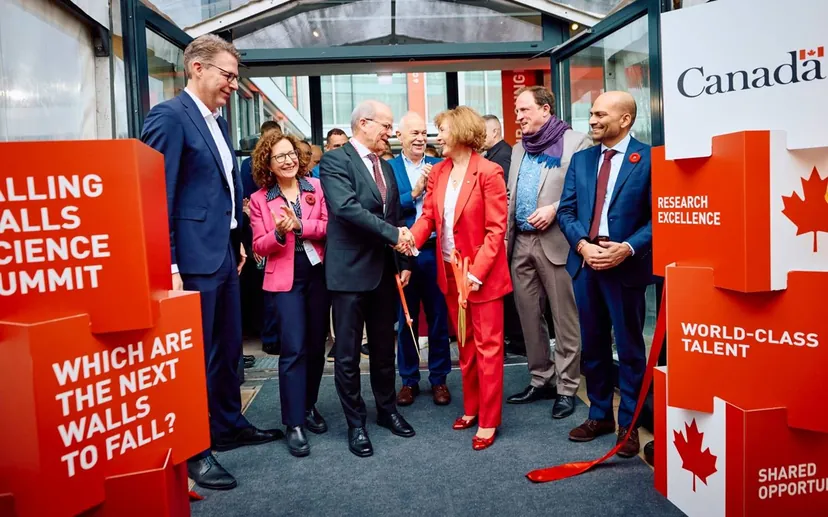
This year’s official partner country was Canada. 2026 marked the 75th anniversary of diplomatic ties and the 55th anniversary of the science and technology cooperation agreement between Canada and Germany. Canada sent a delegation of 209, opened a ‘Canada Pavilion’ at the venue, and hosted separate sessions on topics including AI, health data, research commercialization, dual-use technology, and research security. It is an example of how a country can utilize Falling Walls as a showcase for science diplomacy.
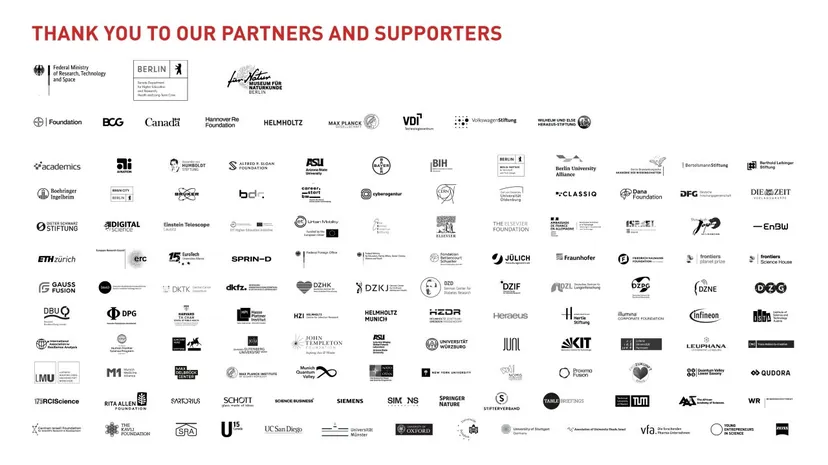
Falling Walls is not just for researchers. According to organizers, the 2025 summit was supported by 106 partners, including major public institutions, foundations, companies, and NGOs. This year, 400 leaders from industry and venture capital also visited Berlin.
The weight of the event is evident when looking at the names on stage. The global consulting firm Boston Consulting Group (BCG) held a media lunch at the summit under the theme, ‘Can Europe Turn Science Innovation into Global Tech Leadership?’ Leaders from Europe’s largest software firm SAP, Bosch’s new business unit Bosch Business Innovations, the Novo Nordisk Foundation, and the Dieter Schwarz Stiftung—founded by the owner of the Schwarz Gruppe (which owns Lidl and Kaufland)—participated as panelists. Stefan von Holtzbrinck, CEO of the German media group Holtzbrinck, stated on the opening stage, “We came to save the world.”
The investor side was also robust. Major European venture capital firms like Project A, Earlybird Ventures, Amadeus Capital, and Visionaries participated in sessions. Research institutions like CERN, the Fraunhofer Society, the Helmholtz Association, the Max Planck Society, and the German Electron Synchrotron (DESY), as well as public innovation agencies like SPRIND, EIC, and EIT, also gathered in one place.
It is rare to find an event where you can meet open innovation managers from large European companies, deep-tech investors, and decision-makers for public research and innovation funding in one place over four days.
First, Falling Walls is not just an academic conference. Decision-makers for European research and innovation funding such as SPRIND, EIC, the Fraunhofer-Gesellschaft, the Helmholtz Association, and the Max Planck Society all appear on the same stage. For deep-tech startups, it is a shortcut to understanding European public funding and research partnerships.
Second, the entry path is open. Pre-registration for the 2027 ‘Global Call’ has already begun. Science-based startups can apply for the venture category, and young researchers can challenge themselves in the lab category. The lab category features a structure that leads to the Berlin finals through preliminary rounds around the world, leaving plenty of room for Korean universities and research institutions to participate.
Third, Canada’s partner country model is a reference for Korea. A national-level pavilion and delegation open doors that are difficult for individual companies to open on their own. If Korea’s science and technology diplomacy and support programs for overseas startup expansion are combined, Berlin could become an effective base for entry into Europe.
The Falling Walls Science Summit provides partner organizations with a touchpoint to the international scientific, policy, and industrial community, and is an event worth attending for companies looking to increase their presence in the European market. The Falling Walls Science Summit 2027 will be held in Berlin from November 6 to 9 next year. We hope that more Korean startups and scientists will come to this stage, where people ask about the ‘next wall to fall’ in a city where walls once fell, and contribute their efforts to tearing down those walls.
The author, Lee Eun-seo, majored in law in Korea and studied theater in Berlin. Based in Berlin—a city of art and a European startup hub—she leads 123Factory, which connects the startup ecosystems of Korea and Germany while growing alongside the city.