

[비즈한국] Facilities with identified structural and safety issues must be accompanied by appropriate safety measures. If the state is critical, use must be prohibited; if there are structural defects, they must be repaired or reinforced. However, when Bizhankook visited Mapo Gongdeok Market in Seoul, an officetel in Changwon, Gyeongnam, and the Gwangmyeong Tax Office in Gyeonggi-do to check their management status, it was found that all three locations continued to operate, house residents, or conduct business without implementing the core safety measures required by their safety grade ratings.
Despite Core Structural Defects… Continued Use Without Measures
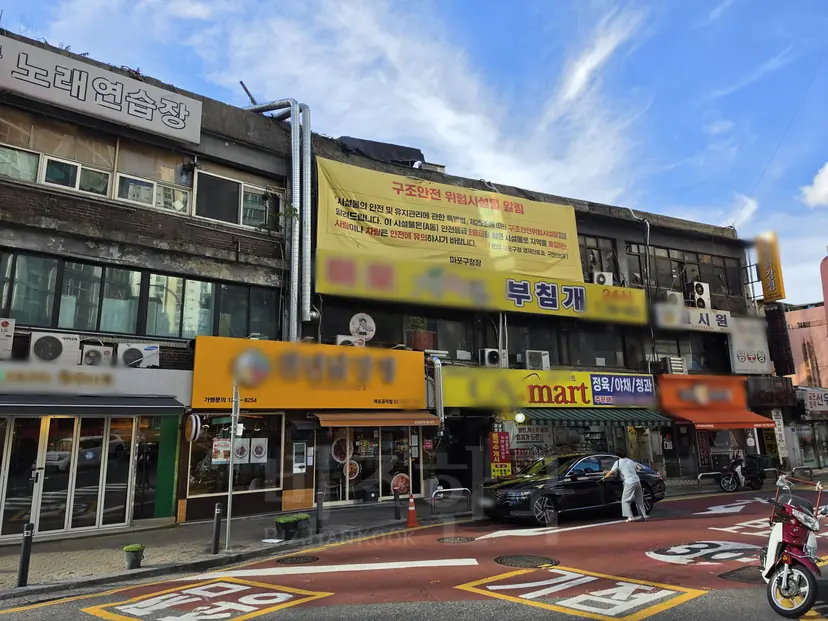
Building A of Mapo Gongdeok Market in Mapo-gu, Seoul, received a Grade E rating during a precise safety diagnosis in January of last year. According to Mapo-gu, the diagnosis confirmed structural safety issues including cracks, corrosion, spalling, and deterioration. By law, its use should have been immediately prohibited, yet about 40 out of the 80 total units remain in use as before. The occupied units include not only restaurants, markets, and shops but also residential spaces such as gosiwons (mini-studios).
An official from the Mapo-gu District Safety Department said, "Owners are supposed to voluntarily prohibit use and limit access until repairs and renovations are complete, but that didn't happen," adding, "We decided that it is difficult to delay any further and are currently undergoing the administrative procedure for a formal usage ban at the district level." Following the diagnosis, Mapo-gu installed jack supports and carried out temporary reinforcement work. An administrative order for emergency safety measures, which includes a ban on the facility's use, is scheduled to be issued this coming September.
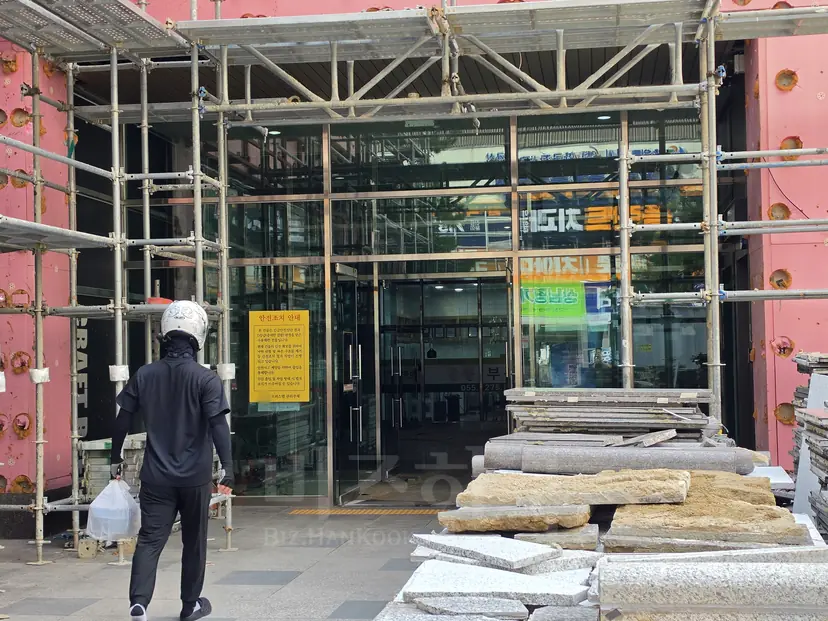
An officetel in Seongsan-gu, Changwon, Gyeongnam, received a Grade D rating during a precise safety inspection this March. The inspection results revealed numerous cracks in the ceiling beams of the basement, as well as exposed, corroded, or severed steel reinforcement bars. The inspection agency determined that due to concerns over the reduced load-bearing capacity of the structure, a precise safety diagnosis was necessary to identify the cause and proceed with repairs and reinforcements. However, more than 300 units in the officetel are currently being used without such measures.
A Seongsan-gu official in Changwon stated, "The basement needs to undergo a precise safety diagnosis and subsequent repairs and reinforcements based on the results, but no plan has been submitted yet regarding when that diagnosis will take place." The official added, "As it is a collective building with multiple owners, measures must be taken through a resolution, but that part does not seem to be working well. We are continuing to inform them that they have an obligation to repair and reinforce the building."
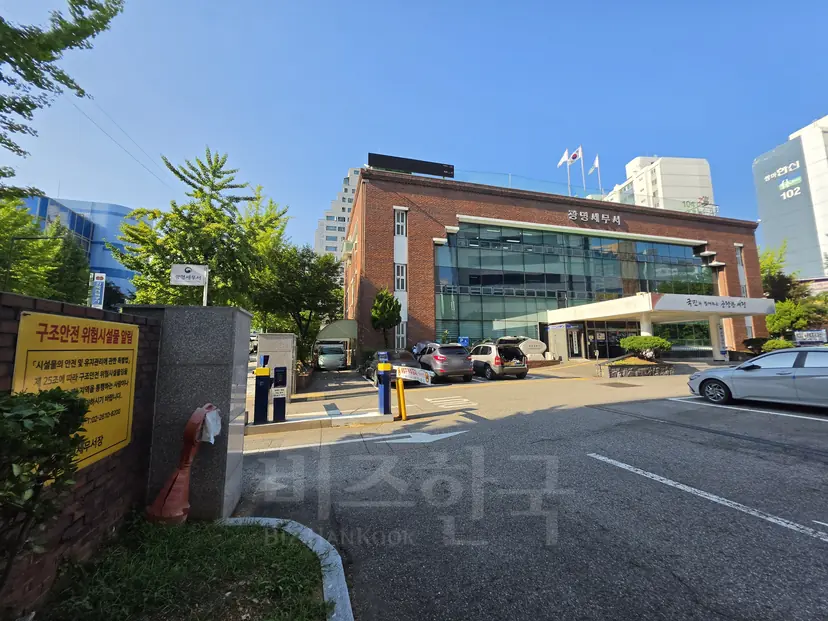
The Gwangmyeong Tax Office in Gwangmyeong, Gyeonggi-do, received a Grade D rating during a precise safety diagnosis in October 2022. The Gwangmyeong Tax Office is a building constructed about 30 years ago before current seismic standards were applied, and the precise safety diagnosis confirmed vulnerabilities in its seismic performance. While the frequency of regular safety inspections has increased since then, no reinforcement of the seismic performance—which was the cause of the Grade D rating—has been carried out. Currently, 84 employees work at the Gwangmyeong Tax Office, and members of the public continue to use the building as usual.
Kim Ji-hoon, head of the Gwangmyeong Tax Office, said, "Because the Grade D rating for seismic performance has not been addressed, the overall grade could not be raised even if other items were rated Grade C or higher," adding, "While we cannot say there are no structural problems in the event of an earthquake, we do not view it as being in an immediate state of risk of collapse. Rather than reinforcing the old building, we are pushing for a new construction." The goal for the groundbreaking of the new Gwangmyeong Tax Office is 2030.
'Cost' Hinders Safety Measures… From Reinforcement Expenses to Livelihood
At the root of the failure to take necessary measures after a safety grade rating lies the issue of cost. The economic burden takes various forms, including direct construction costs for repairs and reinforcements, as well as loss of business, livelihood issues, and reduced real estate rental income when usage is suspended. This has acted as a realistic barrier that delays safety measures regardless of whether the facility is private or public.
At Mapo Gongdeok Market, a ban on use leads directly to livelihood problems. Jo Young-deok, head of the Mapo Gongdeok Market Redevelopment Association, who has been doing business at the market, said, "It’s hard for the merchants to accept being told to stop doing business without any alternatives. We have to make a living, don't we?" He added, "There are quite a few people who say they will leave once moving expenses or compensation are provided." While Mapo Gongdeok Market is pursuing redevelopment, project progress has been slow since the contract with the original construction company was terminated.
The Changwon officetel is also entangled in economic interests. For a precise safety diagnosis and repairs to proceed, the collective owners of the building must reach a decision, and it is reported that some are concerned about the impact safety measures might have on their rental businesses. The representative of the officetel developer stated, "Most of the units in the officetel are small, and many of the owners are landlords. We are trying to take measures, but some owners are opposed due to concerns about the suspension of rentals, so it has been difficult to reach a consensus."
For the public facility, the Gwangmyeong Tax Office, the cost of reinforcement was the obstacle. Tax Office Head Kim Ji-hoon explained, "Fully reinforcing the seismic performance would cost a significant amount, so we are pushing for a new building rather than reinforcing the old one." A National Tax Service official said, "Just because a Grade D rating was issued doesn't mean we can build a new office immediately," adding, "It takes time because it must go through budget planning and deliberation by relevant ministries and be finally passed by the National Assembly."
Facilities Open as Usual… Citizens Say "We Didn't Know It Was Dangerous"
Most of the citizens encountered on-site were unaware of the facility's risks. A visitor in their 50s met at Mapo Gongdeok Market said, "I just thought the building was very run-down, but I didn't know there were concerns about its safety." A visitor in their 30s also added, "I occasionally use the mart or restaurants, but if I had known it was a dangerous facility, I would have been more careful in the inner shops." Currently, banners and notices notifying the public that the building is a structural safety hazard are posted at Gongdeok Market.
Visitors to the Gwangmyeong Tax Office were also unaware of the Grade D rating. Although there was a notice about the dangerous facility outside the building, it was not easily visible from the entrance. One visitor asked, "I didn't know the office building was a dangerous facility. Aren't the employees in more danger?" Another visitor noted, "Wouldn't people be unaware unless they are interested enough to look it up?" adding, "There should be notices where people coming and going can easily see them. If people knew, they would be more careful, and responses would be faster."