

[비즈한국] On September 3, 2026, investors, media representatives, and startup ecosystem participants from Berlin, London, the U.S., Singapore, Japan, and Munich arrived in South Korea. This marks the start of a 10-day, 9-night journey exploring the startup city ecosystems, beginning in Daejeon and continuing through Gwangju, Ulsan, and Daegu.
Why should a series called "European Startup Series" discuss what is happening in Korea? I pondered this question throughout the preparation for this journey. Unlike introducing new startups in Seoul or Berlin, this journey is about taking a deep look at Korea's regional startup ecosystems.
Elevate Regional Startup Ecosystems to a Global Level
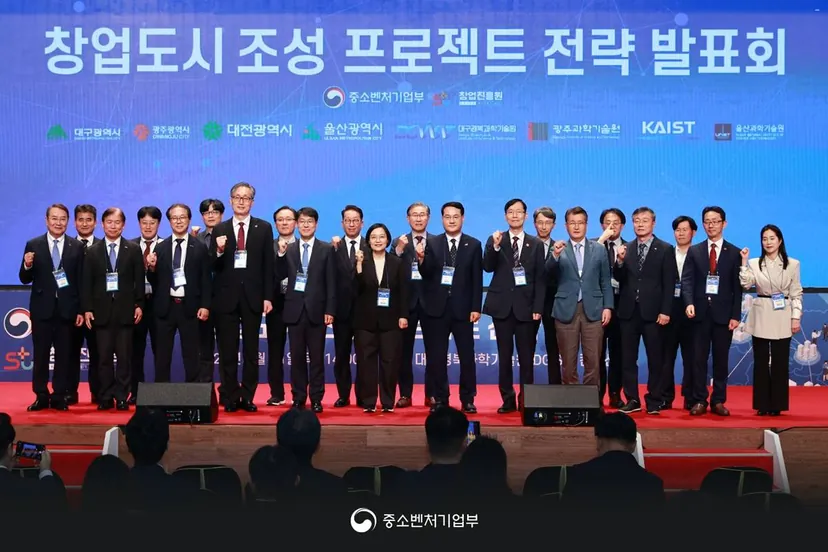
In April 2026, the Ministry of SMEs and Startups announced a plan to create 10 regional hub startup cities and have 5 of them enter the global top 100 startup ecosystem rankings by 2030. The policy aims to shift from a single, Seoul-centric ecosystem to a "multi-core startup ecosystem" where various regional hubs grow together.
The first targets are Daejeon, Daegu, Gwangju, and Ulsan, which host the four major Institutes of Science and Technology. The plan is to prioritize fostering these cities—home to KAIST, DGIST, GIST, and UNIST—as technology-talent-centered startup hubs, and then add six more cities based on regional core industries and balanced national development.
The policy's scope goes beyond simply creating office spaces. It includes establishing startup academies within these institutes and easing regulations on leaves of absence, dual employment, and academic rules that hinder faculty and student startups. It also expands R&D and TIPS (Tech Incubator Program for Startup) support exclusively for startups and allows the use of data and testing infrastructure held by public institutions for startup activities.
The investment plan includes expanding office, residential, and networking spaces to keep companies in the region, alongside a 3.5 trillion KRW sub-fund to be raised by 2030, starting with a 450 billion KRW regional growth parent fund in 2026. It also details the formation of "Startup City Promotion Groups"—involving local governments, universities, research institutes, and investment firms—to connect fragmented support systems.
In June, a follow-up project was launched to select 278 companies across the four startup cities, providing up to 400 million KRW in commercialization funding per company. In some cases, local governments design their own selection criteria based on regional strategies. This represents a departure from the central government distributing uniform projects nationwide, allowing regions to choose for themselves which companies they wish to cultivate.
The critical awareness behind this policy is clear: it is not about the startup launch itself, but ensuring that companies settle and grow within the region. However, a government designation does not automatically make a city a global startup hub. While a startup city can be designated administratively, its reputation as a global ecosystem must be earned from the outside.
Clues from Germany: 'How Regional Ecosystems Develop'
The reason we look to Europe to understand how Korea’s regional startup ecosystems can reach a global level can be found in Germany.
Germany's startup ecosystem cannot be explained by a single city. Berlin is the capital and a representative hub where international talent, software, and platform companies gather. However, Munich shows a presence equal to Berlin in deep tech, mobility, and B2B sectors. Berlin and Munich are fiercely competing for the top spots within the European startup ecosystem.
The port city of Hamburg is home to logistics, shipping, aviation, and media industries, while the financial hub of Frankfurt hosts finance and fintech industries. Aachen has developed manufacturing, energy, and deep-tech startups centered around RWTH Aachen University, while Stuttgart has built its ecosystem in automotive and machinery, and Cologne and Düsseldorf have formed their own networks in media, insurance, telecommunications, and B2B sectors.
This structure is also evident in data. Dealroom's German ecosystem reports highlight not just Berlin, but also Bavaria, Munich, North Rhine-Westphalia, Baden-Württemberg, Frankfurt, and Hamburg as key startup hubs. Regional universities like the Technical University of Munich and RWTH Aachen are identified as core institutions producing entrepreneurs and research-based companies.
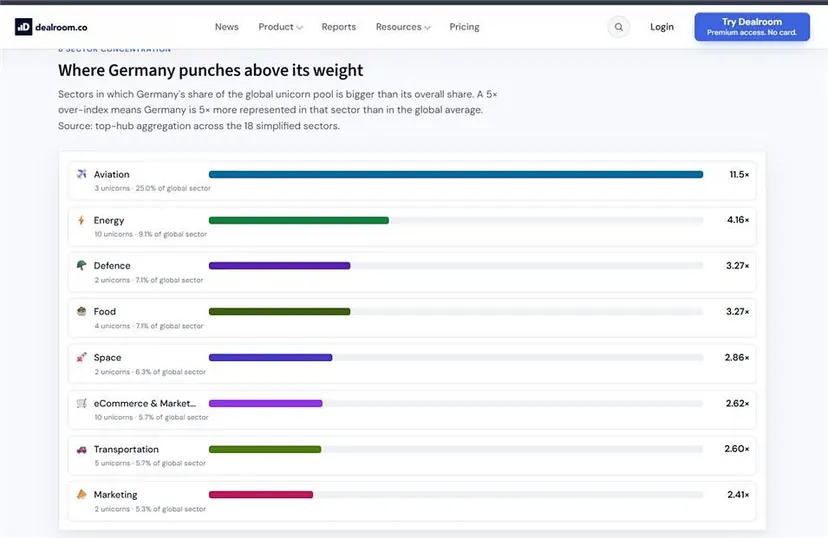
This is not simply because Germany is a federal state. Universities, research institutes, medium-sized enterprises, industry clusters, and local governments have been connected for a long time in each region. You don't have to go to Berlin to meet mobility and deep-tech investors in Munich, logistics/aviation companies in Hamburg, or manufacturing researchers and companies in Aachen.
Germany is a representative European multi-core startup ecosystem where industrial cities directly connected to the world exist outside the capital. Looking at Korea’s startup ecosystem from such a perspective in Germany brings up a natural question: Why is Korea's startup ecosystem still explained by the single word, "Seoul"?
Being Able to Launch a Startup Without Going to Seoul
It is not that there hasn't been startup support in Korean regions before. There are Technoparks, Centers for Creative Economy and Innovation, as well as universities, research labs, and business incubators. Every local government has operated startup support programs and investment events.
Yet, even regional companies with great technology move their addresses to Seoul or open Seoul offices as they enter the growth stage. This is because investors, customers, and talent are concentrated in Seoul. The long-standing problem is that while you can start a business in the regions, it is difficult to stay there and grow into a large enterprise.
The government's "Startup City Creation Project" launched this year is a policy aimed at changing this structure. To verify this, we initiated a startup city promotional project. This journey included institutions that analyze and data-map startup ecosystems worldwide, such as Startup Genome and Dealroom; global investment data sources like PitchBook; and overseas startup media representatives from Sifted and TechCrunch. European investors, including those from Heartfelt and Dracoon Ventures, also visited Korea's regional cities in person.
The delegation did not just listen to explanations of regional startup policies. They moved across Daejeon, Gwangju, Ulsan, and Daegu to see universities, research labs, investment institutions, startups, and industrial sites firsthand.
Daejeon, Stories Shared at the Global Conference
The global conference held in Daejeon on September 3 was a forum to examine this question through four lenses: ecosystem, data, investment, and urban policy.
Chusen Kin, Asia Director at Startup Genome, explained that startup ecosystems do not jump to being global hubs in one go, but grow through stages: "Activation–Globalization–Attraction–Integration." Initially, you need to secure enough tech startups and regional communities; subsequently, entrepreneurs must accumulate business experience relevant to the global market by connecting with overseas customers, investors, and fellow founders. Once successful companies and large exit cases begin to emerge, external capital and talent come to check "what is happening in that city," and eventually, cooperation between startups, universities, large corporations, and investment firms becomes an everyday activity rather than a special event.
Kin particularly emphasized the "density of connections." Ecosystems where founders, investors, and experts meet not only at official events but also in daily life to exchange knowledge and experience grow faster than those that don't. Conversely, if support programs and budgets are increased without sufficient accumulation of community and talent in the region, the effect does not build up sustainably. It was pointed out that the government's role should not be to operate all programs directly, but to be an "enabler" that finds and fills the biggest gaps in the region, helping the private sector to act.

Nina Chaloum, Ecosystem Research Lead at Dealroom, pointed out that even if a good ecosystem exists, it is difficult to be discovered by the world if it is not captured in data. Startup cities are not evaluated solely by total investment or number of unicorns. One must also look at startup and investment density relative to population, recent growth rates, the growth path from early-stage to follow-on investment and large company status, university-led startups and patent commercialization, and field-specific expertise.
An example was introduced where, although the large city of Los Angeles surpasses the Estonian capital of Tallinn in absolute investment scale, Tallinn appears as a stronger ecosystem in terms of startup density adjusted for population. This means Daejeon does not need to compete with Seoul in terms of absolute size. Based on its unique conditions of R&D and deep tech, Daejeon should be compared to global cities with similar size, growth stages, and industrial characteristics.
However, this requires that information regarding regional startups, investment, university-led startups, employment, and patents be continuously accumulated according to internationally accepted standards. If there is a large gap between the reality of a region and how the world can verify it through data, the strengths of that ecosystem will largely remain hidden.
Following this, moderated by Anisah Osman Britton, Deputy Head of Startup Ecosystem at Sifted, Henric Hungerhoff, General Partner at Heartfelt, and David An, CEO of Dracoon Ventures, held an investor talk. The discussion centered on "what startups need besides good technology." In early-stage investments, since revenue is not yet sufficient, judgment about the founding team itself is important. Key criteria presented included whether the team's technological and commercial capabilities are complementary, whether the roles of co-founders are clear, and whether the team is fully committed to the business.
In particular, for deep-tech companies, the opinion was raised that a structure involving both an inventor who has studied the technology for a long time and an entrepreneur who can secure customers and investment is necessary. Beyond simply explaining the accuracy of the technology, the ability to convey the future that technology will create so that customers and investors can believe in it is also crucial. Investors invest in companies that will be created in the future, not in past research achievements. Commercialization capability—managing data on how many conversations with potential customers convert into proofs-of-concept and then into paid contracts—was also identified as a criterion for judging global investment readiness.
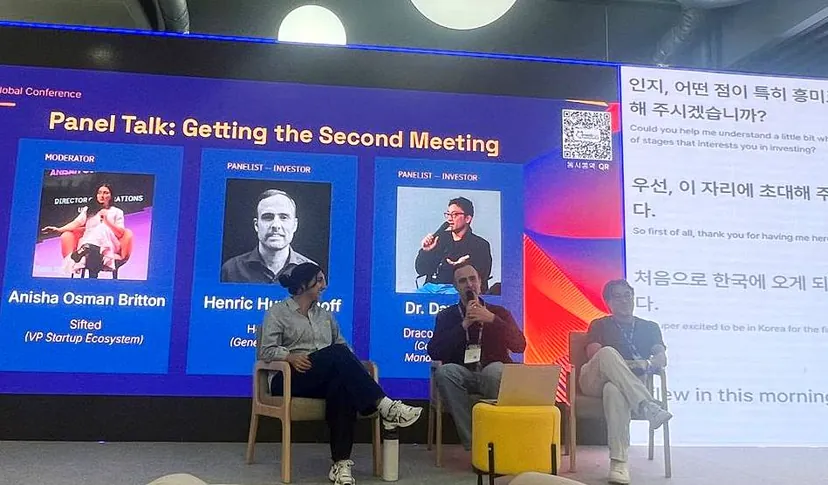
Realistic advice was also given that not every tech company needs venture investment. Since venture funds operate on a structure where a small number of companies grow to a very large scale to drive total returns, the potential to grow into a multi-billion dollar company must be a premise. If it is a deep-tech company with long R&D periods, it may be more appropriate to use government research funds, subsidies, and PoC (proof of concept) projects with corporations to verify technology and the market before seeking venture investment. What matters is not the fact that they received support, but at what point the research converts into customers, revenue, and follow-on investment.
The final talk introduced the case of Montgomery County, Maryland, USA, which has a sister-city relationship with Daejeon. This session involved Judy Costello, Director of Economic Development for Montgomery County, and Kate Park of TechCrunch.
Montgomery County resembles Daejeon in that it hosts world-class research institutions like the National Institutes of Health (NIH), the FDA, and the National Institute of Standards and Technology (NIST), yet it is overshadowed by famous hubs like Washington D.C., Boston, and California. Both sides expanded their existing cultural and academic exchanges into economic cooperation, and Daejeon opened a Global Business Center there. Through this, Daejeon companies, including the logistics robot firm Twinny, are pursuing demonstrations and market entry in the U.S.
Montgomery County explained that being smaller than a major metropolis can actually be an advantage. Instead of companies getting lost in a massive ecosystem, local governments can specifically connect them to suitable testing sites, customers, and research institutions.
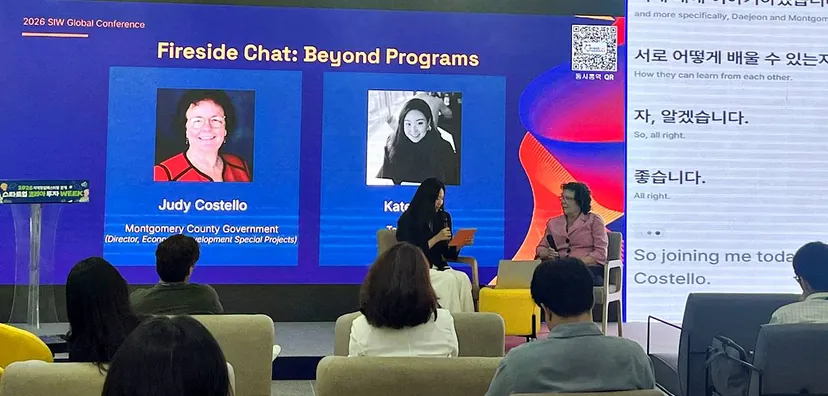
A warning was also issued to regional companies rushing into overseas expansion. They should not view the U.S. as a single market to be captured all at once, nor should they assume they hold the only unique technology. They must first research the target region's industry and competitors, build real customers and partnerships, and then select a base. Local governments should not stop at just supporting offices or subsidies. They should play the role of risk reducers so that companies can encounter suitable demonstration sites, customers, talent, and capital.
The discussion that day could be summarized in three sentences: "Global competitiveness must be created, shown through data, and sustained through relationships." Daejeon already has research institutions, technology, and companies. What is needed now is to connect scattered resources more tightly, turn those achievements into information the world can discover, and create reasons for investors and media who have visited once to return. A global startup city is not a place that holds many support events, but a place where people, capital, and knowledge return repeatedly. This was the clearest message left by the conference.
Beyond Daejeon, Gwangju, Ulsan, and Daegu
The long journey continues with tours of each city's infrastructure. In Daejeon, the delegation examines the government-funded research institutions including KAIST and ETRI, as well as the tech talent environment. They plan to meet Bluepoint Partners, a representative regional investment firm, to highlight its role as a firm specializing in deep-tech startups.
In Gwangju, they will visit the National AI Data Center to observe the city's tech infrastructure. They also plan to meet representative entrepreneurs in the Gwangju ecosystem, which focuses on AI, future mobility, and energy. In Ulsan, they will tour collaboration sites between traditional large corporations like HD Hyundai Heavy Industries and startups. Daegu will open a path toward the global market by visiting the K-Medi Hub, a medical-specialized hub, and DASH, a major startup hub. The delegation will also examine how technology-centric universities representing each region, such as GIST, UNIST, and DGIST, work closely with their startup ecosystems.
The goal of a regional startup ecosystem is not to trap all resources in the region. It is to create a structure where companies that start in the region can access capital, customers, and talent in Seoul and abroad while keeping their headquarters and core capabilities in the region. This is the lesson provided by Germany’s regional ecosystems. Startups in Munich don't just deal with Munich investors, and deep-tech companies in Aachen don't grow only within Aachen. They are rooted in the region but connect capital and the market across borders.
Regionalism and openness are not contradictory concepts. Rather, the stronger the regional ecosystem, the more actively it connects with the outside world. Every city has different resources. If all four cities compete for the same industry, the same programs, and the same investors, they will be left with small replicas of a centralized ecosystem, not a multi-core one. It is worth contemplating a German-style multi-core ecosystem so that Korea's startup cities do not become mere miniatures of Seoul.
Each city must explain not just "what we have," but "why this technology and company must come out of this city." Ulsan's strength should not just be the fact that there are many large corporations, but that startups can verify their technology in actual ships, factories, and automotive production sites. Gwangju should show what specific industrial problems its artificial intelligence, mobility, and energy technologies solve, beyond explaining that it possesses research institutes and infrastructure. Daegu and Daejeon must also create their own representative companies and investment cases.
A city brand is remembered through the companies that actually grew there, not a list of strategic industries set by administrative agencies. A city that does not appear in data becomes a city that does not exist. This is why institutions like Startup Genome, Dealroom, and PitchBook were included in this visiting group. Global investors and companies cannot visit every city in the world. When searching for new markets, they first check databases, ecosystem reports, investment records, and recommendations from existing investors.
If a regional company’s investment and growth information are not properly reflected in global data, the city's actual capability vanishes along with it. If a company founded in Daejeon moves its headquarters to Seoul, the investment success is added to Seoul's ecosystem. If regional startup information is not summarized in English or investment records are omitted, it is difficult for overseas entities to discover those companies.
Therefore, the goal of being a "Global Top 100 City" need not be viewed as a simple ranking competition. What matters more than the ranking itself is whether the world can identify that city. Data must be accumulated on what companies exist, how much they have been invested in, and in what fields they are growing. The relationships between leading entrepreneurs, investment firms, universities, research labs, and industrial partners must also be explainable as a single ecosystem. It is not about inflating numbers to appear in data, but about recording existing activities and achievements in an internationally accepted way. To become a global startup city, you must first become a city that outsiders can search for and understand.
Inviting overseas stakeholders to the region is just the starting point. One visit does not create a city's reputation. If the success of this project is judged solely by how many visitors attended, how many meetups were held, or how many people were at the event, it will not differ significantly from past one-off overseas invitation events.
Global investors do not visit a city again just because they were welcomed. They return when the companies they met during their first visit are growing, when new investment opportunities are continuously discovered, and when reliable local partners provide follow-up information. The clearest indicator of a region's global competitiveness is not the number of visitors, but the number of return visits.
Does overseas media cover regional companies after the event? Do data institutions update information on companies and investments? Do investors request additional materials and conduct follow-up meetings? Do first-time visitors bring the next set of investors and companies with them? For this, it is more important to accurately screen companies that fit the investor's needs rather than showing a large number of companies all at once. They must be able to communicate not only the excellence of the technology but also market size, customer validation, business models, and follow-up investment plans.
Someone must also take responsibility for the relationships that follow the visit. Organizing questions, delivering materials, and...