

[BizHanKook] "You're saying people in Daechi-dong were already doing this secretly? Do you have any idea how much we've spent on tuition? We are the very people who hate 'AI cheating' the most."
On the 17th, two days before the 2027 College Scholastic Ability Test (CSAT), the atmosphere in Daechi-dong, Gangnam-gu, Seoul, was tense. Students met here expressed collective anxiety over the controversy surrounding AI-assisted cheating. For top-tier students, where a single question can determine whether they get into their desired university and major, points gained unfairly by other test-takers could significantly impact their own admission results.
At private academies, staff were even checking the glasses students planned to wear to the test site. Instructions were given to tie hair back so that ears remained visible. This is to preemptively remove any elements that could cause suspicion from proctors, following the outbreak of the AI cheating controversy involving devices like smart glasses.
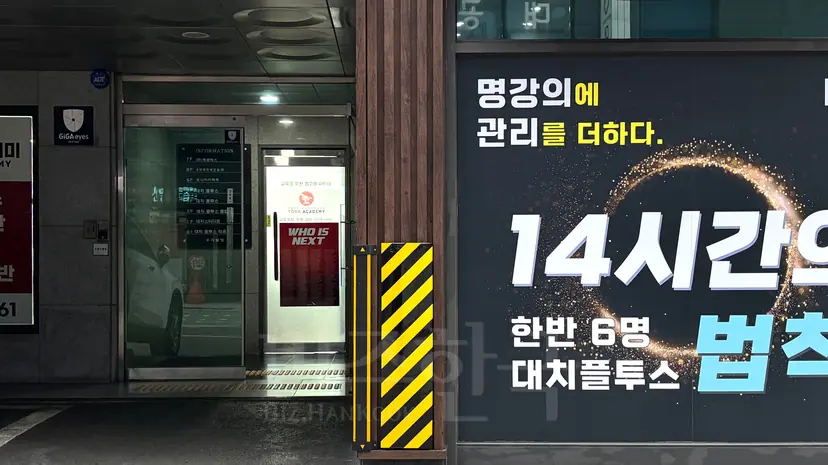
This year’s CSAT is being held amidst controversy over the use of AI devices such as smart glasses for cheating. This follows the discovery of methods where test-takers input questions into AI using small devices during the exam to receive answers. While the Ministry of Education has announced emergency measures, doubts remain among students about whether cheating can truly be prevented.
"I'm anxious that if I get even one wrong, I'll be pushed out by AI"
This anxiety is spreading throughout Daechi-dong, the heart of private education in Korea. Academy officials reported that students feel burdened just by the suspicion that someone might unfairly boost their scores using AI. Students say that at a time when they should be focusing entirely on improving their own skills, they are now forced to worry about the possibility of others cheating.
In fact, students met in Daechi-dong said it is difficult to focus on studying due to the possibility of cheating. A 19-year-old student named Oh, who is retaking the exam at an academy in Daechi-dong, said, "Usually, I wouldn't be very shaken if I got one Korean language question wrong, but now, the thought that 'I'll lose to AI' if I miss even one question makes me lose my focus and my mental state suffers." They added, "For top-tier students who might fail to enter their desired university or major due to just one question, measures that guarantee fairness are desperately needed."
However, they expressed concern about postponing the exam without clear solutions. They reasoned that if the exam were delayed, it might provide more time for cheating via brokers to occur, so it might be better to proceed as scheduled if no foolproof measures exist.
Another student named Lee (19), who attends a different academy in Daechi-dong, pointed out, "The authorities seem optimistic that they can catch everyone through on-site proctoring without fully grasping the level of technology involved. The older generation doesn't fully understand the potential for cheating with AI devices or the anxiety students are feeling." They added, "It feels like the authorities are planning to react only after problems surface after the exam, and the adults around us seem focused only on soothing our anxiety so we can focus on studying."
Previously, rumors spread online that some parents in Daechi-dong had used Telegram brokers to facilitate cheating for their children, explaining why there was silence from certain quarters regarding the controversy. However, the students and exam officials encountered on-site were vocal about their difficulty in focusing and their general sense of anxiety.
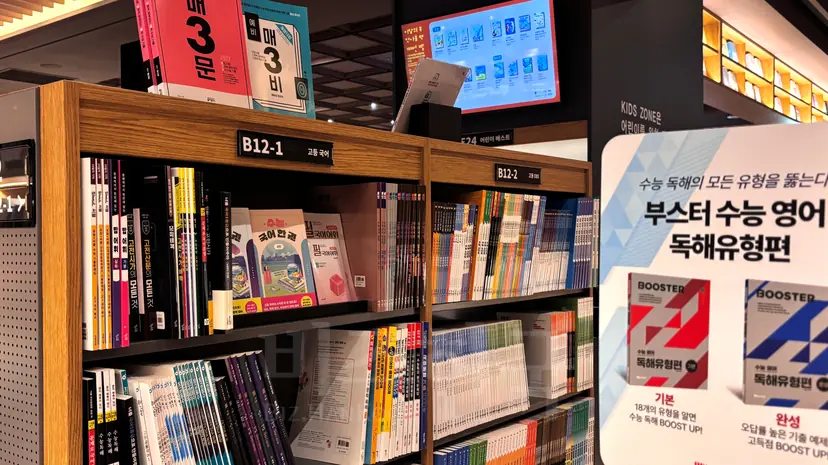
Tying hair back, changing eyeglass frames... Thorough preparation against misunderstandings by proctors
Exam consultants were also advising students to prepare for situations where they might be suspected of cheating. This includes tying hair back to show ears or avoiding thick eyeglass frames. The fear is that even if a student does not possess a cheating device, they might be distracted from the exam if a proctor decides to inspect their personal items.
A Korean language instructor named Shin (46) at a Daechi-dong academy said, "To prevent being suspected of cheating, I've advised students to mentally prepare by removing elements that could cause a scene, such as tying hair back to reveal their ears and avoiding thick eyeglass frames." This approach is intended to help students mentally prepare for potential misunderstandings with proctors.
An exam consultant named Park (54) also explained, "While students are sensitive to the cheating issue, the prevailing atmosphere is one of resignation. Many are choosing to change their glasses or wear contact lenses."
The Ministry of Education announced on the 16th that it would strengthen monitoring, identifying thick eyeglass legs, charging ports, and small speakers as features of smart glasses. While general glasses with thick frames are not banned, students are taking precautions to reduce the chance of being inspected due to the similarity in appearance.
Even ultra-small cameras... The challenge of stronger supervision and student protection
According to the used goods platform Karrot, the search volume for the keyword "AI glasses" increased by approximately 233% between the 13th and 15th compared to the previous three days. As controversies over AI-assisted cheating grow across various exams, interest in such devices has spiked. Naver also posted a notice to its Smart Store seller center the previous day regarding stricter management of "products suspected of being misused for exam cheating."
In response, the government announced on the 17th that it would push for the mandatory handover of all types of smart devices and the blocking of public Wi-Fi at test sites. A response system will also be established, with dedicated personnel at each site to identify smart glasses. All students will be required to remove their glasses and place them on their desks for proctor inspection before the first period. The ban on repeat exams for cheaters will be drastically increased from the current one year to 10 years. Other measures include attaching stickers to clothing with buttons and sending out disaster alerts to detect undeclared mobile phones.
Deputy Prime Minister and Minister of Science and ICT Bae Kyeong-hoon stated, "Not only Wi-Fi, but all communication usage through carriers leaves a record. In addition to real-time responses, we plan to analyze communication records after the fact and take action." He emphasized, "We will analyze relevant logs and track down violators until the end."