

[BizHanKook] The “Team Korea” consortium, which won the bid for the Czech Republic’s Dukovany new nuclear power plant construction project—a project with a total budget of 27 trillion won—has faced a crisis as a construction firm withdrew, casting fundamental doubts on the economic viability of the nation’s nuclear export business.
Negotiations for the construction contract between Korea Hydro & Nuclear Power (KHNP), which oversees the Dukovany project, and the consortium led by Daewoo E&C and Doosan Enerbility officially collapsed on October 29. Because the main contract with the Czech client, which fixes the total construction cost, has already been signed, the project must now proceed within that fixed total amount.
With a key construction firm pulling out after 15 months of negotiations, the controversy over economic viability is emerging front and center: was the overseas nuclear project, which was outwardly packaged as a “jackpot,” actually an unreasonable export drive that could burden individual companies with astronomical losses?
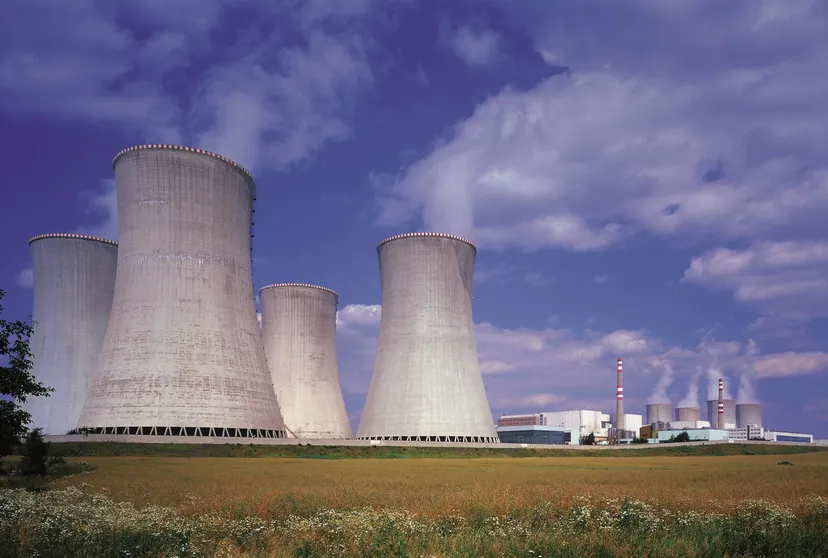
Criticized as a ‘Foreseen Disaster,’ KHNP Refutes Claims of “Low-Price Bidding”
The superficial reason for the split between the two sides is the discrepancy in views regarding the construction costs, which exceed 1 trillion won, and the contract structure. KHNP stuck to the “fixed-price contract” method—the same used for the Barakah nuclear plant in the UAE and the Shin-Hanul plant—in accordance with the requirements of the main contract signed with the Czech client (EDU II). Conversely, Daewoo E&C demanded a “quantity-based contract,” where increasing construction volumes are settled after the fact, citing that it is a new nuclear model for which even the basic design has not been finalized.
The problem is that KHNP had already signed a fixed-price contract with the Czech client. With the upper limit of the total contract amount locked in, KHNP has no room to accommodate the construction firm's demands for budget increases. This is because any additional costs incurred would have to be absorbed by KHNP the moment they accept the construction firm's terms. As they attempted to meet the construction schedule and budget within a fixed total, the state-owned prime contractor and the private subcontractor were inevitably headed for a clash over a gap of more than 1 trillion won.
Daewoo E&C stated, “The APR1000 to be built in the Czech Republic is a new reactor model with no construction track record. In a situation where European regulations apply and the basic design is not even finalized, asking the builder to bear the risk of increased volume without changing the construction cost threatens the company’s survival.”
Both inside and outside the industry, critics have labeled this a “foreseen disaster of the unreasonably pushed low-price bid for the Czech nuclear plant.” The consensus is that the project fell apart because of an attempt to unilaterally shift all risks arising within a limited total budget onto the subcontractor.
KHNP refuted this perspective by presenting objective figures. Choi Il-kyung, Vice President of Project Management at KHNP, emphasized at a briefing, “The construction contract amount for Dukovany units 5 and 6 is approximately 27 trillion won, which is about 2.62 times higher than the UAE Barakah nuclear plant for the same two units, and 1.68 times higher even when accounting for inflation. Even compared to Shin-Hanul units 3 and 4, it is about 2.4 times higher, so it is by no means a low-price bid.”
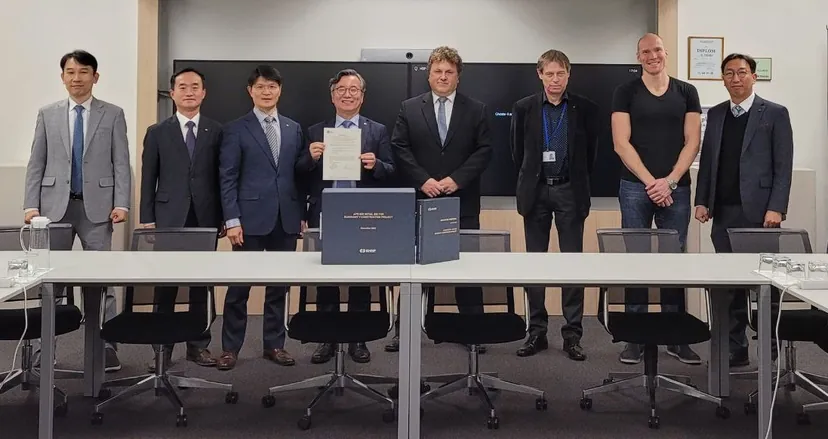
Standardization is Impossible: “Overseas Nuclear Projects Are Difficult to Make Profitable”
Despite KHNP's explanations, experts point out that large-scale overseas nuclear projects have structural limitations and a lack of profitability. In manufacturing, the “economies of scale” work by mass-producing standardized products to lower unit costs. However, nuclear plant construction is difficult to standardize—to the point where people say, “no two nuclear plants in the world are exactly the same.”
Designs for nuclear plants vary entirely based on site conditions, such as soil characteristics, seismic design, and cooling water supply methods. Furthermore, safety regulations and licensing standards differ wildly from country to country. Because requirements change with every project, making “standardization” impossible, it is difficult to guarantee profitability.
In the case of the Czech nuclear plant, unlike domestic plants, the design must be extensively overhauled to meet European Union (EU) regulatory standards. It is essentially creating a new, customized prototype for every project rather than churning out products from a factory to a uniform standard. Ultimately, it is difficult to fully utilize past construction experience, and massive design change costs occur every time. Since the long-term construction period lasts around 10 years without standardization, financial interest and material costs rise, undermining profitability.
Kim Hyun-woo, director of the Energy & Climate Policy Institute, pointed out, “Beyond the mistakes of a specific government, this is just a recurring example of the fact that overseas nuclear power projects themselves are difficult to make money from. All energy technologies become cheaper over time, but nuclear power is the only one that gets more expensive. This is because rising safety standards and accident prevention measures make standardization and mass production difficult.”
This is why investing 120 billion dollars (160 trillion won) into new nuclear power plant construction in the U.S. has led to highly uncertain investment returns. In fact, KHNP and Korea Electric Power Corporation (KEPCO) previously engaged in a dispute over sharing 1.66 trillion won in additional construction costs for the UAE Barakah project. Unlike the state-owned KEPCO, it was difficult for a private builder like Daewoo E&C to accept a fixed-price contract for a new model that could not even be standardized.
Unless Conditions Change, Construction Firms Will Struggle to Participate
KHNP announced that it would terminate the joint cooperation agreement with the Daewoo E&C consortium and select a new construction firm through competitive bidding in accordance with the Act on Contracts to Which the State is a Party by July 2027. The plan is for KHNP to perform the design and licensing work directly or fill the gap through separate short-term orders until a new construction firm is brought in. The contract with Doosan Enerbility, which supplies the main equipment (nuclear reactors and turbine generators), remains in place, and the bidding for the new construction firm will be conducted among major domestic construction companies without the participation of overseas firms.
However, the reaction from the construction industry remains cautious. As long as the design remains unfinalized for an unverified model and the fixed-price conditions are maintained, other construction firms like Hyundai E&C or Samsung C&T will also find it difficult to jump in willingly.
Director Kim Hyun-woo pointed out, “Since the global situation in the nuclear industry is not good, there is a tendency to pursue risky attempts or unreasonable contracts. For overseas nuclear plant construction, the ‘on time, in budget’ completion that the Korean nuclear industry touts is becoming structurally increasingly difficult.”