

[비즈한국] As Chinese memory semiconductor firm ChangXin Memory Technologies (CXMT) announced plans to launch server-grade products utilizing next-generation DRAM architecture within this year, attention is shifting toward the technological competitiveness of Samsung Electronics and SK Hynix. This follows the Chinese company’s announcement of plans to commercialize a technology that domestic firms are currently in the process of developing.
However, the launch of a product featuring new technology and achieving stable mass production are separate matters. Even if cell structures are modified to increase density, securing actual performance and cost competitiveness requires stabilizing production yields and passing customer quality verification. While CXMT's announcement can be seen as a signal of technological pursuit, experts suggest it is premature to interpret this as an immediate narrowing of the technological gap with domestic firms.
4F², An Alternative to Overcome Scaling Limits?
CXMT CEO Cao Kan-Yu announced at the 4th Integrated Circuit and Chiplet Conference held in Shanghai on the 10th that the company would release server-grade DDR5 memory modules (RDIMM) applying the 4F² (four-F-square) structure by the end of the year. RDIMMs are products used in data center servers that require high stability and compatibility. This is interpreted as CXMT, previously focused on consumer memory, expanding its business scope into the server market.
4F² is a technology that reduces the area of the cell, the smallest unit for storing data in DRAM. Reducing the cell area to 4F² from the currently widely used 6F² structure theoretically allows for a reduction in footprint of approximately 33%. Existing DRAM has used a structure where transistors constituting the cell are arranged horizontally. This means more data can be stored on a semiconductor of the same size, or a chip of the same capacity can be made smaller.
This is a different approach from miniaturization, which involves reducing the line width of semiconductor circuits, and it is gaining attention as an alternative to overcome the difficulties in improving density that arise as miniaturization progresses.
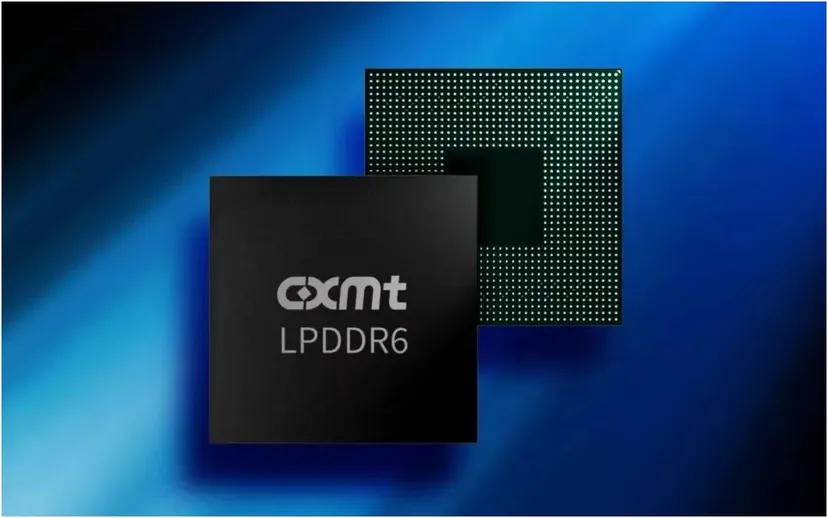
The key is how to place transistors in a narrowed space. Unlike existing planar cell structures, 4F² stands transistors vertically to increase space utilization. CXMT explained that it realized this with its self-developed "Vertical Surround Gate (VSG)" transistor. It is a structure where the gate surrounds a vertically erected channel to control current flow and suppress leakage current. The company explains that it also redesigned its existing manufacturing processes to achieve this.
However, reducing cell area alone does not guarantee product competitiveness. Precise current control and data retention properties must be maintained even in the narrowed space. The mass production competitiveness of a new technology can only be judged after confirming actual operating speeds, power efficiency, and production yields.
Commercialization Before Samsung and SK—Is It Possible?
Domestic firms are also developing 4F² as a next-generation DRAM technology. When asked about the development of related technologies at the Semiconductor Exhibition (SEDEX 2026) on the 14th, Song Jae-hyuk, CTO and President of Samsung Electronics, replied, "Yes," adding, "We are working hard on it." The industry believes Samsung Electronics is pushing to apply a Vertical Channel Transistor (VCT)-based 4F² structure to its 'D0a' process.
SK Hynix also unveiled a technology roadmap last year for applying 4F² Vertical Gate (VG) and wafer bonding to DRAM under 10 nanometers (nm).
The brokerage industry estimates the DRAM process gap between Samsung Electronics and CXMT at 5 to 7 years, based on the timing of mass production. KB Securities also pointed out that the commercial demand and market for products using the 4F² structure have not yet been clearly formed. Analysis suggests that practical market competitiveness can only be determined after verifying performance, yield, cost competitiveness, customer certification, and mass production capabilities.
If CXMT reveals its product by the end of this year as planned, it will be ahead of the schedule compared to Samsung Electronics, whose commercialization is discussed for around 2028.
CXMT stated that it has been researching the 4F² structure since its establishment in 2016 and has disclosed about 300 related patents. However, it did not disclose specific capacity, processing speed, production volume, or customers for this new product. Additional information is needed to gauge the actual timing of mass production and supply capacity.
Does Reducing Cells Also Lower Costs?
The industry interprets CXMT's move as an attempt to increase density by changing the cell structure due to the difficulty in securing extreme ultraviolet (EUV) lithography equipment amid U.S. export controls on China. As there are limitations to miniaturization through reducing line width, the approach is to compensate for this through structural innovation. It is known that CXMT has been implementing circuits by repeating exposure and patterning multiple times without EUV.
The problem lies in process difficulty and manufacturing costs. Precision implementation of vertical structures makes process control more difficult, which could lead to lower initial yields. The method of repeating patterning is also a factor that increases process time and costs. Even if production volume is increased by reducing cell area, it is difficult to lower the cost per chip if the defect rate is high. While domestic companies are also developing related technologies, analysis suggests that process economics and market demand must be considered for actual application to mass production.
On the 13th, immediately after the CXMT announcement, shares of Samsung Electronics and SK Hynix plummeted by 7.39% and 10.09%, respectively. The market reacted sensitively not just to the technology itself, but because concerns about the speed of pursuit and supply volume overlapped.
This is interpreted as an effect of highlighting the possibility of supply expansion by Chinese companies in addition to a sense of wariness regarding technological pursuit. CXMT's DRAM wafer production capacity is expected to increase to about 350,000 sheets per month by the end of the year. According to market researcher TrendForce, CXMT's global DRAM market share in the second quarter of this year reached 9.5% in terms of revenue, ranking fourth in the world. Its listing on the Shanghai Stock Exchange last July also expanded its fundraising base. With growing doubts about the sustainability of the memory boom led by AI demand, the possibility of supply expansion from China is also being highlighted.
As of the market close on the 15th, Samsung Electronics closed at 210,000 won and SK Hynix at 1,258,000 won.