

[BizHanKook] Security incidents that have plagued the financial sector are now spreading to the virtual asset industry, sounding the alarm for financial consumer protection. Following the leakage of personal information of customers and employees at Bithumb and GOPAX, the virtual asset exchange FraBang has suffered actual financial losses. On top of this, a massive security breach at Binance, the world’s largest virtual asset exchange, has further intensified investor anxiety. Financial authorities have launched emergency inspections and on-site investigations, announcing plans to strengthen the security standards of the virtual asset industry to match those of traditional financial institutions.
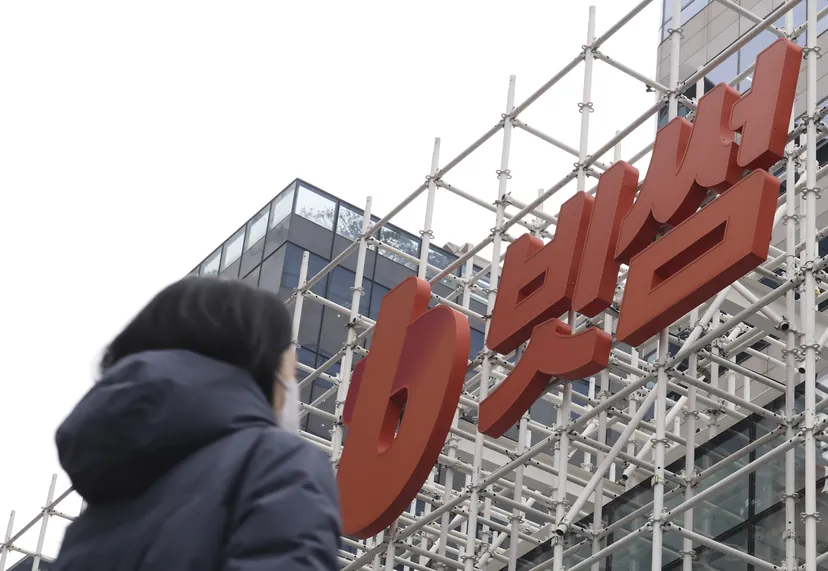
According to Bithumb on October 29, the personal information of 6,444 customers and 715 employees was leaked due to an external attack. While the personal information of 5,600 of these customers was encrypted, the data of 844 individuals was exposed in an unencrypted state. The leaked information includes names, phone numbers, email addresses, resident registration numbers, driver's license numbers, account numbers, and copies of identification cards.
Regarding the details of the incident, Bithumb explained, “We confirmed that on October 27, an unauthorized external party accessed our internal mobile groupware system, DaouOffice, leading to the leak of some personal information. After confirming the leak of employee information, we discovered during further investigation that customer information was also included.” The exchange further stated that the system compromised by the external attack was an internal operational system separated from the exchange's accounts or virtual assets. Since the incident, Bithumb has formed a task force (TF) to conduct post-incident measures such as security inspections.
Lee Jae-won, CEO of Bithumb, stated, “Taking this incident as a turning point, we will re-examine our entire security management system, including how we handle and store personal information and our internal systems, from the ground up,” adding, “We will improve vulnerabilities through inspections by external specialized agencies and strengthened internal controls to prepare fundamental measures to prevent similar incidents from recurring.”
Prior to Bithumb, security incidents also occurred at the virtual asset exchanges GOPAX (operated by Streami) and FraBang. GOPAX announced on October 16 that the personal information of 7 customers and 2 former/current employees had been leaked. According to GOPAX, abnormal account access and personal information inquiries occurred starting in early September, and the company became aware of this in early October. It was later revealed that additional personal information was leaked on October 26. On the 27th, GOPAX stated, “No abnormal withdrawals of KRW or virtual assets, or asset losses, have been confirmed.”
In the case of FraBang, the incident has led to actual financial losses, sparking controversy. FraBang stated, “On October 24, a security breach occurred due to unauthorized external access. Immediately after detecting abnormal withdrawals from the exchange's hot wallet (a digital wallet connected to the internet), we conducted a full inspection of the exchange system and discovered security vulnerabilities,” adding, “The identified loss of assets is approximately 100 million KRW. We plan to accurately determine the extent of the lost assets and take measures to fully compensate them with company assets.” FraBang has temporarily suspended services since October 26 to protect member assets. The Financial Supervisory Service has also launched an on-site inspection of FraBang to verify the scale and circumstances of the damage following the incident report.
Meanwhile, a security incident at Binance, the world’s largest virtual asset exchange, has heightened concerns about financial losses for virtual asset investors. At approximately 6:24 AM KST on October 30, Binance announced, “We are aware of a security issue and are actively investigating it.” That morning, domestic virtual asset exchanges also simultaneously notified users to be cautious regarding withdrawals, citing a security issue at Binance.
Later, at approximately 11:25 AM, Binance stated, “Initial investigations suggest that the security incident occurred after an attacker gained access via a compromised laptop belonging to a development and operations engineer. We have found no evidence that the private keys of blockchain wallets were leaked,” and added, “The impact of the incident is approximately 6.3 billion USD (about 8.4 trillion KRW). We have worked with blockchain partners to freeze about 3 billion USD (about 4 trillion KRW) in assets. We will compensate for all losses through the Secure Asset Fund for Users (SAFU) and company funds.”
As security incidents continue to occur in the virtual asset industry following those in traditional financial sectors such as banks and securities firms, financial authorities have initiated emergency inspections. While there had been no actual financial damage until now, the asset leak at the crypto exchange FraBang has raised red flags for consumer protection. On the 28th, Yoo Young-jun, Director of Digital Finance Policy at the Financial Services Commission (FSC), held an emergency inspection meeting with the Financial Supervisory Service (FSS), the Financial Security Institute, the Digital Asset eXchange Association (DAXA), and Bithumb.
Financial authorities have commenced on-site investigations and are sharing information and cooperating among relevant organizations to identify the cause of the incidents. They also announced plans to manage and supervise the leaking firms to ensure that consumer protection measures, such as full compensation in the event of secondary damages, are carried out.
The FSC stated, “We will strengthen security measures for sectors not currently covered by the Electronic Financial Transactions Act, such as the virtual asset industry, to match the level of traditional financial firms,” and added, “We will pursue multi-faceted plans to enable a swift response when incidents occur.” Furthermore, they added that they are launching accident investigations and victim protection measures for secondary financial firms that have experienced data leaks, such as Mirae Asset Life Insurance, Mirae Asset Global Investments, and Daishin Securities.